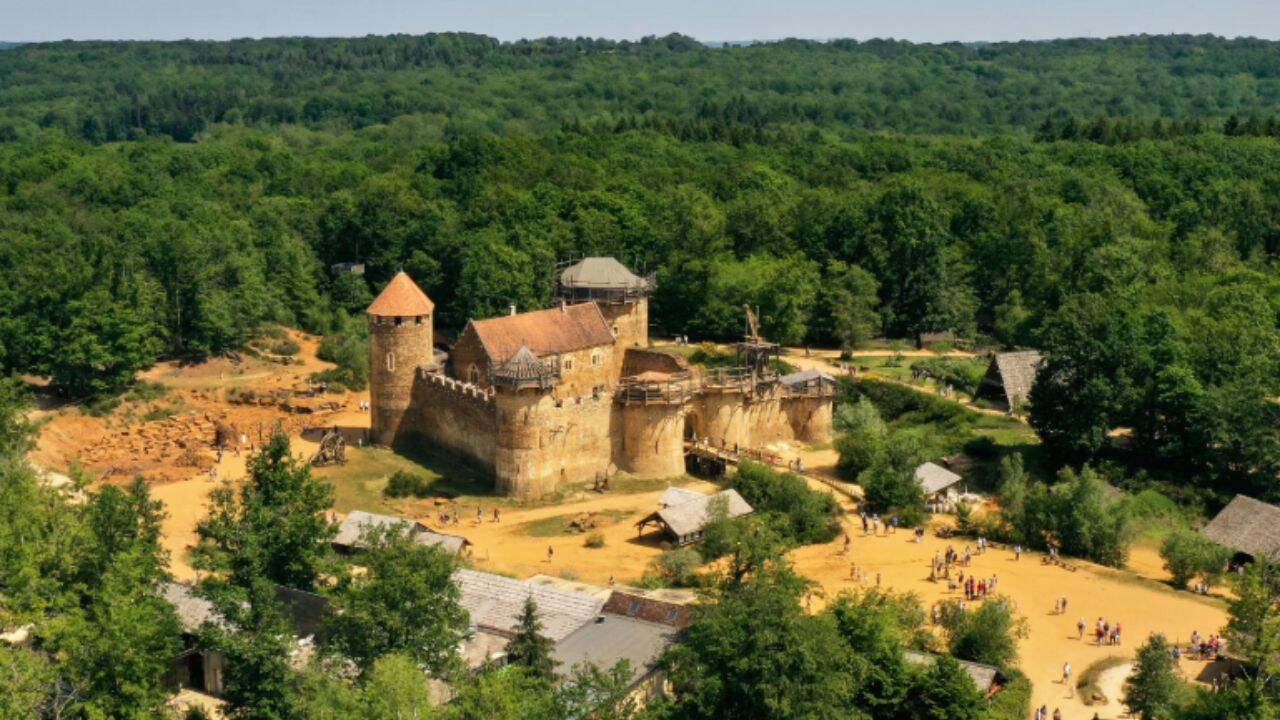
More than 25 years ago, a group of history lovers in quiet forest of France's Burgundy region decided to build a brand-new medieval castle from scratch. However, their condition was that everything had to be done as it would have been in the 13th century.
Get breaking news anytime, anywhere. Download the TOI app now!
Today, that project, Guedelon Castle, has become one of France's most remarkable historical experiments. The castle is, however, still not fully complete. But after more than two decades of work it now stands with walls, towers, a great hall, chapel, kitchens and other medieval features. It has also become a centre for archaeological research, traditional craftsmanship and sustainable building techniques.
When the work began in 1997, very few people believed such an ambitious project could succeed. The site was an abandoned quarry surrounded by forest. Moreover, workers used only hand tools, locally sourced stone, timber and other materials that would have been available around the year 1230.
Back then, only the outline of the castle could be seen, and the walls had barely risen above the ground. Nobody knew how long the project would take because no one had attempted to build an early medieval castle entirely by hand for hundreds of years.
Now, more than a quarter of a century later, the castle has become a major attraction, welcoming around 310,000 visitors every year.
Shaped by hand
The work at Guedelon is carried out by more than 60 skilled craftspeople, NPR reported. Stone cutters, masons, blacksmiths, carpenters, joiners, painters, tilers, ropemakers, basketmakers and wheelwrights all work using traditional techniques.
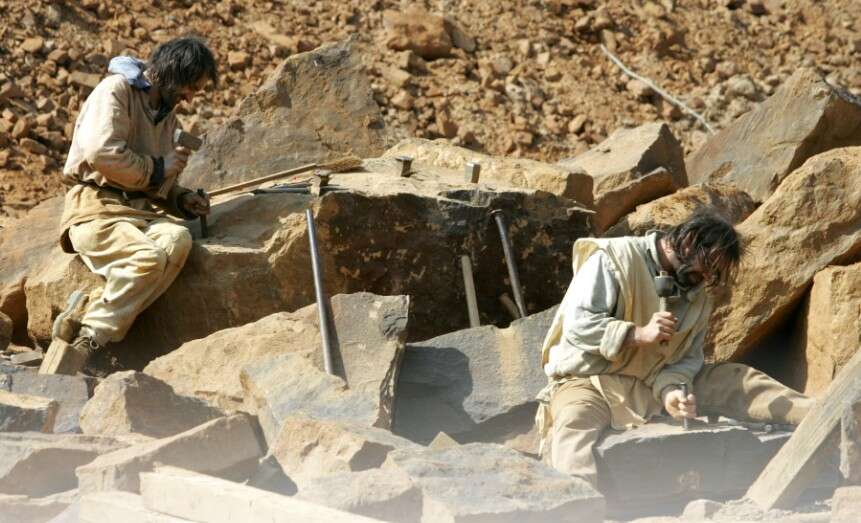
Modern equipment is largely absent with the only exceptions being safety boots, protective glasses for stone cutting and safety ropes for workers on scaffolding.
Visitors to the castle can also hear the sounds of hammers striking stone, horses pulling carts and blacksmiths shaping iron over open fires instead of engines or power tools.
The site functions both as a working construction project and an open-air classroom, allowing visitors to watch the building process as it happens.
Learning by doing
The builders do not simply copy existing castles. They study medieval ruins, historical records and advice from archaeologists, historians and scientists before testing different methods themselves.
Florian Renucci, Guedelon's master builder, said that much of the work involves deduction and experimentation. One of the current challenges according to him is understanding how medieval drawbridges actually operated.
"We know pulleys existed. But that's it. How did it work? In 1250, how exactly were two men able to raise and lower a 400-tonne drawbridge?" Renucci said as quoted by The Guardian.
Some problems have also taken years to solve. The team rebuilt a clay tile oven five times before it finally worked because no complete medieval example still existed.
When they struggled to make waterproof mortar for the castle's cistern, they collected samples from another medieval castle and had them analysed in a university laboratory. Even placing the keystone in the chapel roof required months of trial and error.