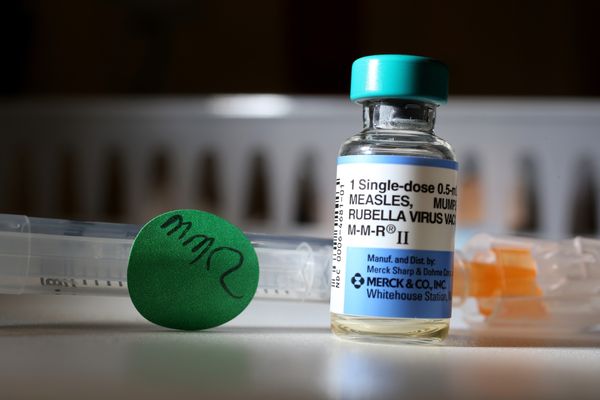
State legislatures introduced more than 400 vaccine-related bills over the past year. Nine of them became law.
That ratio is the story, and it runs against the impression left by a year of headlines about vaccine mandates falling. A New York Times interactive analysis counted the measures introduced between August 2025 and July 2026 and characterized 209 of them as aiming to weaken vaccination rules or erode public trust in vaccines. No state eliminated its core childhood immunization requirements.
For a parent filling out school forms this month, the practical answer in almost every state is that the requirements have not changed. The exceptions are narrow and specific, and they are worth knowing by name.
Four Hundred Bills, Nine Laws, and the Gap Between Them
The proposals touched nearly every part of the vaccination system: school and day-care requirements, legal protections for people who decline vaccination, restrictions aimed specifically at mRNA and COVID-19 vaccines, and requirements around how vaccines are described in state materials.
Volume is not the same as enactment. Bills die in committee, miss funnel deadlines, pass one chamber and stall in the other, or reach a governor who declines to sign. Florida's medical freedom bill, which would have created a conscience exemption from school requirements, died when the session ended in March. Iowa's exemption expansion failed to clear a mid-March deadline.
The analysts who compile the biweekly vaccine policy briefing published by CIDRAP at the University of Minnesota noted that vaccine critics "consider this year a win even though most of their measures failed," and are already drafting bills for the next session. Both halves of that observation matter for readers trying to calibrate.
Arizona and New Hampshire Came Closest
Two states produced the near-misses.
Arizona's HB 2248, styled the Arizona Medical Freedom Act, would have barred schools, businesses, employers, and government bodies from requiring what the bill called medical interventions, a term drafted broadly enough to cover vaccines. It reached the governor's desk in June.
New Hampshire took a different route, with three separate bills heard by the House Health and Human Services Committee. HB 1719 would have removed hepatitis B from the list of vaccines required under state law. HB 1584 would have required the health department to notify families of available medical and religious exemptions. HB 1449 would have limited the hours school-based vaccine clinics could operate and required a parent or guardian to be physically present during any vaccination.
None of these produced a repeal of core requirements. The distinction between a bill that removes one vaccine from a school list and a bill that ends school requirements altogether is substantial, and it has frequently been blurred in coverage.
The Laws That Did Pass Are Narrower Than the Headlines
Among the nine enacted measures, the cluster drawing the most attention concerns death investigations rather than school entry.
Laws in Louisiana, Mississippi, and Oklahoma now require recent vaccinations to appear on the death reports of infants and children. Louisiana's version, Senate Bill 29, became Act 732 and took effect August 1, requiring coroners to include a child's immunization history in autopsy reports for sudden child deaths.
Observers have tied these laws to a claim linking vaccines to sudden infant death syndrome. That claim is not supported by the evidence. Multiple large studies have examined the question, and infants in the age range when SIDS peaks are also in the age range when routine vaccines are given, which produces coincidental timing without a causal relationship. Recording immunization history in a death investigation is not itself a scientific claim, but the framing around these laws has been.
A separate enacted measure, Iowa's SF 304, took effect July 1 and limits teenagers from receiving HPV or hepatitis B vaccines without parental permission by removing vaccines from the scope of care minors can seek independently.
A Dozen States Moved in the Opposite Direction
The session was not one-directional, and this is the part most likely to be missed.
Roughly a dozen states passed laws protecting childhood vaccination recommendations after federal officials moved to narrow them. Colorado enacted SB 26-32, which allows the State Board of Health to consider vaccine guidance from the American Academy of Pediatrics and other major medical organizations rather than only from the CDC, codifies pharmacists' authority to prescribe and administer vaccines, and addresses state funding for vaccine access.
Maine's governor signed LD 2071, expanding pharmacists' authority to prescribe and administer vaccines to adults without a prescription and extending that authority to children for influenza and COVID vaccines. Illinois advanced a measure requiring hospitals to identify and offer eligible patients influenza and pneumococcal vaccines.
The net effect across the country is that access expanded in some states and narrowed in others, mostly at the margins, while the central architecture of school immunization requirements stayed intact everywhere.
Checking Your Own State Before the School Year
Because requirements are set state by state and can be modified by health department rule as well as by statute, the only reliable source is your own state.
Look up your state health department's school and child care immunization requirements page, which lists required vaccines by grade level and the documentation schools accept. If a bill in your state passed this year, that page will reflect it. Confirm whether your child's records are current before the enrollment deadline rather than after, since catch-up schedules take weeks.
If you have questions about a specific vaccine, the conversation belongs with your child's pediatrician, who can address timing, spacing, and any medical reason to modify the schedule. A medical exemption is a clinical determination, not a paperwork option.
For adults, the relevant change in several states is expanded pharmacist authority, which may mean a vaccine you previously needed a physician visit for is now available at a pharmacy counter.
State legislatures reconvene in January, and the analysts tracking this expect a new wave of bills. MedicalDaily will report on enacted changes that affect school requirements or vaccine access rather than on introductions.
Frequently Asked Questions
Did any state end school vaccine requirements? No. No state eliminated its core childhood immunization requirements during this legislative session, though Arizona and New Hampshire considered measures that would have moved in that direction.
How many bills actually became law? Nine, out of more than 400 vaccine-related measures introduced between August 2025 and July 2026.
What do the death report laws do? Laws in Louisiana, Mississippi, and Oklahoma require recent vaccinations to be recorded on the death reports of infants and children. Louisiana's took effect August 1.
Do vaccines cause sudden infant death syndrome? No. The evidence does not support a causal link. SIDS peaks at an age when routine vaccines are also given, which creates coincidental timing without causation.
What changed for teenagers? In Iowa, a law effective July 1 requires parental permission for minors to receive HPV or hepatitis B vaccines by removing vaccines from the care minors can seek on their own.
Did anything expand access? Yes. About a dozen states passed protective measures. Colorado and Maine both expanded pharmacist authority to prescribe and administer vaccines.
Where should I check my state's rules? Your state health department's school and child care immunization requirements page, which reflects both statutory and regulatory changes.