More than 1,100 alleged abusers and enablers of abuse are still serving with the Australian defence force, including almost 600 in the permanent forces and public service, it has been revealed in landmark reports.
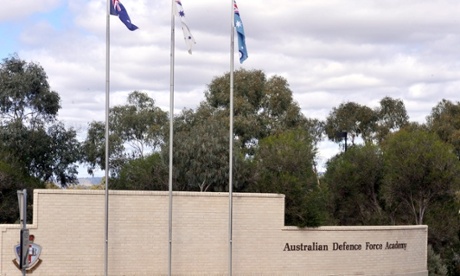
The federal government tabled two reports from the defence abuse response taskforce (Dart) on Wednesday, one covering allegations and instances of abuse within the ADF over several decades, and a second looking more specifically at cases at the Australian Defence Force Academy (Adfa).
Dart found “a significant cluster of very serious allegations within Defence have never been thoroughly investigated and abusers have never been called to account”. Allegations include serious sexual assault and physical violence and disturbing initiation and hazing rituals.
It called for a royal commission into Adfa which it found had seriously mismanaged a high number of complaints since its establishment in 1986.
The defence minister, David Johnston, said the government would consider the recommendations and announced an extension of the taskforce.
Len Roberts-Smith, the taskforce’s chair, said a “significant amount” of complaints made to the taskforce related to abuse occurring between 2000 and 2011 and noted that the use of technology such as email and social media was increasing among abusers.
The report revealed that across the ADF, 594 alleged abusers are still fully employed in the permanent forces and working for the public service in Defence. A further 204 are in the active reserve and 341 in the inactive reserve. Dart identified 60 alleged perpetrators of abuse within Adfa who are still serving.
At least 16 alleged abusers at the academy, including those accused of serious sexual assault, are still serving in some form, including eight in the navy, five in the army and three in the air force, ranking as highly as commander, lieutenant colonel and wing commander.
At least one allegedly assaulted two separate women and another may have been responsible for multiple other sexual assaults against women who were not named, the report said.
An unknown number of alleged perpetrators have left the ADF and cannot be the subject of any internal disciplinary process. Referrals to civilian police were low, the report said, as one can only be made at the behest of a complainant.
Roberts-Smith urged caution when looking at Dart’s numbers as they were not limited to alleged perpetrators and included a “broad range of conduct”. “The other category of people which fall within that definition for the purposes of the taskforce, is those within defence who mismanaged reports of abuse” he told Guardian Australia.
He said Dart was going through the “thousands of pages” of supporting documentation from complainants to determine the specific allegations against each person flagged as an “abuser” in the system.
Among the complaints of each alleged victim was at least one case of mismanagement. In some instances Defence failed to respond appropriately to reports of abuse, in others it was witnessed or carried out by staff or people in positions of authority.
“[My divisional officer] told me he didn’t believe me at this first meeting,” one unnamed complainant told Dart. “At a subsequent meeting with my DO, he told me that even if the incident had occurred, I had invited it by my behaviour.”
Another female former cadet said she had become “the accused” and was questioned for an hour by staff about her sexual history with other cadets after reporting she had been sexually assaulted.
“I was told that if I didn’t sign the attached documents stating that I was being fairly treated action would be taken against me,” she said. “I therefore signed the statement under duress.
“Instead of receiving some acknowledgement of the gravity of the crime against me, I was charged with fraternisation and left no option but to resign.”
‘Disturbingly high’ rate of female victims at Adfa
As of September this year, the taskforce had assessed and found plausible 2,224 allegations of abuse across the ADF, from more than 1,650 complainants. The largest number of complaints from across the ADF were of abuse occurring in the 1970s and 1980s, with “high levels” persisting through to the 2000s.
Most occurred in the army with 879 cases, followed by 861 in the navy and 378 in the air force, but the navy was significantly overrepresented. Despite having approximately the same number of personnel as the air force and half as many as the army, it accounted for 39% of all cases of abuse.
“In most complaints of abuse during recent years, abuse was carried out by persons of higher rank, including reports from multiple complainants within each service who experienced abuse at the hands of the same alleged abuser who had developed a reputation for abuse within the service,” the ADF abuse report said.
There were 50 “plausible” complaints relating to abuse occurring within Adfa. There was found to be a “disturbingly high” rate of incidents of abuse of female cadets at Adfa in the 1990s.
Of those people, 35 said they experienced harassment and bullying, 33 experienced sexual abuse, 18 sexual harassment, and 20 experienced physical abuse. A “significant majority” reported being victim to two or more categories of abuse.
All alleged sexual abuse perpetrators were male, mostly other cadets at the time of the abuse. Eight sexual abuse victims were male, but all who claimed they had been raped were female. The vast majority of all complainants were cadets aged under 20 at the time the alleged abuse occurred. Most are female.
“The majority of cadets enter Adfa directly following or shortly after high school,” Roberts-Smith said in the report. “This means that those who suffered abuse during their time of living and studying at AdfaA were between 17 and 20 years old, living away from their homes and family, sometimes for the first time.”
It was important Adfa be examined by a royal commission because the institution has trained much of today’s military leadership, Roberts-Smith said. “Unlike general abuse which has occurred right across Defence, these are the people who are Defence leaders,” he told Guardian Australia.
“The issue there is whether or not there are people still serving, possibly in mid-range to senior leadership positions, who have been perpetrators of abuse, particularly serious sexual or physical abuse, and I think it’s fairly clear that is the case and many of them are still serving.”
Adair Donaldson, a partner at Shine Lawyers which represents a number of ADF victims, said “the horse has bolted” in regards to the still-serving alleged abusers.
“Those serious sexual assaults that occurred should be the subject of a police investigation but if they weren’t at the time it’s going to be incredibly difficult to prove beyond a reasonable doubt [now],” he told Guardian Australia.
He also said a royal commission would not achieve anything for victims of abuse as the ADF has already acknowledged the abuse and begun addressing it.
“The No 1 focus should be what’s happening with the survivors at the moment – these brave people that have come forward to tell their stories.”
Donaldson said no one should be surprised by the contents of the report, and there were now four things survivors need: acknowledgement of their abuse, an apology, steps put in place by the ADF to ensure the same things don’t happen to others, and access to support services.
“I don’t believe a royal commission is any way going to deliver that for survivors … We can deliver that now with the government putting in steps to assist survivors.”
The report also identified significant factors which contributed to abuse at Adfa and said while there had been significant improvements in recent years, “abuse has continued to occur at ADfA throughout the 2000s, indicating that some of the risk factors which have contributed to abuse in the past may continue to be issues of concern”.
Dart was set up in November 2012 after the DLA Piper review into allegations of sexual and other kinds of assault within the ADF. The review was launched in response to the so-called “Skype scandal” which involved a cadet secretly filming himself having sex with a fellow cadet and broadcasting it via Skype to colleagues without the woman’s knowledge.
The case prompted more than 2,400 reports of abuse.