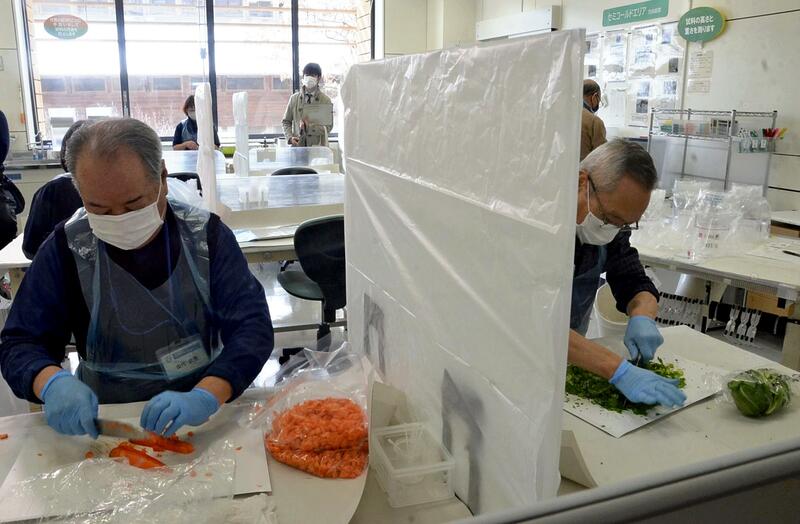
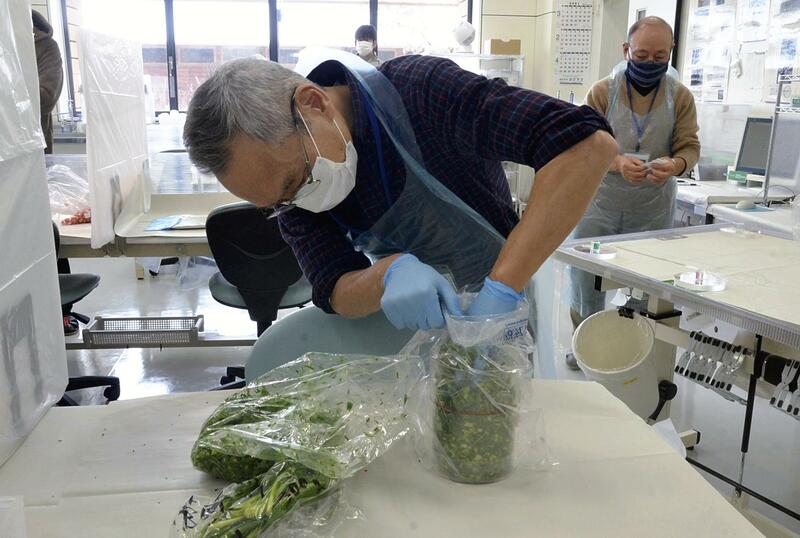
Nearly all the 17 prefectures required to test food products for radiation according to central government rules created after the March 2011 nuclear accident in Fukushima Prefecture are also testing items not listed in the guidelines. The Yomiuri Shimbun has also learned that 11 prefectures not required to perform radiation tests are doing so on their own initiative.
The prefectures are testing vegetables, fish and other items not listed in the guidelines to dispel concerns among domestic and overseas consumers, though it is extremely rare for these products' radiation levels to exceed the national standard.
The national standard of maximum acceptable radiation levels is 100 becquerels per kilogram for general food items such as vegetables and rice. Japan's standard is much stricter than the European Union's 1,250 becquerels per kilogram and the 1,200 becquerels per kilogram in the United States.
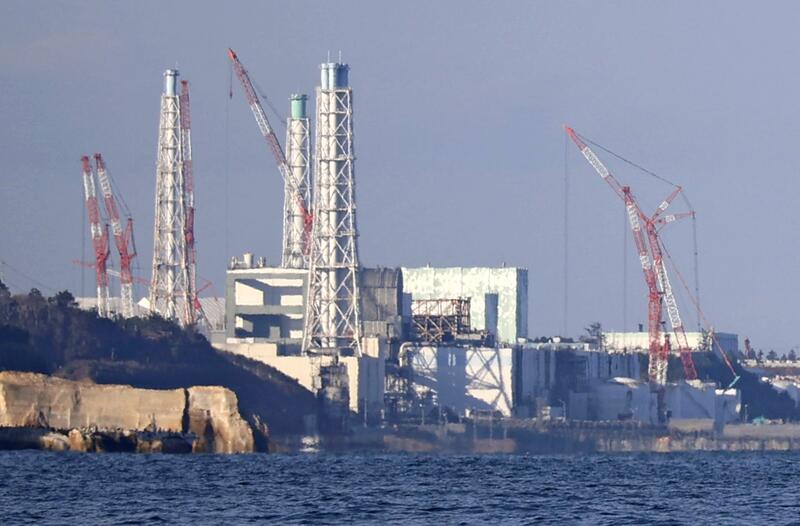
Immediately after the nuclear accident at Tokyo Electric Power Company Holdings, Inc.'s Fukushima No. 1 nuclear plant in March 2011, the provisional standard of the maximum acceptable radiation level for general foods was 500 becquerels per kilogram, but it was revised to the current 100 becquerels per kilogram in April 2012. The standards for food for infants and milk are 50 becquerels per kilogram, and drinking water is 10 becquerels per kilogram.
The areas and items to be inspected for radioactive cesium levels in food are determined by the guidelines of the government's Nuclear Emergency Response Headquarters.
As of March, 17 prefectures in eastern Japan were required to test food including wild mushrooms and wild mountain vegetables that tend to accumulate cesium, as well as meat from birds and beasts. If the radiation level exceeds the national standard, such foods cannot be shipped.
The Yomiuri Shimbun asked all 47 prefectures about the matter and found that 15 of the 17 required prefectures were also testing for items not covered by the guidelines, in addition to 11 prefectures conducting tests on their own.
According to the Health, Labor and Welfare Ministry, 54,412 items were tested nationwide, whether required or voluntary, in fiscal 2020, and 127 items, or 0.23%, were found to have exceed the national standard. One of the 127 was from an unknown place of origin. The remaining 126 items were subject to inspection as stipulated in the national guidelines.
In recent years, there have only been a few cases in Fukushima Prefecture where voluntary inspections found the radiation level had exceeded the standard.
Fukushima Prefecture is testing tomatoes, cucumbers and other vegetables that are not subject to inspection. The radiation level exceeding the standard has not been found in such vegetables since fiscal 2015, but the prefecture has been continuing the tests in order to dispel long-lasting negative rumors after the nuclear accident. For this fiscal year's budget, the prefecture has earmarked about 500 million yen using central government subsidies to these efforts.
Restrictions on the import of Japanese food products continue in 15 countries and regions, with some countries requiring the attachment of inspection certificates. For this reason, Ehime Prefecture is among the places far from Fukushima that are inspecting their marine products.
"Data to ensure safety has been accumulated over the past 10 years," said Naoya Sekiya, associate professor at the Center for Integrated Disaster Information Research at the University of Tokyo. "It is necessary for the government to proactively disseminate information on safety based on the data."
Read more from The Japan News at https://japannews.yomiuri.co.jp/