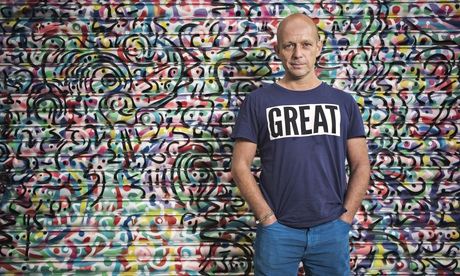
Every now and then, the system we live under is seized by a spasm of self-doubt. Appalled by the brutalities to which it has given birth, it comes up with a new vision: compassionate capitalism, small is beautiful, the big society, citizen stake-holding, all-in-it-togetherness and so on. When things get really serious, wackier solutions may be on offer: mindfulness, Scientology, off-the-peg Theosophy, packaged Kabbalah, ready-to-serve transcendentalism and outbreaks of touchy-feelyism, most of them fashionable in the California to which Steve Hilton, David Cameron’s former adviser, has now decamped. It isn’t surprising that a former resident of the state, Steve Jobs, was a monster when it came to business and a sucker when it came to the life of the spirit. The flipside of the hard-nosed operator is the gullible dreamer.
In true California style, Hilton’s book mixes a hymn to entrepreneurship with a plea for a more caring society. It even touches discreetly from time to time on one of the most vital links between the two – the fact that treating people well is good for business. It can also do wonders for the labour market. Hilton tells us of an experiment in which jobcentres sent out messages to jobseekers using their first names, thereby significantly improving the response rate. Market forces may foster unemployment, but you can always cut the number of jobless by calling them Kate and Bill.
More Human has a few acerbic comments to make about the banks and the big corporations. The real enemies, however, are government and bureaucracy. Governments, not businesses, run the world, Hilton claims. Perhaps he lived through the crash of 2008 with a paper bag over his head, as the banks queued up to be bailed out by the taxpayers they had defrauded. If nation states struggle to say boo to Fifa, it’s unlikely they are going to pull the plug on Shell. In Hilton’s view, being more human amounts among other things to being less regulated. They used to call this free-marketeering, but now it’s known as putting people first. If you plunge to your death off scaffolding because of lax safety regulations, you may do so confident in the knowledge that you are dying a richer, more valued human being. Simple-minded Tories who oppose the creative and dynamic to soulless bureaucracy forget that there are destructive ways of being dynamic and creative forms of regulation. The disadvantaged need contracts and formal procedures, however distasteful their more privileged fellow citizens may find them, since they would be foolish to rely on the big-heartedness of their bosses.
It is the uniform and monolithic Hilton objects to, rather than injustice and inequality. He has some worthy proposals about educational reform, but is silent on the scandal of the public schools. It is red tape in the NHS, not privatisation, that draws his fire. He finds the sudden closure of an unprofitable industrial plant inhuman, but also believes that entrepreneurship is “profoundly human”, as though Trump and Branson represent the finest flowers of our species. Words such as “profits” and “capitalism” are coyly placed in quotemarks, as though the book is reluctant to admit that the system it so ardently advocates actually exists. To do so might be to imply that commerce and competition are not simply human nature after all.
Hilton shares the public aversion to obscenely high salaries for CEOs, but has no clue what to do about it. Indeed, as soon as he mentions the subject, he turns to talking about bureaucracy instead. Banks and corporations are objectionable not primarily because they rip people off but because they are oversized, as though the small-scale is never predatory. With a remarkable touch of self-delusion, he believes that centralisation is less of a problem in his idealised, newly adopted US.
In any case, business in Hilton’s view creates wealth, not poverty. A chapter on the latter topic focuses tendentiously on the family. Rather than inquiring into the economic roots of deprivation, Hilton regards it as a kind of disorder transmitted like dwarfism or myopia from one generation to the next, so that by parenting courses, teaching children a wider vocabulary, holding them close to you and tackling a sinister obstacle to prosperity called “toxic stress”, we can turn poverty around. It is the poor who need to change their ways, suitably overseen by a battery of experts, not the economic system that starves them of resources.
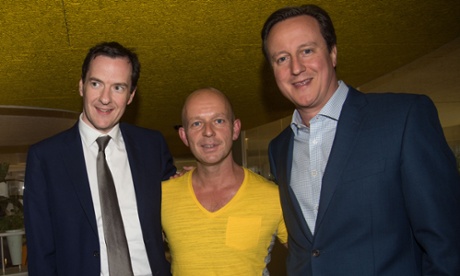
Here as elsewhere in the book, Hilton’s conservatism forces him into idle fantasy. Since any radical change in the property system is off-limits for a man who numbers David and Sam among his drinking companions, risibly inadequate bits of sticking plaster have to serve instead. The scraping sound one hears when turning these pages is uncannily reminiscent of the reshuffling of deckchairs on the Titanic. How do we transform our way of life? By getting more good-hearted people to stand for office in the very system that lies at the source of the trouble. Stirred by the uneasy feeling that the market economy, technology and global capitalism don’t seem to be working in human terms, the author asks a friend what the solution is, and receives the answer “training”. He seems fairly well satisfied with it. At least it doesn’t mean having to inconvenience the rich.
Hilton uses the word “human” in a purely positive sense, failing to grasp the fact that rape and genocide are human, too. He finds statistics dehumanising, but speaks the reified language of behavioural psychology himself, and has no qualms about men and women being subjected to laboratory experiments. (Given the size of our neocortex, he solemnly informs us, we are capable of only about 150 meaningful relationships at the same time.) Roughly speaking, the role of the social sciences is to find out what makes us tick so that we may become more satisfied producers and consumers. There have been broader visions of the human. The book’s prose is strewn with earnest cliches and high-minded pieties: there’s more to human flourishing than roads and railways (wow, wish I’d thought of that), listening to people is an excellent thing, and so is basing your policies on how the world is rather than how it ought to be. Progress can be wondrous, but only in pursuit of the right ends. The most cheering news of all is that together we can make a difference.
More Human has one mysterious feature. Despite the fact that David Cameron, George Osborne, Michael Gove and Maurice Saatchi have all done their bit for the world of inflexible, anonymous, monolithic institutions, not a breath of criticism of any of them can be found in these pages. On the contrary, their benign influence is fulsomely acknowledged. Perhaps this is an example of the small-scale, interpersonal collaboration the author is out to promote, otherwise known as cronyism.
• Terry Eagleton’s Hope Without Optimism will be published by Yale in the autumn. To order More Human for £15.19 (RRP £18.99) go to bookshop.theguardian.com or call 0330 333 6846. Free UK p&p over £10, online orders only. Phone orders min p&p of £1.99.