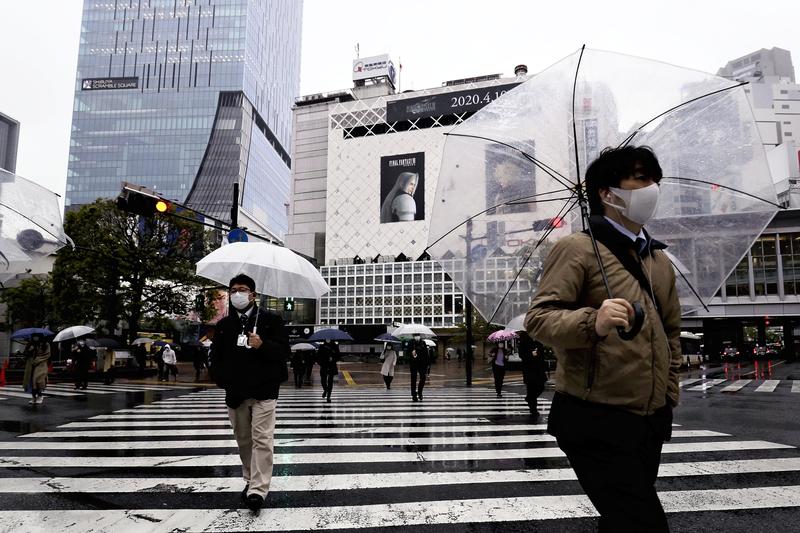
Following the declaration of a state of emergency due to the spread of the new coronavirus, the government has asked companies to cut the number of employees coming to the office by at least 70%. Major companies are expanding their use of teleworking, but small and medium-sized companies are finding it difficult to introduce.
Starting Monday, Toyota Motor Corp. has allowed employees who commute to its head office or factories by train or bus to work from home in principle, in response to Aichi Prefecture declaring its own state of emergency.
Nippon Life Insurance Co. announced the company would have about 52,000 of its sales employees nationwide work from home from Tuesday through May 6. About 100 insurance consultation offices across the country also closed, reducing the number of workers by more than 90%.
Many large enterprises say that they have achieved the government's request of a "70% reduction in employees at the workplace" in their back-office sections. Last week, Mitsui & Co. said more than 90% of its employees have been working from home.
As evidenced by the expansion of teleworking, internet traffic during the daytime on weekdays is increasing. According to communications company Internet Multifeed Co., the amount of data traffic on Friday afternoon increased by about 40% compared to Feb 14.
According to BCN Inc., domestic sales of personal computers increased 9% between March 30 and April 5 compared to the same period last year, and 45.1% between April 6-12 compared to the same period last year.
However, telework is difficult to apply to factories and stores. Small and midsize companies that do not have the necessary online infrastructure set up are also struggling to cope with the situation.
According to a survey conducted in March by the Tokyo Chamber of Commerce and Industry, only 26% of about 1,300 companies that responded said they are actually getting their employees to work from home.
Japan Chamber of Commerce and Industry Chairman Akio Mimura said at a press conference Monday, "Some industries such as manufacturing and transportation have difficulty teleworking, and the hurdle [of a 70% reduction] is very high."
Read more from The Japan News at https://japannews.yomiuri.co.jp/