Danone has recalled several batches of Aptamil and Cow & Gate baby formula because of the possible presence of a toxin linked to the poisoning of children.
Low levels of heat-resistant toxin cereulide, which can cause symptoms such as vomiting and diarrhoea, were identified in some specific batches of the formula milk.
It comes after the Food Standards Agency (FSA) confirmed there have been more than 30 reports of children with symptoms of toxin poisoning linked to recent recalls by Danone and Nestle.
Danone said it has now replaced the affected batches with new products, it added that all products available for purchase are safe to use.
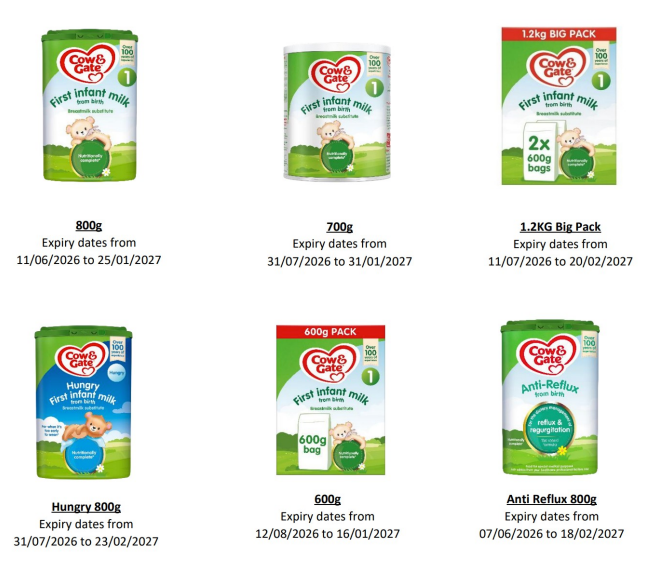
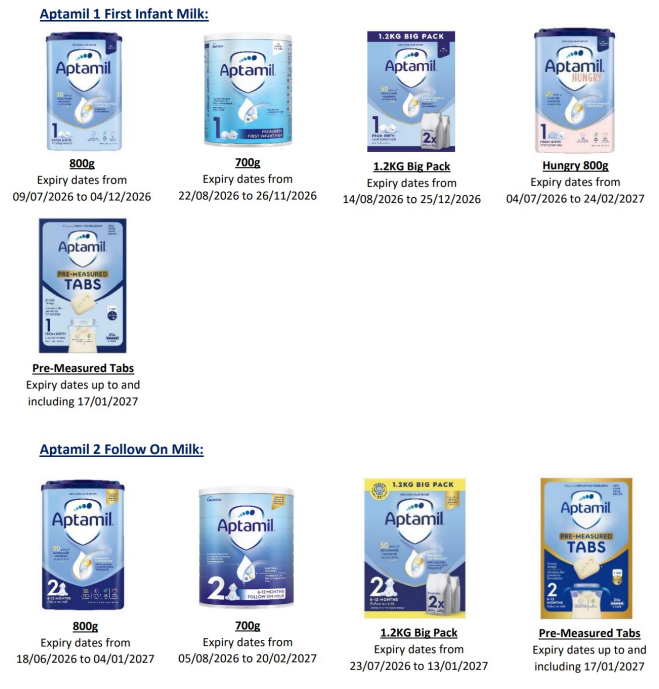
The latest recall issued by the FSA includes:
- Aptamil 1 First Infant Milk
- Aptamil 1 First Infant Milk Big Pack
- Aptamil 1 First Infant Milk Hungry
- Aptamil 1 First Infant Milk pre-measured tabs
- Aptamil 2 Follow-on Milk
- Aptamil 2 Follow-on Milk Big Pack
- Aptamil 2 Follow-on Milk pre-measured tabs
- Cow & Gate 1 First Infant Milk
- Cow & Gate 1 First Infant Milk Big Pack
- Cow & Gate 1 First Infant Milk Hungry
- Cow & Gate Anti Reflux
These products are in addition to the batch of Aptamil First Infant Formula recalled by Danone on 24 January.
More details on the batches affected can be found at food.gov.uk.
A spokesperson for Danone North Europe said: “Danone never compromises on food safety, and we want to reassure all parents that we take this responsibility seriously.
“All our baby formulas are produced under strict food safety and quality standards and undergo rigorous checks before leaving our factories.
“We have recalled specific batches of Aptamil and Cow & Gate products in the UK in line with the latest guidance related to cereulide from the FSA.”
Nestlé also recalled more than 60 batches of its SMA formula in January.
FSA chief executive Katie Pettifer said: “The affected batches are unlikely to still be on shop shelves but may be in your cupboard.
“If you have an affected batch, do not use it. You can return it to the store and exchange it for an unaffected batch.
“If you are feeding your baby one of the affected batches, stop using it and switch to an unaffected batch from the same brand or another brand. If your baby’s formula was prescribed, speak to a pharmacist or doctor before changing.”
Following the recall, which included powdered and pre-mixed formulas for babies and toddlers, the UK Health Security Agency (UKHSA) said it has received 24 notifications in England, seven in Scotland, three in Wales, one in Northern Ireland and one from the crown dependencies of children who had consumed implicated batches, developing symptoms consistent with cereulide toxin poisoning.
The FSA confirmed on 30 January that arachidonic acid (ARA) oil, vital for infant development and added to formula for non-breastfed babies, was the affected ingredient.
It emerged last week that the contamination that led to both recalls originated from a shared, third-party ingredient supplier.
Bacillus cereus is a spore-forming bacterium that can contaminate a range of food products. When allowed to grow, certain strains can produce the cereulide toxin, the UKHSA said.
Symptoms of Bacillus cereus food poisoning and cereulide toxin poisoning are most commonly vomiting, but may include stomach cramping and diarrhoea. They usually have a rapid onset, between 15 minutes and six hours after ingestion.
The symptoms usually resolve within 24 hours, provided there is no ongoing exposure to the toxin.
Parents are urged to contact their GP or NHS 111 if their baby has already consumed the formula.
Although ingestion of the toxin rarely causes more significant illness, a “few” cases of liver or kidney injury, muscle breakdown and multi-organ failure have been reported, the UKHSA said. Individuals at high risk of complications include young children and the immunocompromised.
The FSA said it is continuing to investigate the source of the contamination.
Danone recalls further batches of baby formula over toxin concerns
Autistic and ADHD children to be excluded from disability queue at Alton Towers
Wood burners may treble children’s exposure to pollution in homes, study finds
Mental health hospital paid millions by NHS facing police probe after patient death
What are statins? The uses and side effects of cholesterol medication
Families who lost babies due to NHS failings hit out at maternity investigation