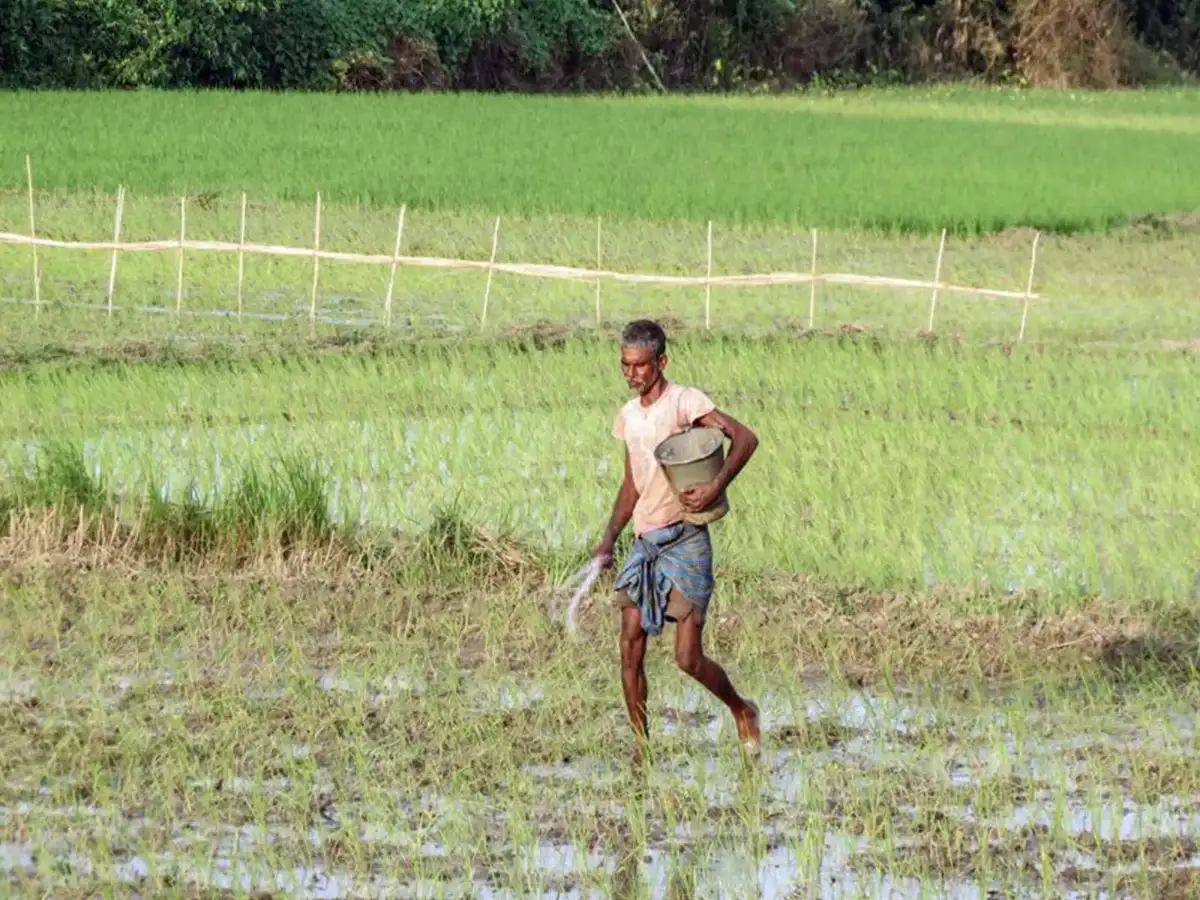
The southwest monsoon has staged a strong comeback in July after one of its weakest starts in recent years, sharply reducing India’s rainfall deficit and lifting optimism over the ongoing kharif season. However, experts caution that the recovery, while encouraging, doesn’t eliminate the risks associated with El Niño. They say that the next few weeks will be crucial for crop development and overall agricultural output.
Following above-normal rainfall during the first week of July, rainfall deficit in the country narrowed to about 12% as of July 9 from nearly 40% at the end of June, as per India Meteorological Department.
The government on Tuesday reviewed the monsoon situation in the country at a high-level meeting, chaired by P.K. Mishra, Principal Secretary to the Prime Minister, where ministries were directed to prepare district-level contingency plans to deal with any adverse impact of El Niño and prolonged monsoon weakness.
While the narrowing rainfall deficit has eased immediate concerns, experts say it is far too early to conclude that El Niño’s influence has weakened. Agricultural policy expert Devinder Sharma says El Nino has only begun to develop and is expected to strengthen through July and August, with its strongest effects likely to be visible during October and November. “It is too early to conclude that the impact of El Niño is weakening,” he says.
Sharma says that rainfall averages alone don’t determine agricultural outcomes. “What matters is where the rain falls, whether it is evenly distributed, and whether it arrives during critical crop growth stages.”
The early rainfall deficit has already affected sowing in many regions, he says, while warning against complacency simply due to the improvement in national rainfall numbers.
The government earlier this week reported that the number of rainfall-deficient districts has declined from 262 to 178 after widespread rains across several parts of the country. Kharif sowing is just over 20% behind last year’s figure due to June’s prolonged dry spell. The planted area stands at 35.09 million hectares compared to 44.28 million hectares a year ago. The area under paddy was down by roughly 13%, cotton by around 23%, and oilseeds close to 39%.
Meanwhile, the global weather agencies, including the World Meteorological Organisation, continue to warn about the potential impacts of El Niño on weather patterns across the world, reinforcing the need for continued vigilance.
Rainfall status (weak and season)