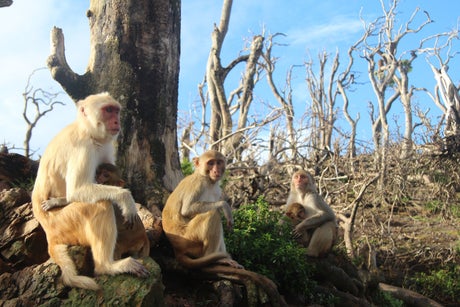
Monkeys living on an island in Puerto Rico became more tolerant and widened their friendship circles after a devastating hurricane struck in 2017, researchers have found.
Cayo Santiago, a place also known as “Monkey Island”, was severely hit by Hurricane Maria four years ago, a disaster that killed more than 3,000 people in the US territory.
In the aftermath of the storm, scientists from the US and UK noticed that rhesus macaques in Cayo Santiago transformed their social networks, despite the loss of two thirds of green vegetation meaning resources were more limited than they were before.
By observing the animals’ proximity and grooming habits, the researchers discovered that the monkeys - especially those who were previously socially isolated - made new friends.
“We expected the monkeys would use their closest allies to cope with the ecological devastation of the hurricane and so would invest in their existing relationships,” said Professor Lauren Brent.
Prof Brent, an academic at the University of Exeter, noted the team’s surprise at the level of tolerance the monkeys showed each other.
“These were not always active interactions – tolerance might mean simply sharing a shady place to sit. Our closest friends can give us many things. But sometimes what we need is a social network where everyone is just friendly enough,” she added.
The study, published in the journal Current Biology, also revealed that macaques typically chose the path of least resistance, befriending the friends of their friends.
Camille Testard, the lead author from the University of Pennsylvania, said the research showed that these animals “dynamically respond to major events by tweaking the composition of their social networks”.
The group of academics next want to look into the long-term effects of forming new social relationships in the midst of extreme change.
Michael Platt, a professor at the University of Pennsylvania, said that generous donations had enabled them to get their research back up and running quickly after the hurricane destroyed their infrastructure on Monkey Island.
“That put us in a unique position to study how the monkeys’ behaviour may have changed in response to a natural disaster, the sort that’s becoming more common and intense as a result of climate change,” he said.