Support truly
independent journalism
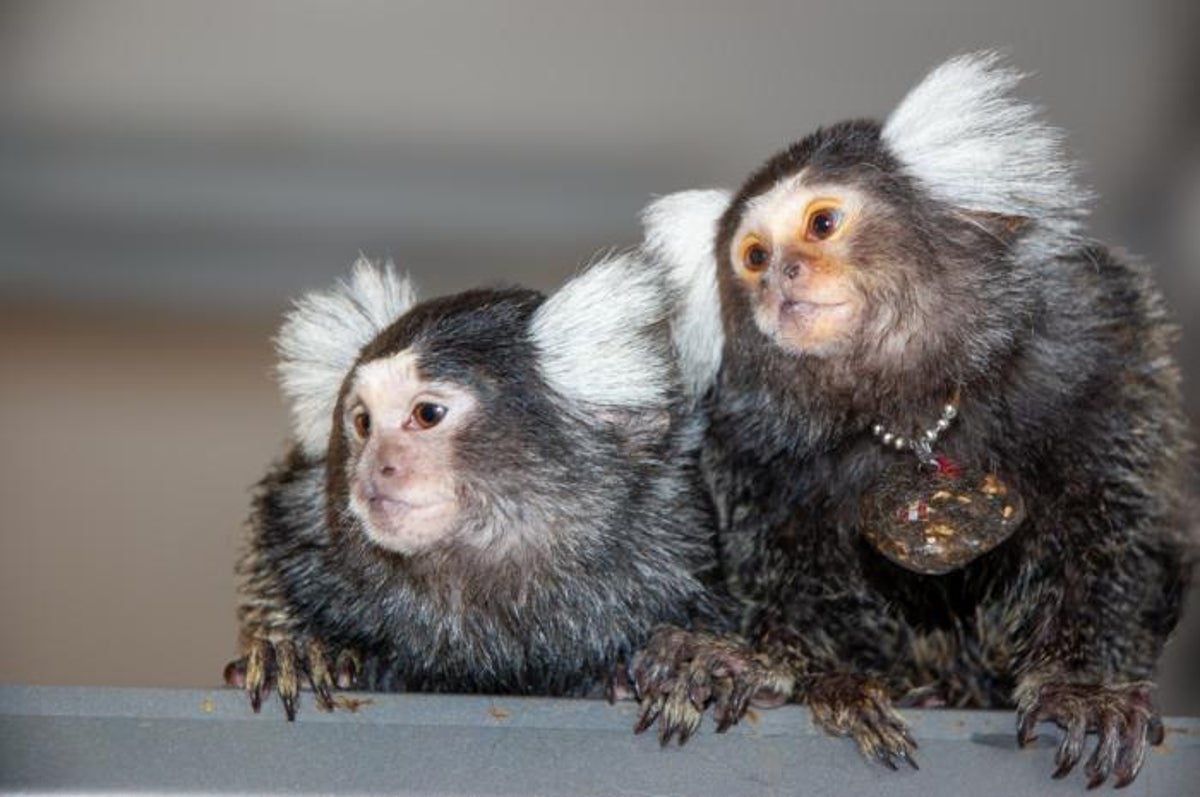
Marmoset monkeys have been found to use specific calls to name each other, a behaviour previously thought to exist only in humans, dolphins and elephants.
Naming other individuals in a population is a highly advanced cognitive ability seen in only a select group of social animals, with even some of the closest evolutionary relatives of humans such as non-human primates lacking it altogether.
Now, scientists have made a groundbreaking discovery that marmoset monkeys are part of this select list of only four animals.
The monkeys appear to use specific calls, called phee-calls, to name each other, according to the study which was published on Thursday in the journal Science.
Scientists recorded natural conversations between pairs of marmosets as well as interactions between monkeys and a computer system. The monkeys tended to use phee-calls to address specific individuals.
They also found a marmoset could discern when a call was directed at it, and responded more accurately when it was.
“These calls are not just used for self-localisation, as previously thought. Marmosets use these specific calls to label and address specific individuals,” study co-author David Omer from Hebrew University said.
Family members within a marmoset group were found using similar vocal labels to address different individuals as well as similar sound features to code different names.
This appears similar to the use of names and dialects in humans, researchers said.
Name learning appears to happen even among adult marmosets who are not related by blood.
Scientists said marmosets may be learning both vocal labels and dialects from other members of their family group.
They suspect that the unique behaviour may have evolved to help marmosets stay connected in their dense rainforest habitat where visibility is often limited.
Having names for each other may be helping them maintain their social bonds and keep the group cohesive.
“Marmosets live in small monogamous family groups and take care of their young together, much like humans do,” Dr Omer said.
“These similarities suggest that they faced comparable evolutionary social challenges to our early pre-linguistic ancestors, which might have led them to develop similar communicating methods.”