
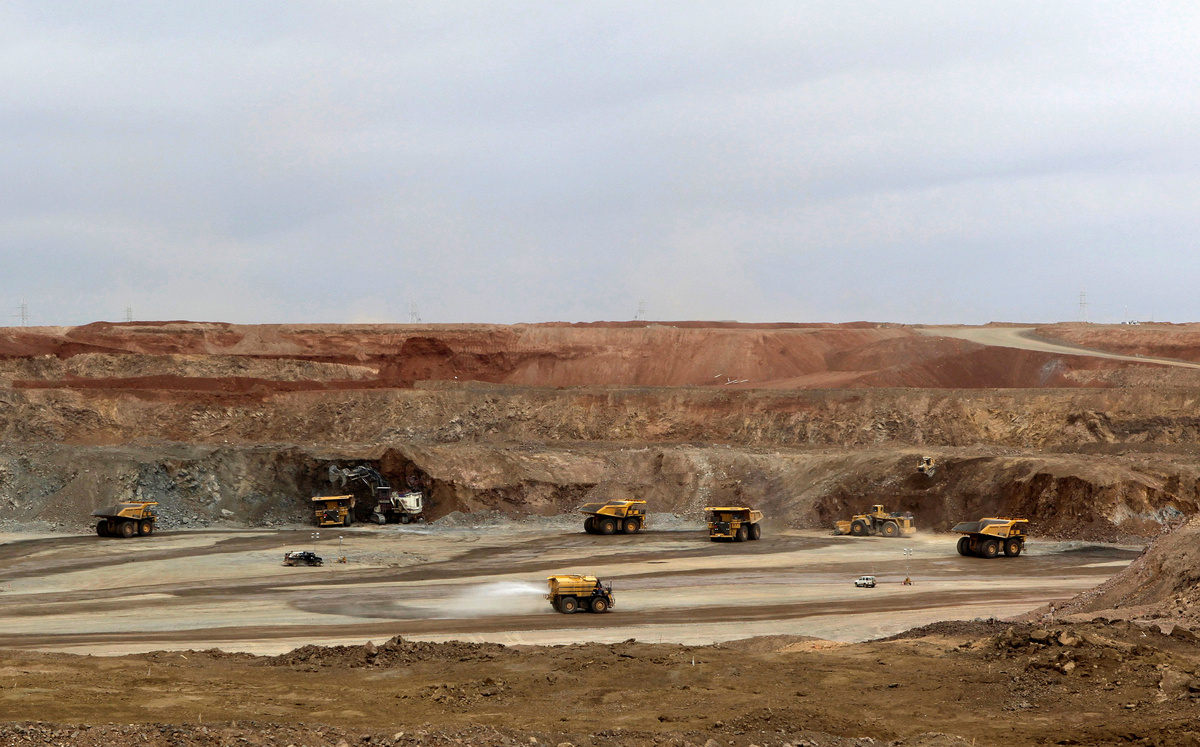
Mongolia's government is seeking to cancel a deal with miner Rio Tinto to expand the Oyu Tolgoi copper mine in the Gobi Desert and replace it with a new agreement, the Financial Times reported.
The government has asked the Anglo-Australian mining giant whether it was prepared to mutually terminate the existing expansion plan and come to a new agreement that offers better terms for the project, rather than acting unilaterally and risking future foreign investment, the FT said. It cited unnamed sources with knowledge of the situation.
Rio Tinto declined to comment on the matter when contacted by Reuters.
The mine is one of the world's largest-known copper and gold deposits. The government holds a 34% stake in the $6.75 billion project, while Rio Tinto-controlled Turquoise Hill owns the remainder.
The underground mine expansion has been severely delayed by a dispute over funding as the Mongolian government seeks a bigger portion of the profits, even as costs have ballooned due to difficult geology.
Ulaanbaatar has previously told the miner it was concerned that the economic benefits of developing the mine have been eroded due to the significant increase in costs.
The recent appointment of a Mongolian national, Bold Baatar, as Rio's chief executive of copper operations, is widely seen as an attempt by the miner to improve its relationship with the government and progress talks on the project.
Baatar has vowed to discuss the plans with the new government and work towards a resolution.
Oyun-Erdene Luvsannamsrai took over as the Mongolian prime minister in late January, after protests in the capital over the government's handling of the COVID-19 pandemic led to the resignation of his predecessor.
(Reporting by Derek Francis and Rashmi Ashok in Bengaluru; Additonal reporting by Helen Reid in Johannesburg; Editing by Richard Pullin and Susan Fenton)




.png?w=600)








