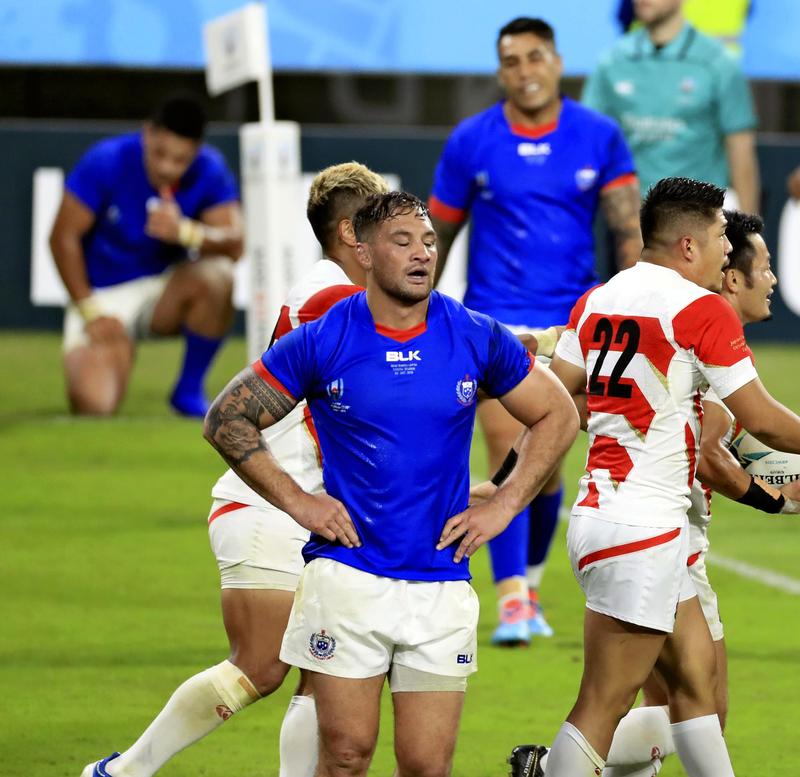
The three South Pacific nations of Fiji, Samoa and Tonga have all bowed out at the pool stage of the Rugby World Cup, the third straight tournament in which they have done so. Despite featuring talented players including Fiji's Leone Nakarawa, who was named European Player of the Year in 2018, these island nations have not achieved the results they desire, for reasons including a lack of money.
Despite being Tier 2 nations, these teams are known for their physically imposing players and, when on form, have toppled some of rugby's powerhouses. Fiji and Samoa have both reached the Rugby World Cup quarterfinals twice.
One factor behind their disappointing results in recent years has been that many players have moved to wealthy European clubs since the sport went professional in 1995. A lack of funds and other reasons have made it difficult for the governing bodies in Fiji, Samoa and Tonga to bring their best players together and continually strengthen their national teams.
In many cases, players who have been away from their homeland for many years or grew up elsewhere have chosen to represent the nation or territory in which they now live. For example, Japan's squad at this year's Rugby World Cup includes players born in Tonga and Samoa.
France's Top 14, one of the Northern Hemisphere's leading rugby competitions, and other leagues are being played even during the Rugby World Cup. Tonga head coach Toutai Kefu lamented that there were players he could not bring to Japan for various reasons.
In recent years, World Rugby, the sport's international governing body, has supported efforts by the three nations to assemble their players for international matches, such as by assisting with travel costs. About 20 million pounds (about 2.8 billion yen) is set to be given to the three nations from 2016 to 2019, an increase of about 20 percent from the 2011-15 period, as part of efforts to help them unleash their underlying potential.
Fiji coach John McKee said he stays in close contact with overseas players who qualify to represent Fiji, and that careful efforts are being made to develop domestic players aged 20 or younger.
Although the three island nations likely will face a difficult path in the years ahead, administrators and other officials affiliated with these teams have certainly not thrown in the towel.
Read more from The Japan News at https://japannews.yomiuri.co.jp/