James Connor was just two years away from his planned retirement when he received the bombshell news that he would be losing more than 60% of his expected pension at a stroke.
Connor had spent years carefully planning for a comfortable retirement, and had been on course to receive £69,000 a year. But a few weeks ago he learned he will now get £26,500 a year. What’s more, the tax-free lump sum he had earmarked to pay off his £325,000 mortgage will also be just a fraction of what he had been anticipating.
Meanwhile, father-of-three Dave Beeston has been told his pension will be slashed in half. He had been set to receive £51,000 a year but, like Connor, he is now in line for £26,500. Beeston is being forced to consider selling his family home and working for another 12 years to try to make up the shortfall.
Another father-of-three, Derek Knightley, had been planning to use his pension cash to help his children get on the property ladder and pay off his mortgage – but that was before he discovered he faces losing out on an estimated £400,000 over the course of his retirement. Knightley had been in line for a projected pension of £47,000 a year but, like the other two, he is having to get used to the fact that this will be slashed to more like £26,500 a year.
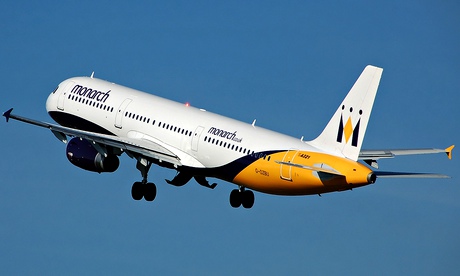
All three men work for the same company – the airline Monarch – and have discovered to their cost that there are still situations where workers can, through no fault of their own, end up having a sizeable chunk of their company pension entitlement snatched away.
Connor, Beeston and Knightley are among 70 Monarch pilots who have had their retirement plans wrecked because of a recent deal to offload the company’s pension scheme on to the Pension Protection Fund (PPF). This is a compensation scheme set up by the government to bail people out if their employer goes bust – though in this case, Monarch has not gone out of business.
The PPF protects members of final-salary company pension schemes and was set up in 2005 after a string of firms went belly-up, leaving little or no money in the pot to pay promised retirement benefits. But while the PPF has, over the past decade, provided some much-needed security for millions of workers, there are limits on the amounts of compensation it is able to pay out. These “compensation caps” vary depending on your age – basically, the younger you are, the lower the cap.
For those workers yet to retire, the most you can currently receive from the PPF at age 65 is £32,761 a year. At age 55 it’s £26,572 a year. Anyone who was expecting to receive more than their cap amount will lose everything above that level. (Those who have already retired usually receive 100% of their pension.)
So why are the Monarch pilots losing so much money – as much as 60% of what they were expecting? It’s to do with a number of things. Their normal retirement age is 55, and, added to that, senior pilots often earn six-figure sums, with many paying significant amounts into their pensions. It is also understood that the Monarch pension scheme was, until restrictions were imposed on it some time ago, a very generous arrangement, providing 1/50th of final salary for each year of service.
The other question many people will have is: why was the Monarch scheme put into the PPF?
Monarch was owned by the billionaire Mantegazza family from Switzerland (the head of the family, Sergio Mantegazza, is said by Forbes to be worth $4.3bn) but after bailing the company out several times, they are said to have lost patience and sold it in October to investment firm Greybull Capital. The deal involved a radical shake-up of Monarch, and permission was given for the firm’s pension scheme – which was in shortfall to the tune of £660m – to be put into the PPF on the grounds that without the restructuring, the company was going to go bust.
The UK pilots’ trade union, Balpa, is – as you might expect – very unhappy. It says most of the pilots affected by the PPF compensation caps will have their pensions restricted to a maximum of £26,572.
On top of this, the pilots will lose more going forward because the PPF only offers limited protection against inflation – the pensions that it pays out only rise by a maximum of 2.5% a year, and any payments relating to pre-1997 service receive zero inflation-proofing and so will never increase.
Connor, 53, has flown for Monarch for nearly 30 years and told Guardian Money: “I’m going from [an expected pension at 55 of] £69,000 to £26,500.” His pension adviser had told him he was in line for a tax-free lump sum of around £310,000, though he will now be entitled to receive just a fraction of that. “That tax-free lump sum basically formed my future financial planning – I don’t have any other savings. My mortgage is about £325,000, and now I don’t think I’ll ever be able to pay it off.”
He adds: “I’m 53 years old, and the impact on my financial planning is devastating. I’m seriously considering a move to the far east to make some money. I have two young boys, and any thoughts I may have had of helping them in the future with education or training have pretty much disappeared. I’ll certainly be telling my kids: ‘Don’t pay into a pension – put your money into property or whatever.’ ”
Beeston, 52, a Monarch pilot for more than 20 years, was two-and-a-half years away from his planned retirement when he suffered the bombshell blow. As well as seeing his expected pension halved, he has been advised that the tax-free lump sum he was expecting is likely to be slashed from £280,000 to half that amount or less. “It’s a financial catastrophe, and it’s grossly unfair,” he says.
Meanwhile, Knightley, 51, says: “I’m still in a state of shock about it, I suppose – it’s like a grieving process. My pension is something I’ve paid a lot into over the years, and I feel that it’s something I was promised. I was paying around £1,000 per month from my salary, excluding the company contribution, and I’ve always regarded my pension as deferred pay.”
All the pilots have said the PPF compensation caps should be raised.
The PPF – which is funded by a levy on all UK final salary schemes – says the “vast majority” of people are not affected by the caps. It told us: “We welcome that we, along with the Pensions Regulator, were able to agree a deal with Monarch ... If the PPF were not here and able to step in, the 2,400 members of the pension scheme would receive much less than the compensation we provide.”
Monarch says an agreement was reached for its retirement investment plan to be put into the PPF. It told us: “Failure to reach this agreement would have resulted in Monarch no longer being able to continue trading and the likelihood of the plan passing to the PPF in any event. Payments under the plan are subject to PPF compensation rules and are therefore not decided by Monarch. The arrangements for the plan to pass to the PPF were agreed by the pension trustees, the PPF and the former shareholders.” It adds that 96% of the Monarch pilots represented by the union voted in favour of the restructuring plan.
• The three pilots’ names have been changed