Around 14% of South Africans don’t have electricity, according to statistics from the World Bank. Amid rising demand, even those connected to the grid face energy access problems, notably frequent power cuts.
“The demand for electricity is growing at a sustained rate in an environment where the development of the network of distribution cannot meet the demand,” says Giovanni Di Ielsi, who oversees retail business operations in South Africa for Enel Green Power, a subsidiary of energy multinational Enel.
The country is also heavily reliant on coal – around 90 per cent of its electricity comes from coal-fired power stations. It’s the twelfth largest emitter of CO2 globally, and number seven on the list of the biggest coal producers. All of which means it is no surprise that pressure is increasing to drive the country to a greener future.
“The Department of Energy has current set a target of introducing around 10,000 gigawatt hours of renewable energy by 2030,” explains Ayub Machiri, an electrical engineer and until recently a postgraduate student assistant at Tshwane University of Technology in Pretoria. “South Africa is [gradually becoming] an active participant in attempts to reducing carbon emissions.”
A policy brief drawn up by the Western Cape government, in collaboration with the African Futures Project, published in June, stressed that further intervention is needed to relieve the pressure on the strained electrical grid. It suggested that provinces should do more to embrace clean energy and encourage private uptake of smart technology such as home solar panels.
Enel Green Power wants to promote domestic photovoltaic (PV) distribution. “The idea is to offer a sustainable alternative that is cheaper and cleaner, by providing customers with residential PV systems, installation services – and financial services if needed,” says Di Ielsi.
Selling and installing home rooftop solar systems will need skilled workers – and the company has committed to training a local labour force skilled in PV technology. A programme of free courses, sponsored by Enel and delivered by the Master Artisan Academy, was launched in 2014 and has reached more than a thousand people in its first year.
The five-year programme is part of Enel’s social and economic empowerment commitments to South Africa. In partnership with NGOs Ubuntu and Amandla, the company is also running projects that support children’s education “from the cradle to career” and spread awareness of mother-to-child transmission of HIV. Enel Green Power is also implementing in partnership with the non-profit organisation Mothers to Mothers, a programme with a specific focus on the awareness of mother-to-child transmission of HIV, that will be developed in Limpopo Province.
Those in the first academic year of the domestic PV training programme were a mixture of electricians who wanted to acquire basic knowledge of how to install PV systems, sellers who wanted a better understanding of how to complete transactions, and entrepreneurs, including owners of small companies, who were considering investing in PV technology but were unsure how to go about it.
Feedback so far has been positive – and it seems that there is a growing demand for PV training.
“I’d be interested in enrolling for the free courses offered on entrepreneurship training,” says Machiri, who now works for an engineering consultancy. “Such courses would enable me to improve my knowledge about solar business models that are available. And, together with my existing knowledge on renewable systems, it would provide me with a complete understanding on implementation possibilities.”
The more people like Machiri that Enel is able to reach with its training, the more value it will bring to the company’s business as it seeks to expand the PV retail market across South Africa, argues Di Ielsi, who was responsible for designing the course.
This is what is referred to as a shared value approach: investing in training creates social benefits and also a pool of skilled workers that can serve a local network for Enel – selling and delivering PV technology to households.
And having mastered the art of completing a transaction and installing a system, the hope is that workers will be more likely to have success executing installations at a higher standard and with a high customer satisfaction rate.
The benefits for workers will be especially large if they also decide to look for their own solar contracts and installation work.
“The training will allow electricians [and the like] to take a step forward in a business that is becoming more and more important,” says Di Ielsi. “It will boost the chance for them to find job opportunities and increase their personal income.”
Enel is not the only organisation delivering solar training in South Africa. Kinesh Chetty, is director and country manager of Maxx Solar Academy, a non-profit training centre that runs solar courses in Cape Town, Durban and Johannesburg. “It is, in our mind, a brilliant way to get rid of dirty jobs that harm health and the planet and develop a movement towards the utilisation of a free and abundant resource [sunlight],” Chetty says.
His academy has seen more than 1,500 engineers, architects and craftsmen go through its skills workshops. “Training provides entrepreneurs with the capacity, skills, knowledge and materials to leverage off and join one of the fastest growing global industries.”
Chetty highlights the advantages of PV technology as the future of renewable energy. It is not only “one of the cheapest ways to generate electricity – cheaper than coal fired power stations” – but it’s “moving out of the ‘nice to have’ category into the ‘essential intervention’ category”. Residential PV systems will be particularly important in bringing power those who live off-grid – power that is vital for development, because “without access to energy, economic growth is stunted,” he adds.
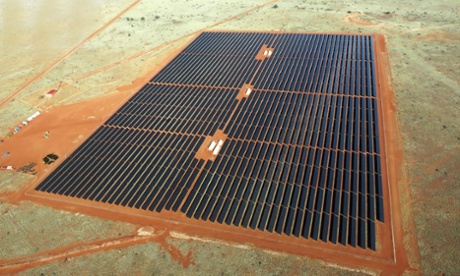
Meanwhile, Enel is also expanding solar power on a much larger scale in South Africa. It recently began construction of four large PV and two large wind power plants, generating up to 513MW in total. It has also been awarded the rights to build five other wind farms adding up to a further 705MW. It will supply the renewable energy these produce to Eskom, the state-owned electricity provider. The company is already supplying Eskom from its 10MW PV plant in Upington, Northern Cape province.
But it is the projects to develop small-scale PV technology that look likely to have the biggest impact in educating local people about the benefits of renewables. Di Ielsi predicts that a new labour force skilled in residential PV installations, and the direct contact between the installer-cum-seller and customer, will help to spread awareness of green energy in South Africa and a sense of community empowerment.
“It allows them [all] to be an active part in the process of modernisation that South Africa is experiencing,” he says.
Content on this page is paid for and produced to a brief agreed with Enel, sponsor of the energy access hub on the Guardian Global Development Professionals Network.