Parenting is extremely stressful as it is. But what do you do when your child’s behavior becomes dangerous—to you, your family, and even themselves?
One woman recently took to TikTok to explain that she had to remove her 9-year-old daughter, who struggles with mental illness, from their household for the safety of everyone involved. The child would injure her siblings, hurt the family dog, and once even nearly caused a car accident. It was, by all accounts, a lot to handle.
Her video ended up getting a divided reaction. Some viewers sympathized with her decision, while others felt that separating from a child should never be an option.
Scroll down to hear her side of the story and share your thoughts.
The woman’s daughter, who suffers from mental illness, was putting both herself and her family in danger with her behavior
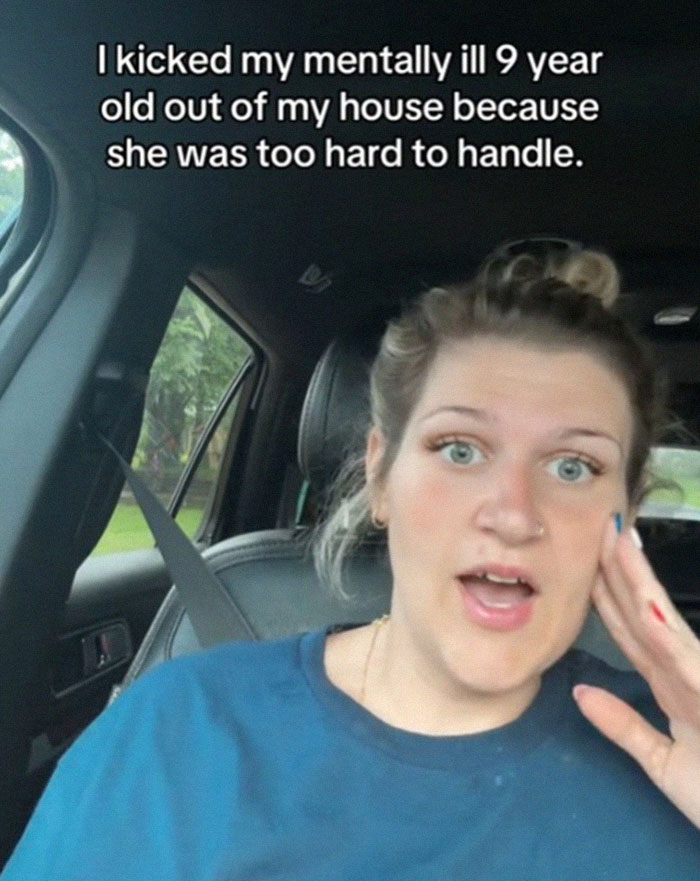
So, the mom made the difficult decision to remove her from the household



Image credits: meggles2446
Watch the full video below
@meggles2446♬ original sound – meggles
Up to 77% of parents of children with complex care needs experience burnout
When people decide to have children, they usually prepare themselves for the common struggles of parenthood. Sleepless nights, tantrums, school troubles, teenage rebellion. It’s all part of what most expect. And even then, it’s incredibly hard.
But for parents raising a child with a mental illness, the challenges can go far beyond what’s considered typical. These parents often face overwhelming emotional, physical, and logistical stress.
In fact, research shows that up to 77% of parents of children with complex care needs experience burnout—a rate significantly higher than that of parents with neurotypical children.
Depending on the child’s condition, parenting may involve constant monitoring, intensive accommodations, and navigating situations where the child could hurt themselves or others. It’s no wonder many parents feel pushed to their limit.
Experts emphasize that while mental health treatments often focus on the child, the well-being of the parent is just as important, but too often overlooked. According to CBS News, researchers and pediatric mental health professionals argue that therapies should support the entire family, not just the child.
“I have so many parents sit across from me on the couch and cry,” Danielle Martinez, a behavioral health specialist at Driscoll Children’s Hospital in Corpus Christi, told CBS. “The hospital is creating peer support groups, to launch by the fall, for family members whose children are under the facility’s care.”
“They felt so alone, felt like bad parents, felt like giving up,” she added, “and then felt guilty for wanting to give up.”
And when a parent’s physical or mental health begins to break down, the consequences can ripple outward. It not only affects the parent, it also limits their ability to manage their child’s condition and offer the support that’s so desperately needed.
“Parents are a kid’s most important resource and need to be a concern,” explained Mary Ann McCabe, a member of the board of directors at the American Psychological Association, an associate clinical professor of pediatrics at the George Washington University School of Medicine, and a psychologist in independent clinical practice.
It’s clear that this is a deeply complex and emotional issue. Parents of children with mental illness aren’t just dealing with a difficult diagnosis, they’re often carrying the weight of it alone. That’s why care and healing need to extend to the whole family. Because the toll it takes can truly be heartbreaking.
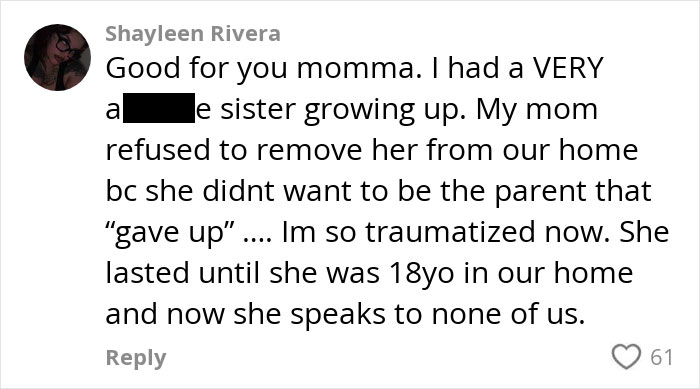
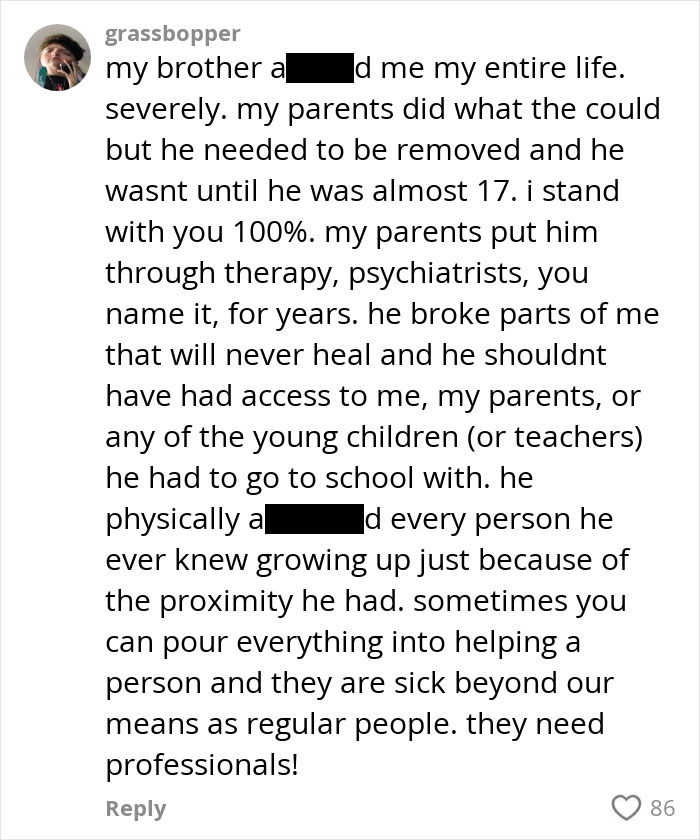
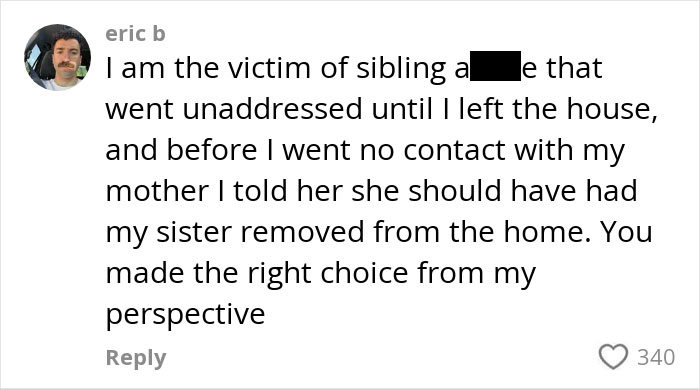
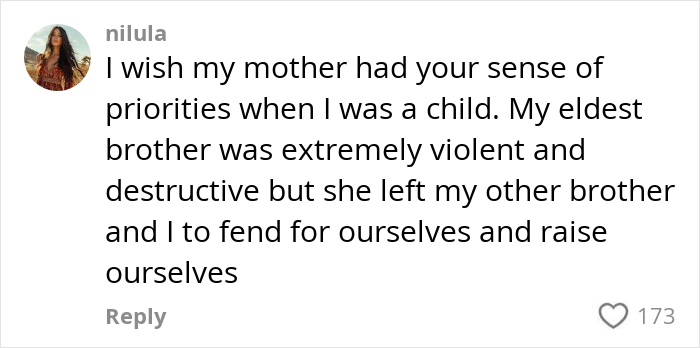
Plenty of people sympathized with the woman and supported her choice









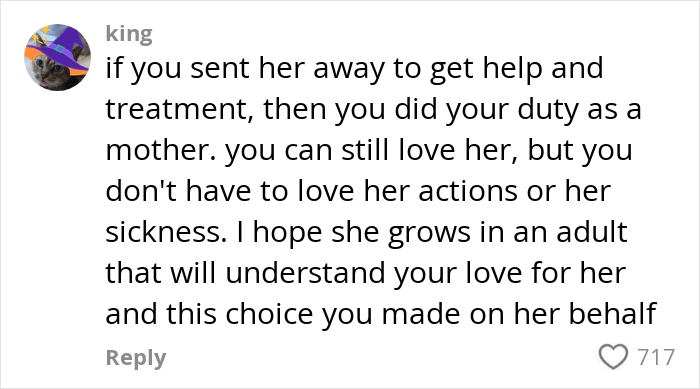

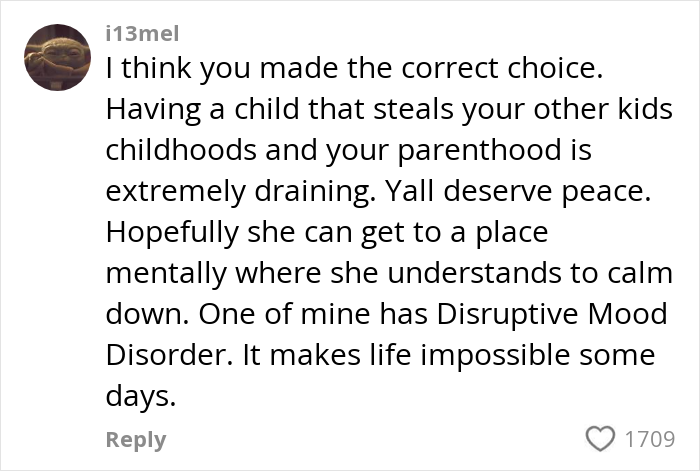



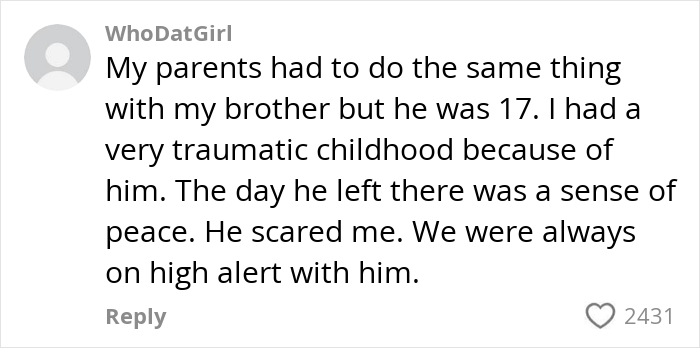
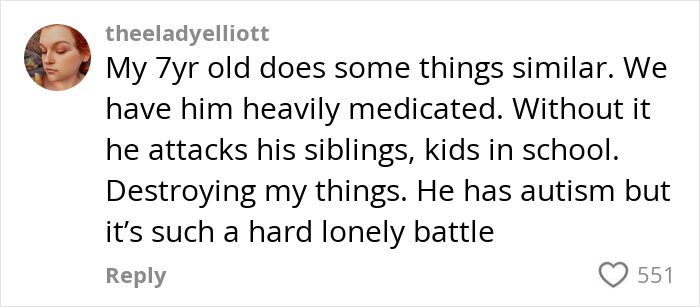
Some shared similar experiences with difficult children

Others, however, believed the situation could have been handled differently