Earlier this month, the Guardian launched Panic!, a Create survey into diversity in the arts, culture and creative industries. In partnership with Goldsmiths and others, the findings will form the backbone of a 10-day series of events, trying to understand whether British culture is increasingly dominated by the wealthy, the white and the male.
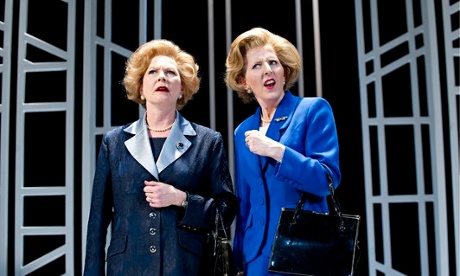
A number of successful Goldsmiths alumni have filled in the survey, with their responses to be published on the Guardian’s website – the first is Moira Buffini. She is one of the UK’s leading playwrights and screenwriters, having written the Olivier-nominated Dinner and the recent Handbagged, adapted Jane Eyre and Tamara Drewe for film, and written the book for the Damon Albarn musical wonder.land.
Her edited responses are below; if you want to take the survey yourself, click here.
What is your highest achieved level of education?
PhD/DPhil/other doctoral qualification; Undergraduate degree (eg BA, BSc, BFA).
What was your course title?
BA Joint Honours English and Drama.
Tell us a little about your decision to enter your current occupation in the cultural and creative industries. And if this isn’t your first occupation, tell us about that too.
My first occupation was acting. My journey into dramatic writing was a gradual one. Both careers were at first financed with other jobs; waitressing, teaching, temping etc, and my living costs were low. My mum couldn’t help me out as she had no money herself. She bought me little treats and gave me 100% support emotionally. I now write plays and films and am making a very good living, as the film industry pays its writers well. But the money was extremely slow to come – and for many writers in the theatre, it never comes at all. It can take months and years to write a good play. The commissioning money doesn’t even cover the childcare, which is an added problem, especially for female writers.
Is there anything else which you think is important in getting ahead in your industry?
Imagination. Education. Tenacity. Passion. Confidence. A hunger for knowledge. A questioning nature. Compassion. A support network of friends and family. And enough endurance for long slow climb to financial independence.

Looking at your creative occupation as a whole, how important do you think each of these is in getting ahead? On a five point scale from ‘essential’ to ‘not important at all’.
Coming from a wealthy family: Not important at all
Having well-educated parents: Not very important
Being well-educated: Very important
Having ambition: Very important
Hard work: Essential
Knowing the right people: Not very important
Your talent: Very important
Your ethnic group: Can’t choose
Your class: Can’t choose
Your religion: Can’t choose
Your gender: Can’t choose
What kind of work did your first parent/caregiver do?
Modern professional occupations such as: teacher – nurse – physiotherapist – social worker – welfare officer – artist – musician – police officer (sergeant or above) – software designer.
What was this parent’s highest achieved level of education?
Apprenticeship.
What kind of work did your other parent or caregiver do when you were around 14?
Not applicable – only one parent/caregiver.
Can you give an example of art or culture that you love?
William Blake’s drawings and paintings at Tate Britain and JMW Turner’s paintings. These are old friends. I have been going to see them for 30 years.
Where do you see yourself in five years?
I would have liked to have written and directed an original screenplay and at least one more play of scale for a large theatre.
Please tell us more broadly about your experience in your industry. Is there anything else you want to tell us?
I can only talk about my own experience. I am a creative writer because of who I am, and because of the education that I got, which was free. I didn’t earn any money until I was about 35, when I had children and every priority changed. At the end of the day, experience makes a writer, not money, class, gender, religion or race. But time is also essential. You have to make mistakes and get good at your craft and no one pays you for that. I’ll repeat: TIME IS ESSENTIAL. And money buys time. It has always been easier for people with money. But it used to be possible for people without. I lived very cheaply as a student and I left college with negligible debts – unheard of now.