A prison sentence, it is argued quite rightly, should serve a purpose beyond the obvious. Of course, the primary reason for a custodial sentence is punishment for a crime committed. But then to that can be added further elements. There is the idea that society seeks retribution or vengeance.
Then, in some cases, comes the need to protect the public. A sense that a sentence might act as a deterrent to others committing an offence is a fourth consideration. Finally, often disregarded, comes education and rehabilitation. The vast majority of offenders are released eventually, most sooner rather than later, and it serves no purpose simply to eject them through the prison gates without a further thought to their well-being, or that of the society into which they are thrust.
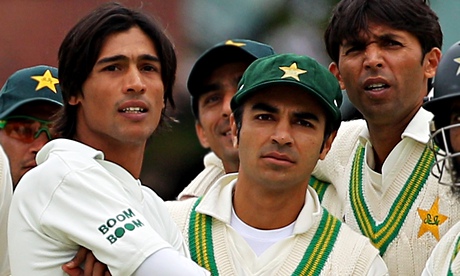
Along with Salman Butt, the Pakistani pace bowlers Mohammad Asif and the teenager Mohammad Amir received prison sentences for their part in the 2010 spot-fixing scam during the Lord’s Test against England. Butt, the suave and hitherto impressive Pakistan captain at the time, but the man who inveigled his team-mates into wrong-doing, received 30 months, Asif a year, and Amir six months with all released early, Amir having served half of his sentence. Additionally, each received a five-year ban from cricket in all its aspects. In case memories need jogging, the offence involved the deliberate bowling of no-balls (not in itself an offence except against the spirit of the game: pace bowlers have often ’gone through the crease’ to soften up batsmen) to order at a specific time. It was done not for direct financial gain, certainly of the bowlers anyway, but as a result of a businessman, caught up in a newspaper sting, demonstrating that he could organise such things in future: a bragging shopwindow in other words.
At his sentencing, Amir was described by the judge Mr Justice Cooke, as “unsophisticated, uneducated and impressionable” and “readily leaned on by others”. He was 18 at the time of the offence. I have no beef with the treatment of Butt, who used his position of considerable influence to lure others into an offence: there is little doubt he would have done so again in future. Asif too had been around for too long not to understand fully the nature of what was going on. Amir, though, I see as different, and his status as one of the world’s most promising young cricketers an irrelevance.
We still don’t really know what underlying threats may have dragged him into it all but he was certainly a vulnerable junior in a very hierarchical environment. Even the unsophisticated nature of the no-ball delivered, missing the crease by a massive margin, was at odds with that of Asif. Reduced as it was, his sentence was harsh.
But then there is the other sentence which in its way may have proved considerably more punitive than the three months he spent in Portland young offenders’ institute. A five-year ban, effectively the same as Butt, half of whose 10 years was suspended, has removed the formative years of his career and deprived someone from a very humble background of the one thing in his life that appeared to have any real meaning.
I am not suggesting that the offence should not be recognised, but rather pointing out that three of the tenets of a custodial sentence – punishment, retribution and deterrent – are similarly being served in the ban, but hitherto there has been nothing in the way of acknowledging the need for rehabilitation.
Except that now, thanks to the reorganisation of the ICC’s Anti Corruption and Security Unit (ACSU), and amendments to its code, there might be. Already the chief executive officer of the ICC, Dave Richardson, has flagged the possibility that offenders such as Amir, given certain conditions, could be eligible not so much to have the ban lifted in toto but rather to allow a period of reintegration into the game through domestic cricket. It makes sense. The idea that a cricketer could one day be forbidden to participate in any form of the game and the next be eligible to play for their country doesn’t wash. In effect, the ban would be extended by that period of time it took to rediscover the game, and regain fitness. “There is a provision now in the revised code,” says Richardson, “which will allow a player who has been banned internationally to play domestic cricket a certain period up from his ban coming to an end.” This with certain conditions having been met.
At last week’s ICC meeting in Dubai, things were firmed up. “When exercising his discretionary powers in this regard,” said the ICC chairman, N Srinivasan, “the chairman of the ACSU will consider a number of factors, including the level of remorse shown by the player, his/her cooperation with the ACSU’s education programme and/or if the player has helped the ACSU by disclosing all information that, in turn, has helped it to enforce the anti-corruption code in respect of others engaged in corruption conduct.”
Already, back in August, the Pakistan Cricket Board made representations to try to get Amir released from the constraints in time for the forthcoming World Cup in February. That, as Amir himself acknowledges, is just not going to happen. But he does understand the debt he owes to the game, and his new position as an ambassador, if you will, for the whole issue of anti-corruption in the game.
“What I did was wrong and I got lost in all the fame and wealth,” Amir said recently. “I went down the wrong path.” That he did, but now he deserves to get back on the right one and to be helped in that. His ban is officially lifted in September of next year and, if he is allowed to play cricket in the interim, he might be there to torment England in the Emirates. I like to think we would all welcome that.