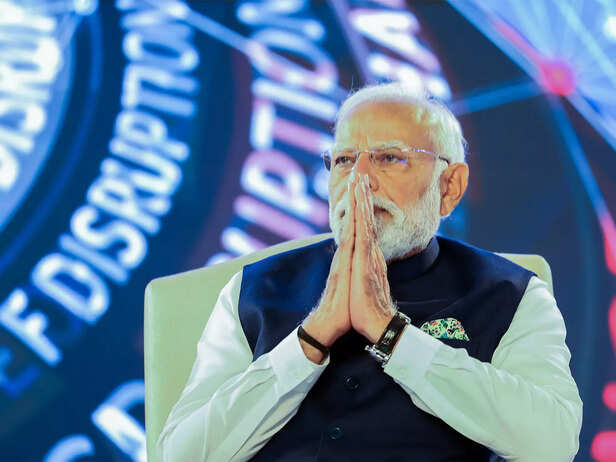
At the India AI Impact Summit 2026 in New Delhi, Prime Minister Narendra Modi laid out a set of guiding principles for artificial intelligence that reflect India’s human-first, inclusive, and ethical approach to the technology. Rather than seeing AI as just a new tech trend, Modi positioned it as a transformative force that must benefit society as a whole changing how we work, live, and collaborate globally.
1. Human-Centric AI Over Machine-Centric AI

Modi stressed that AI should not focus solely on algorithms and machines but on
amplifying human potential. He said AI must be
human-centric, meaning the technology should enhance human capabilities, help solve real social challenges, and improve quality of life - not replace people.
Instead of asking “what can AI do?”, Modi urged a shift to “what can humans achieve with AI today,” highlighting that the real value of the technology lies in its human impact.
2. Ethical and Moral-Based Deployment
One of the centrepieces of Modi’s speech was India’s MANAV Vision for AI where the first letter M stands for
Moral and Ethical Systems. According to this framework, AI must be rooted in ethical guidance, ensuring fairness, safety, and respect for human values.
This principle goes beyond innovation for innovation’s sake - it calls for frameworks that prevent misuse, mitigate harm, and build trust among users.
3. Transparent and Accountable Governance

The second pillar of the MANAV Vision -
Accountable Governance -underscores the need for clear rules, oversight, and responsible institutions that regulate AI development and deployment.
Modi said AI should operate under transparent accountability mechanisms that balance freedom to innovate with safeguards against unchecked risks. This means policies and governance must evolve alongside AI capabilities ensuring the tech remains aligned with public interest and democratic norms.
4. Inclusive and Democratised Access
A key takeaway from the summit was Modi’s emphasis that AI should be
accessible to all, not just technologists or big corporations. He stressed that AI must be
democratised, particularly for people in the
Global South, small businesses, and underserved communities, to ensure equitable benefits.
This principle reflects the idea that AI could become a tool for empowerment — expanding opportunities rather than creating new divides in society.
5. Upholding National Sovereignty and Reliability
Modi also highlighted
national sovereignty— meaning individuals and countries must retain rights over their data and AI systems must be
lawful, valid, and legitimate.
This principle emphasises data ownership, legal compliance, and trustworthiness — making sure AI respects national laws and individual rights while fostering innovation.