Let’s talk about the ultimate canvas: you. Specifically, your skin. The tattoo, once an underground whisper, is now screaming from every corner of the globe, no longer just a cool drawing but a bona fide art form. We’re not talking about simple sailors’ anchors anymore. This is a sophisticated aesthetic universe, spanning everything from hyper-realism to minimalist lines, a testament to its explosive growth. The market? It’s projected to hit north of $9 billion by 2034, proving that ink isn’t just a trend; it’s a permanent fixture in mainstream visual culture. Whether it’s a whisper-thin symbol on a wrist or a full-blown narrative across a back, the tattoo has become the ultimate personal statement, a living, breathing reflection of our wildly diverse global art scene.
But really, why are we all getting inked up? Our deep dive into what everyone’s searching for shows it’s way more than just wanting something pretty on your arm. For most, a tattoo is a seriously profound act of identity formation and self-expression—a permanent diary etched right onto your skin, telling tales of beliefs, passions, and the messy journey of life itself. It’s about empowerment, taking back your body, and projecting exactly who you want to be. And then there’s the commemoration, those powerful marks honoring loved ones or celebrating beating the odds, turning scars into stars. This isn’t just skin-deep design; it’s a rich psychological landscape, and combined with how much more accepting the world has become (and all those wild regional quirks), it’s clear: modern tattoo culture isn’t just art you wear. It’s about that primal human need to speak volumes, to remember, and to define yourself in a constantly shifting world.
No one captures this evolution quite like David Anton.
Anton, who works under the name David Anton, was born in Lima, Peru, and has cultivated a career that bridges the worlds of fine art and tattooing. He sees these as two complementary yet distinct practices. As a visual artist he explores the subconscious and the symbols found in dreams and visions. As a tattooist he helps others externalize and communicate what stirs within them. In both roles he serves as a kind of intermediary, translating inner experience into visible form.
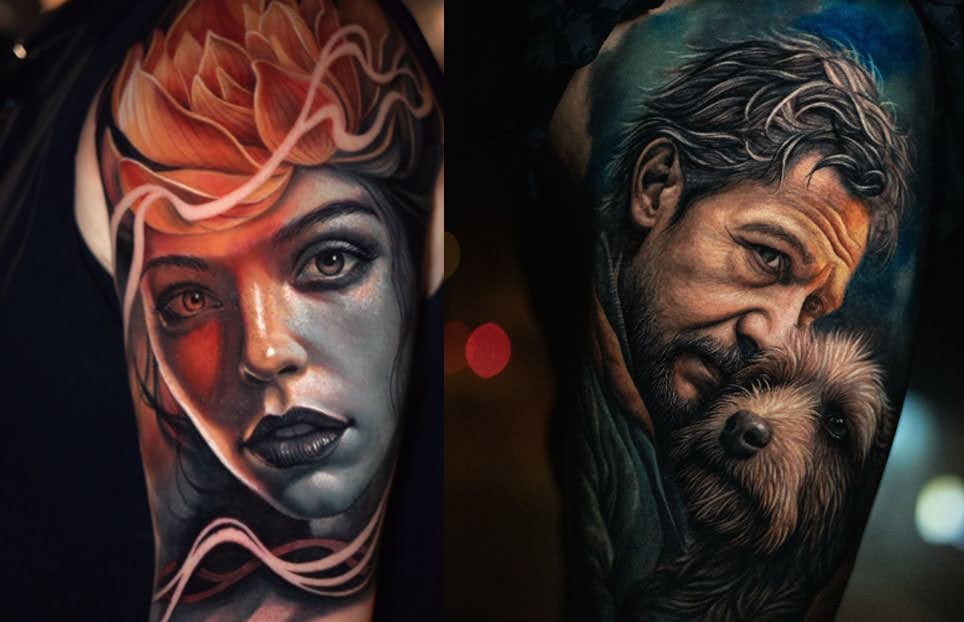
Anton received his formal education at the IEE Mercedes Indacochea Lozano, where he built a foundation in anatomy and classical painting. His early tattoo work displayed a mastery of color and black-and-gray realism. According to one art professor who has studied his work, these styles demand an intimate knowledge of depth, color theory, and value as well as technical execution without error. The professor observed that few tattooists reach the level of skill Anton demonstrates, creating images that appear almost photographic in their detail and texture.
For Anton, however, realism was just the opening act. Today, he is venturing into a synthesis of surrealism and abstraction, departing from the academic discipline that defined his earlier period. In his own words, he seeks to ascend to a higher level in his artistic trajectory by challenging himself to move beyond the expected.
What’s striking about Anton’s philosophy is his almost monastic focus on self-competition rather than rivalry. “Let inspiration find me working,” he likes to say. And work he does—endlessly. He is drawn to experimental projects that probe psychological themes. One of his most recent, a full leg piece examining maternal closeness, he describes as a dialogue between artist and client, telling a story of pure and innocent love. He speaks of it like a novelist speaks of a favorite chapter, eager to finish and share it with the world.
Anton’s creative process feels almost cinematic. He takes cues from everywhere: a color combination glimpsed on a passing truck, the play of light in a park at dusk, even the cadence of a conversation overheard on the subway. He believes inspiration is everywhere if you bother to look up from your phone long enough—and if you’re already at work when it arrives.
This discipline has carried him through what he calls “even the most catastrophic scenarios,” and it has also propelled him to a stature that most tattooists only dream about. Sponsored by elite brands like Radiant Colors Ink and Hi Tattoo Official—an honor reserved for a rare few—he has won awards at the Türkiye Art Festival and Inti Tattoo Expo in Peru, among others. Regularly booked as a headline artist at marquee conventions like Expo Tattoo Medellín, Lima Tattoo Convention, and the World of Ink Tattoo Convention, Anton has become something of an ambassador for the notion that tattooing isn’t just craft. It’s art.
Watching Anton at work, you get the sense of someone perfectly balanced between two poles: the demands of realism and its exacting technical perfection, and the risks of abstraction, where chaos and meaning swirl together. He moves fluidly between these extremes, his hands as steady as his vision is restless.
In a city—and a world—where tattoos can feel like just another accessory, Anton reminds us that they are something else entirely: a cultural practice, a record of experience, and a profoundly human form of art.