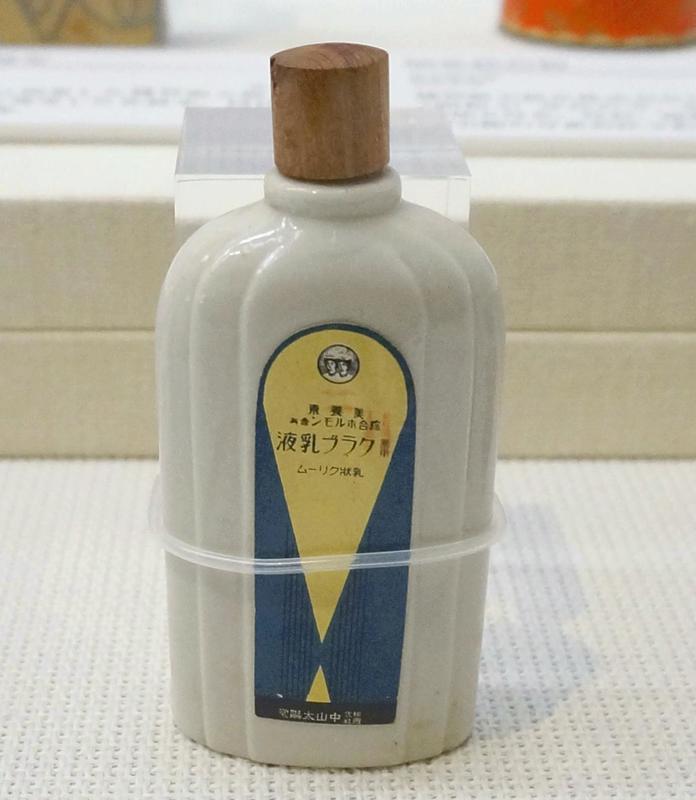
The National Museum of Japanese History in Sakura, Chiba Prefecture, is holding a special exhibition called "The Modern History of Soaps and Cosmetics," featuring roughly 90 items, ranging from packages and advertising posters, for cosmetics and shampoos that have been popular since the Meiji era. This exhibit will run until May 6, with the items on display on rotation.
One of the skills that made huge advances in the Meiji era is soapmaking. The alkalinity of the domestically produced soap of the time, made from bovine fat hardened by sodium hydroxide, easily caused skin to dry and become unhealthy, and was primarily used as a laundry detergent. Instead, people used an oil specifically made to get rid of dandruff.
In the 1930s, products like a shampoo made from a fine powder came onto the scene. However, as a result of wartime economic regulations, a heavy tax was levied on such commodities even after the war had ended and sales failed to improve.
The turning point for shampoo in Japan came comparatively recently, in the latter half of the 1960s, when indoor baths became commonplace.
People began bathing every day and products that gently cleansed the skin with neutral or mild formulas were introduced. In the latter half of the 1980s, there was a huge increase in the number of people who would wash their hair in the morning as well as in the evening. So, stores began to advertise products that wouldn't strip hair of its essential oils if used frequently.
Dental hygiene has also come a long way, and the exhibit illustrates the progress since the Edo period, when people used toothpicks to clean their teeth, to today's brushing culture.
When it comes to cosmetics, products such as oshiroi face powder were once well-favored in Japan. But upon entering the Showa era, as Hollywood movies increased in popularity, it became increasingly popular to make facial features more prominent with European style cosmetic items such as rouge and lipstick. However, during the war, these trends fell out of fashion, returning original Japanese styles to the forefront even in the early postwar years.
Then in 1959, European cosmetics suddenly burst into popularity when a foreign company launched a campaign called "Roman Pink," which used a pink lipstick as its forerunner.
The professor behind the planning of the museum's exhibition, Takahiro Aoki, explained: "Because this color shied away from the negative image associated with red lipstick, it was a huge hit. What was becoming more frequent wasn't high-pressure, door-to-door sales, but demonstrations given by beauticians. This was a big influence."
Japanese cosmetics makers, along with department stores and textile manufacturers, began a large-scale campaign that led to today's culture of creating fads centered on new products, he added.
Read more from The Japan News at https://japannews.yomiuri.co.jp/