India’s future military strength will depend not only on fighter aircraft and warships but also on artificial intelligence, cyber warfare, drones and resilient industrial systems, Air Marshal Ashutosh Dixit said at a defence conclave in Mumbai. He said modern warfare is changing rapidly and called on Micro, Small and Medium Enterprises (MSMEs) to become long-term partners in India’s national security framework. The remarks were made during a day-long conclave on ‘Atmanirbharta in Defence – Opportunities for MSMEs’ hosted by the Bramha Research Foundation with support from the Indian Navy in Mumbai.
Operation Sindoor highlighted indigenous defence capability
The conclave was held on the completion of one year of Operation Sindoor. Discussions during the event focused on how indigenous defence systems such as BrahMos, Akashteer and the Indianised Su-30MKI strengthened India’s operational preparedness and strategic confidence. Speakers at the event said Atmanirbharta in defence has moved beyond an economic goal and has become a strategic national priority.
Air Marshal Dixit stresses role of AI and cyber warfare
Delivering the inaugural keynote address, Air Marshal Dixit described Operation Sindoor as an example of India’s growing indigenous military capability and strategic resolve under the leadership of Prime Minister Narendra Modi. He said India’s defence exports have crossed ₹39,000 crore and noted that more than ₹5 lakh crore worth of recently approved defence projects are focused on Indian-made systems and domestic manufacturing.
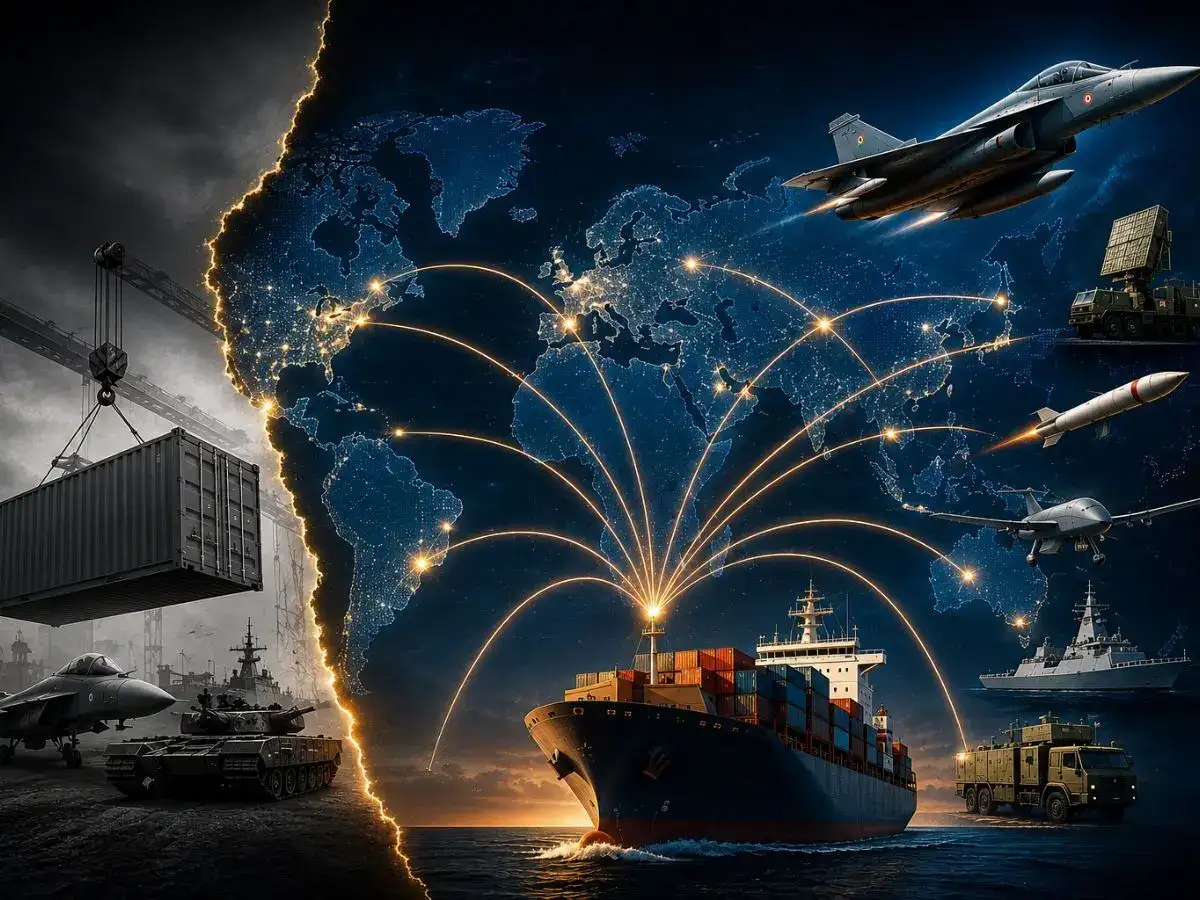
Reflecting on future warfare, Air Marshal Dixit said strategic superiority will increasingly depend on resilient supply chains, rapid innovation, scalable manufacturing and stronger MSME participation. He stated, “modern conflicts will be shaped not only by platforms such as fighter aircraft and warships, but also by AI, cyber warfare, autonomous systems, drones, advanced electronics and industrial resilience.”
Calling MSMEs the backbone of India’s future defence ecosystem, he urged them to move beyond the role of vendors and become long-term partners in national security.
MSMEs could benefit from ₹10 lakh crore opportunity
BRF Director Paresh Page said that in the current geopolitical environment, Atmanirbharta is no longer only an economic objective but a strategic national imperative. He said future warfare and national preparedness will increasingly depend on technology, innovation and indigenous capability across sectors such as AI, cyber security, drones, defence manufacturing and resilient supply chains.
Page also highlighted the sharp rise in India’s defence exports over the past decade and said it reflected India’s emergence as a growing global defence manufacturing hub under the leadership of Prime Minister Narendra Modi.
“He added that the vision of Atmanirbhar Bharat and India’s rapidly expanding defence ecosystem together represent nearly a ₹10 lakh crore business opportunity for MSMEs across manufacturing, aerospace, electronics, drones, shipbuilding, cyber technologies, MRO, AI and next-generation defence systems.”