Model soldiers and secret bunkers on Taiwan's front line with China
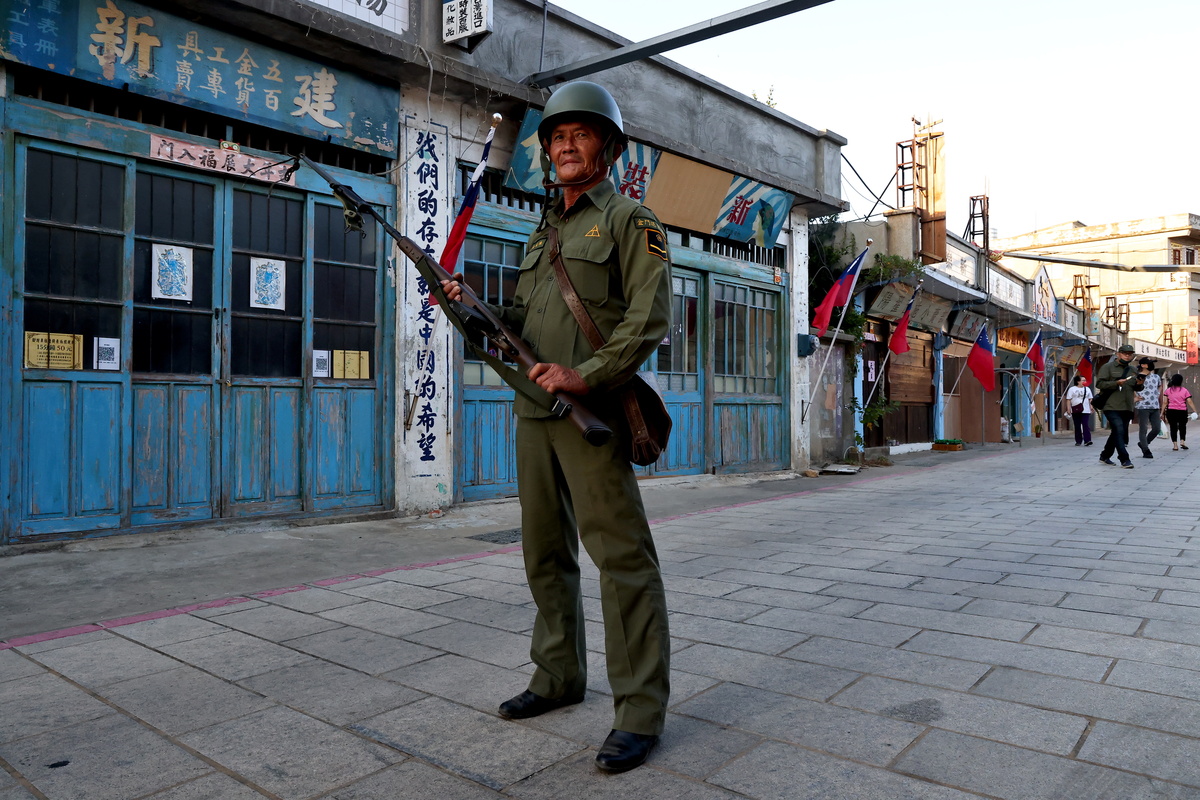
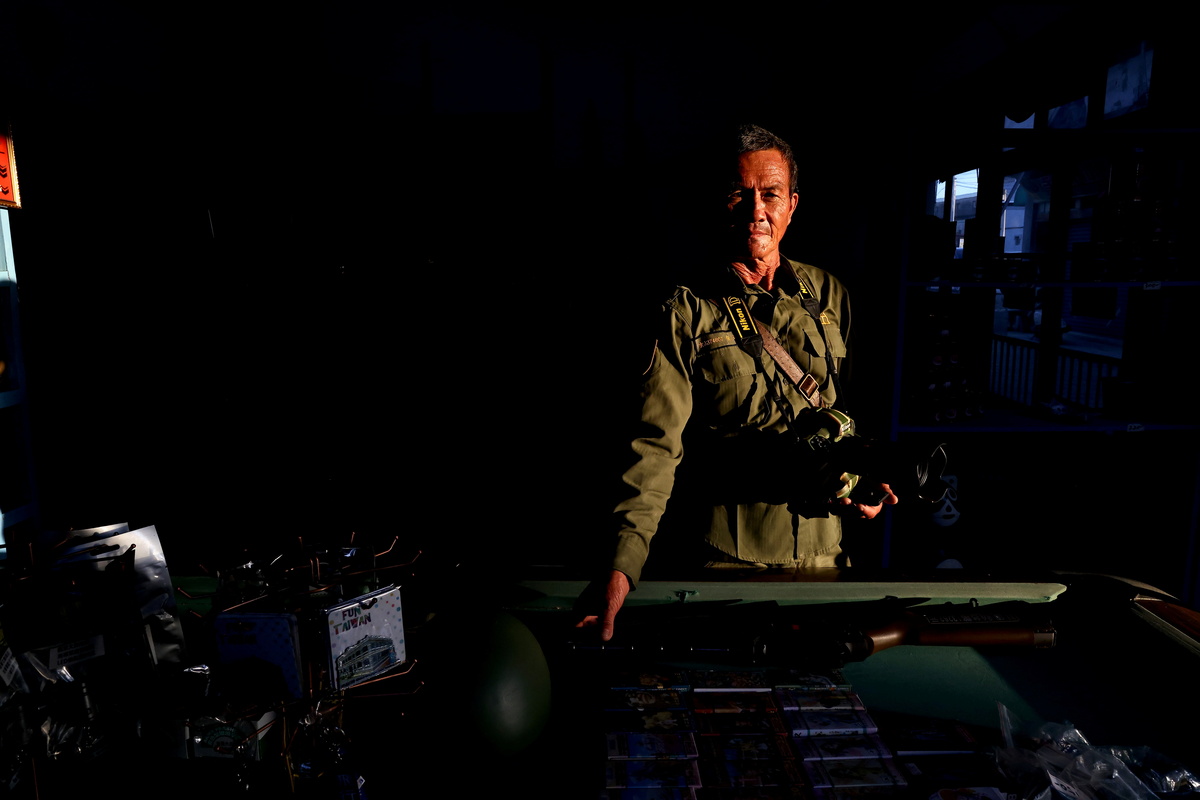
Chen Hong-Ren, 58, a veteran, poses for a photo while wearing a replica of the military uniform he wore during his service on Kinmen, Taiwan, October 16, 2021. Sitting on the front line between Taiwan and China, Kinmen is the last place where the two engaged in major fighting, in 1958 at the height of the Cold War, and where memories of war are burned into minds decades later. REUTERS/Ann Wang
Chen Ing-wen strides up to a rocky outcrop some 3 km (1.9 miles) from China's coast on Taiwan-controlled Kinmen island and demonstrates how as a soldier he used to shoot from there at Chinese trawlers that got too close.
"It was just to scare them - but they weren't scared," said Chen, 50, who did his military service on Kinmen from 1991 to 1993. "We were not trying to kill them, just warn them away."
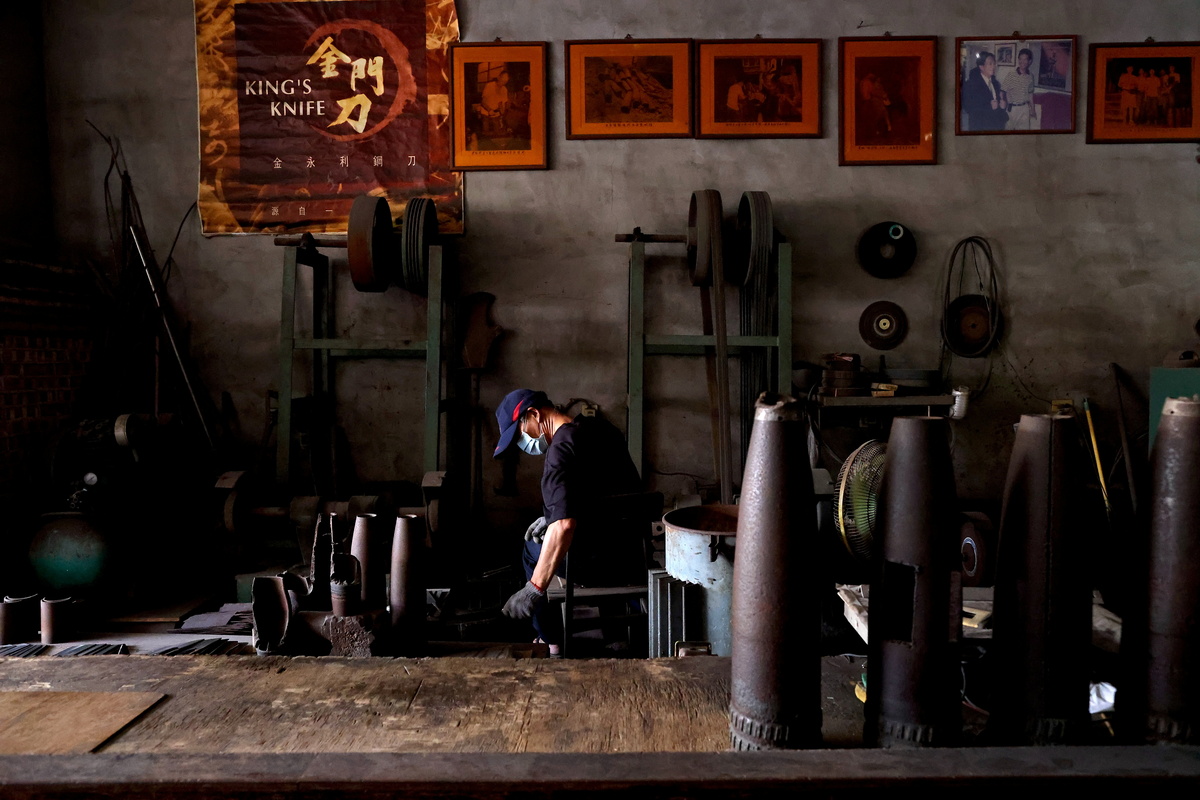
A bladesmith makes knives out of shells fired from China between 1958 to 1979 at his workshop on Kinmen, Taiwan, October 16, 2021. REUTERS/Ann Wang
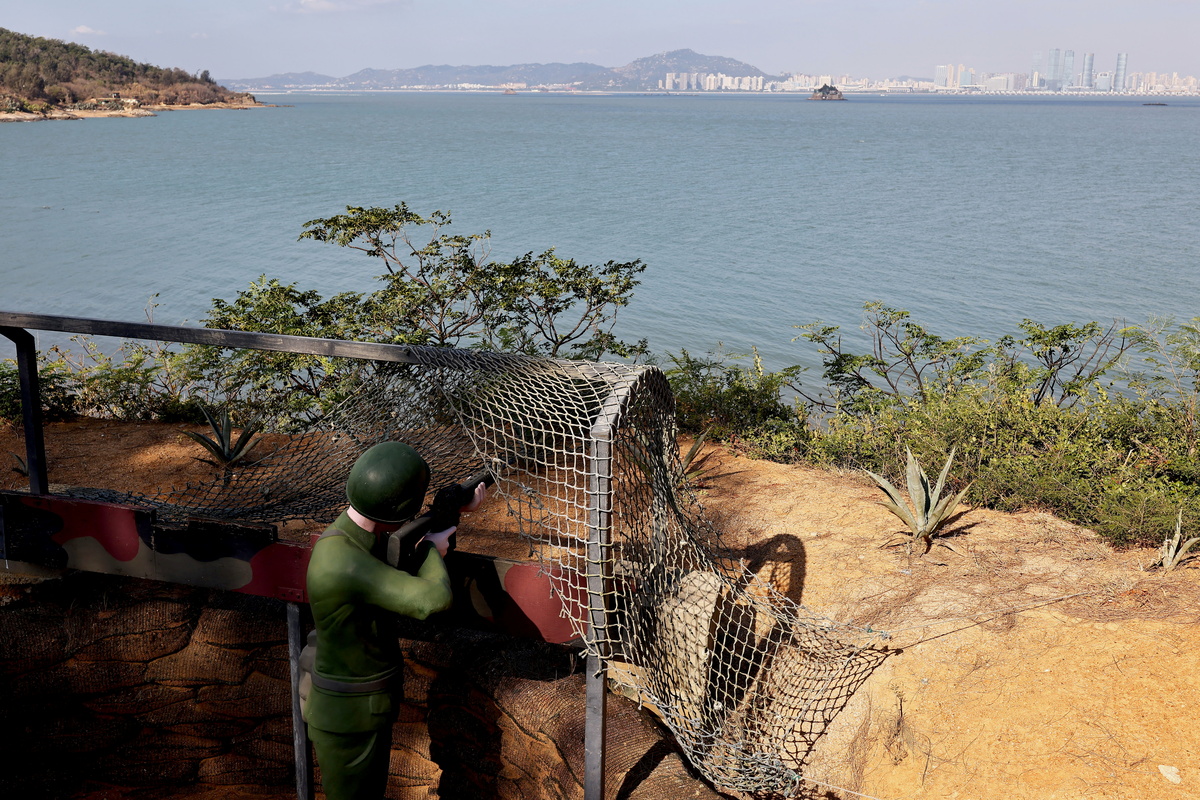
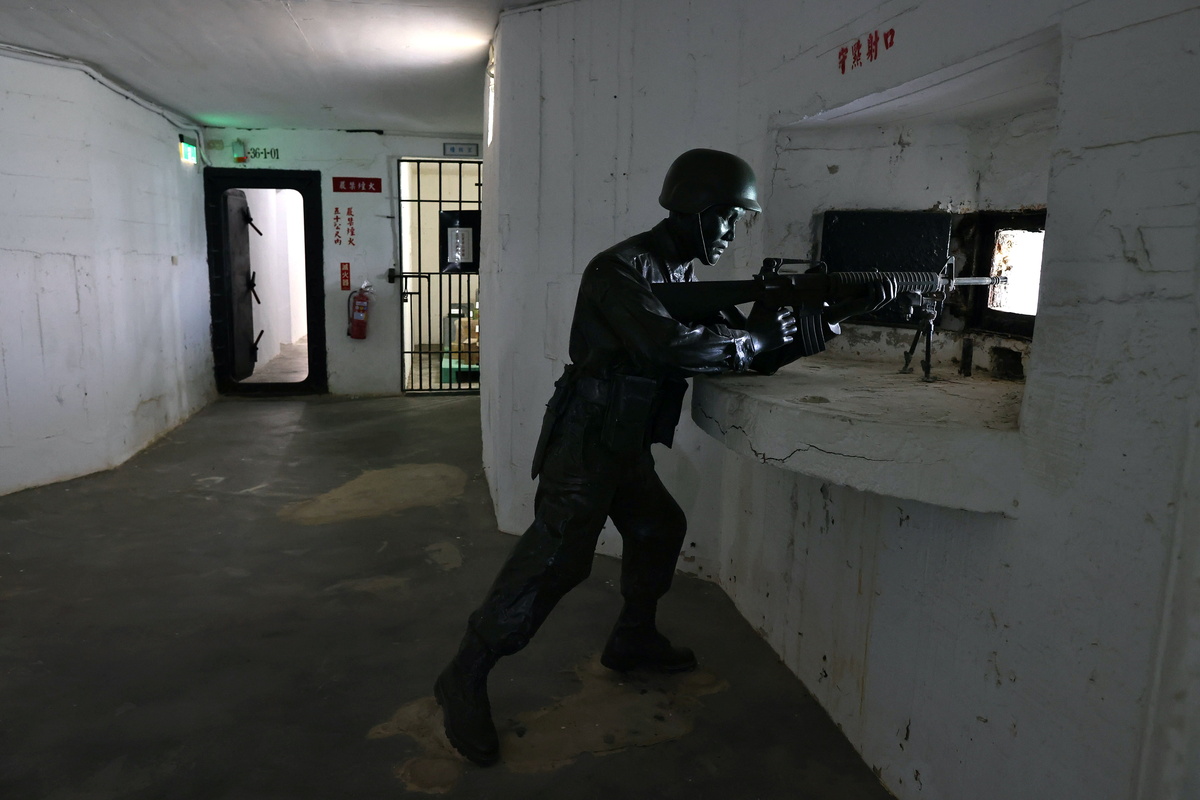
Sitting on the front line between Taiwan and China, Kinmen is the last place where the two engaged in major fighting, in 1958 at the height of the Cold War, and where memories of war are burned into minds decades later - large model soldiers point guns at China from some old bunkers.
(Open in an external browser to see a picture package on Kinmen island.)
China views Taiwan as part of its territory, and has never renounced the use of force to bring it under Beijing's control.
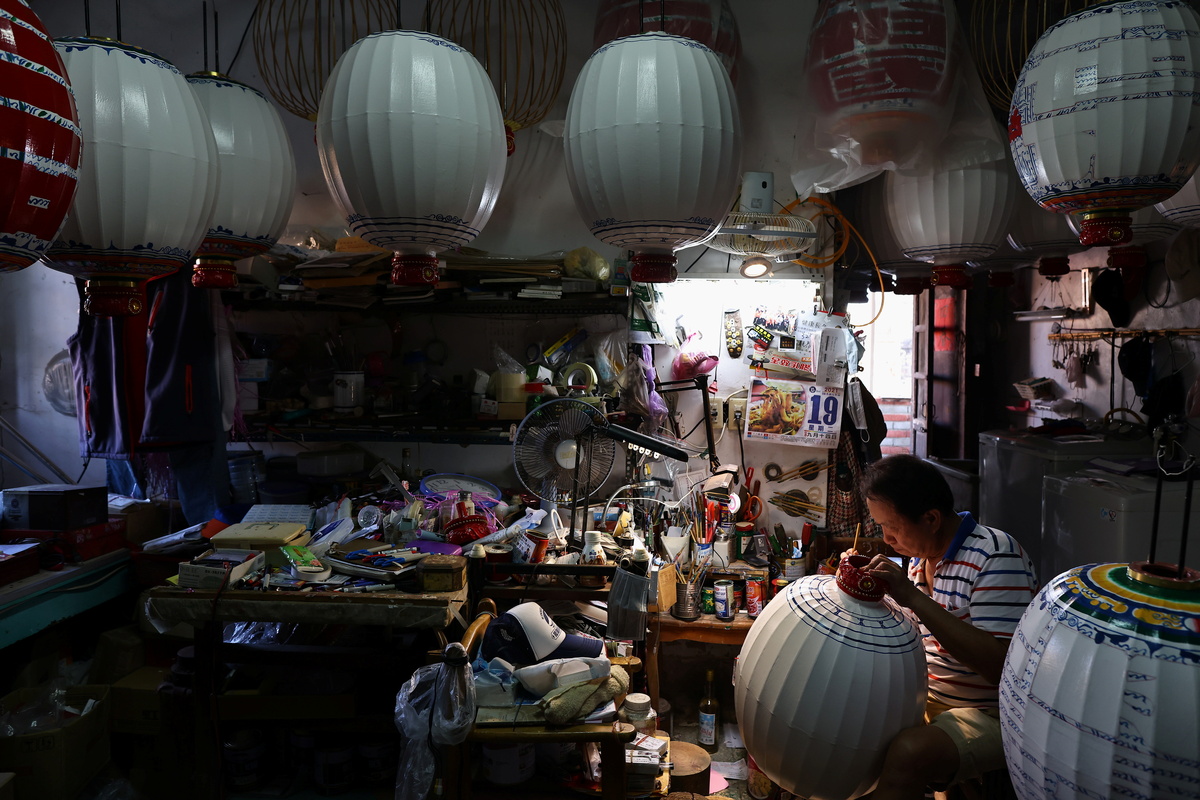
Dong Teng-siang, a third generation traditional lantern maker works at his home on Kinmen, Taiwan, October 19, 2021. The lanterns Dong makes are used for weddings, painted with the names of the new family and words of blessing. REUTERS/Ann Wang
A recent spike in tensions, with China's air force carrying out four days of mass incursions into Taiwan's air defence zone starting on Oct. 1, caused alarm in Western capitals and Taipei that Beijing may be planning something more dramatic.
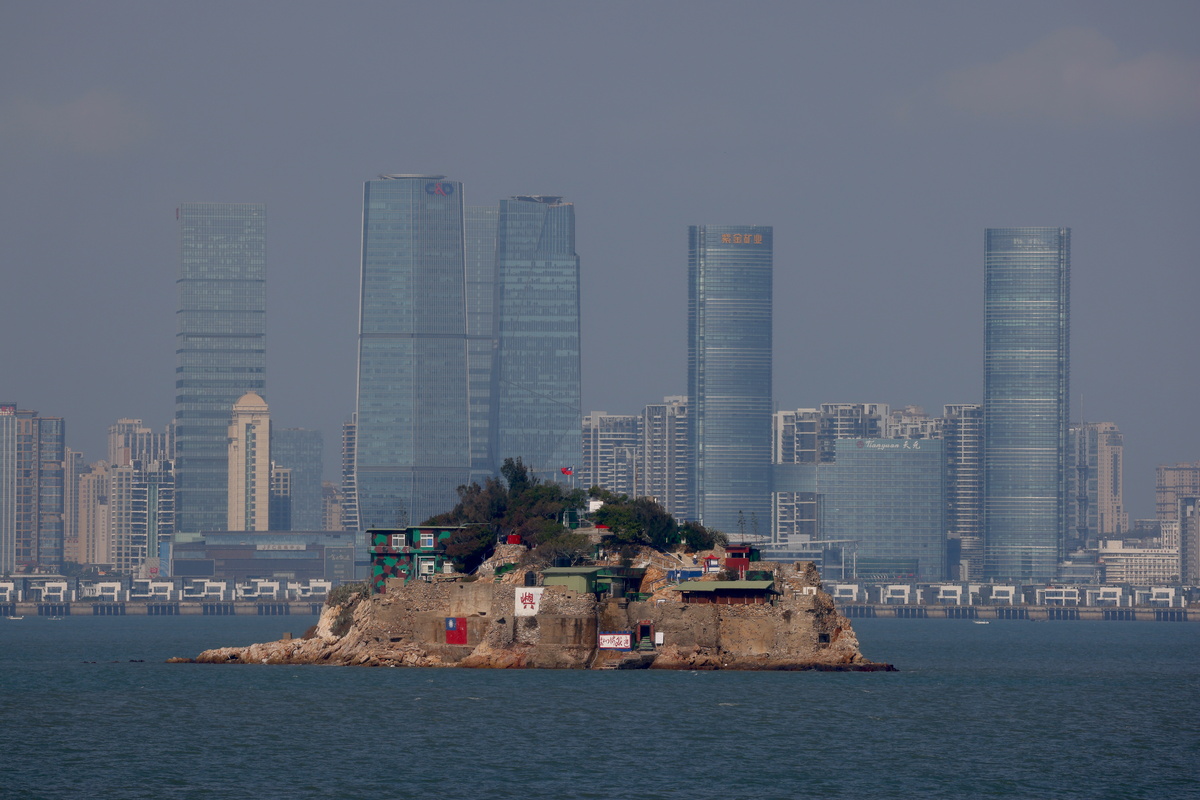
But in Kinmen, less than an hour by plane from Taipei and directly facing the high rises of China's Xiamen, there is no sense of panic nor restrictions on visiting from Taiwan, but only a feeling of surprise over questions about whether it is advisable to come.
"We are a very safe place. Whether economically or on people's lives we have not felt any impact from cross-strait tensions," Ting Chien-kang, who runs the Kinmen government's tourism department, told Reuters outside a ruined house briefly occupied by Communist troops in an abortive invasion of the island in December 1949.
A mannequin of a soldier aims in the direction of China at the coastal line of Lieyu Township, Kinmen, Taiwan, October 19, 2021. Sitting on the front line between Taiwan and China, Kinmen is the last place where the two engaged in major fighting, in 1958 at the height of the Cold War, and where memories of war are burned into minds decades later. REUTERS/Ann Wang
Kinmen, along with the Matsu archipelago further up the Chinese coast, has been held by the government in Taipei since the defeated Republic of China forces fled to Taiwan in 1949 after loosing a civil war with the Communists.
Regular shelling did not end until Dec. 15, 1978, when Washington formally recognised Beijing over Taipei, though by then it was shells fired on odd-numbered days carrying propaganda leaflets that fell.
Still, those shells could and often did kill people, and terrified residents - a memory that haunts older Kinmeners.
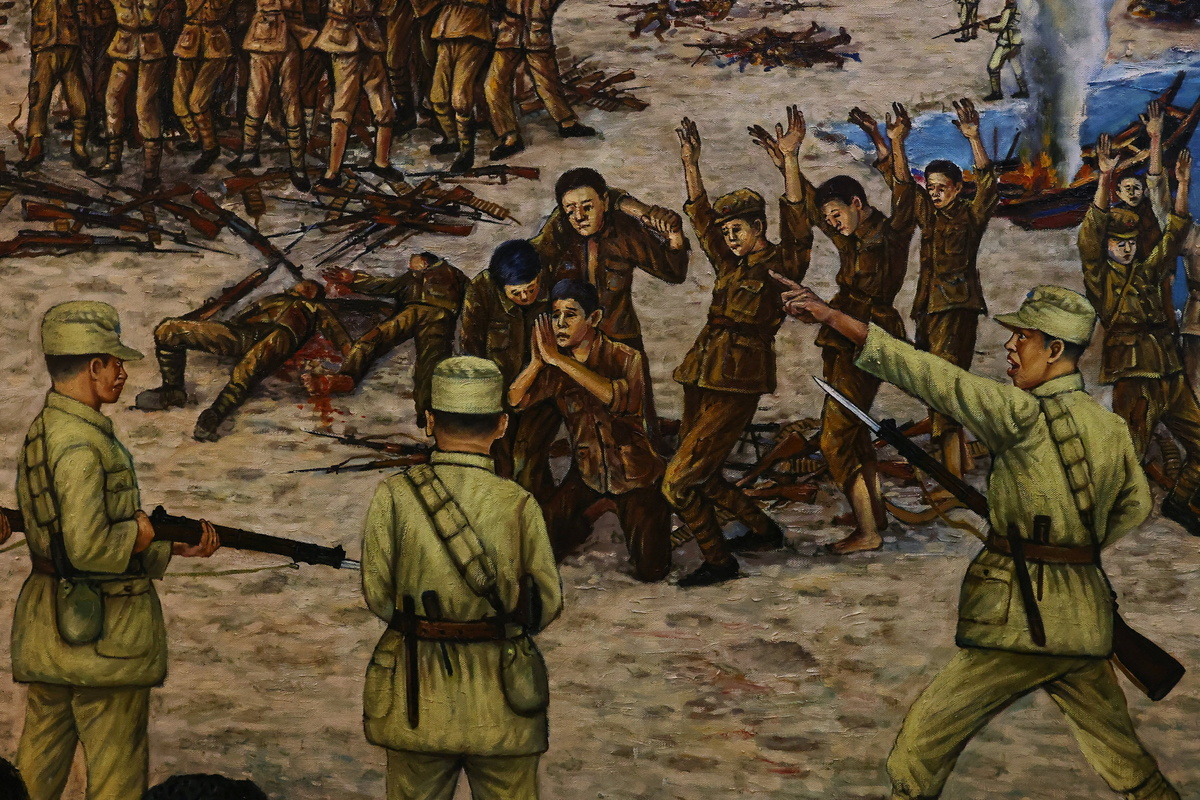
A painting depicts the Taiwan military members arresting communists attempting to invade Taiwan during the Battle of Guningtou at a war museum on Kinmen, Taiwan, October 17, 2021. Sitting on the front line between Taiwan and China, Kinmen is the last place where the two engaged in major fighting, in 1958 at the height of the Cold War, and where memories of war are burned into minds decades later. REUTERS/Ann Wang
"I don't want that to happen again," said Jessica Chen, 53, who runs a tea shop and remembers the shelling. "People may think the situation is tense, but we're used to it."
TIME WARP
At its nearest point, from the Mashan observation post, the main island of Kinmen is at low tide less than 2km from Chinese-controlled territory. It was from there former World Bank chief economist Justin Lin swam across to defect to China in 1979.
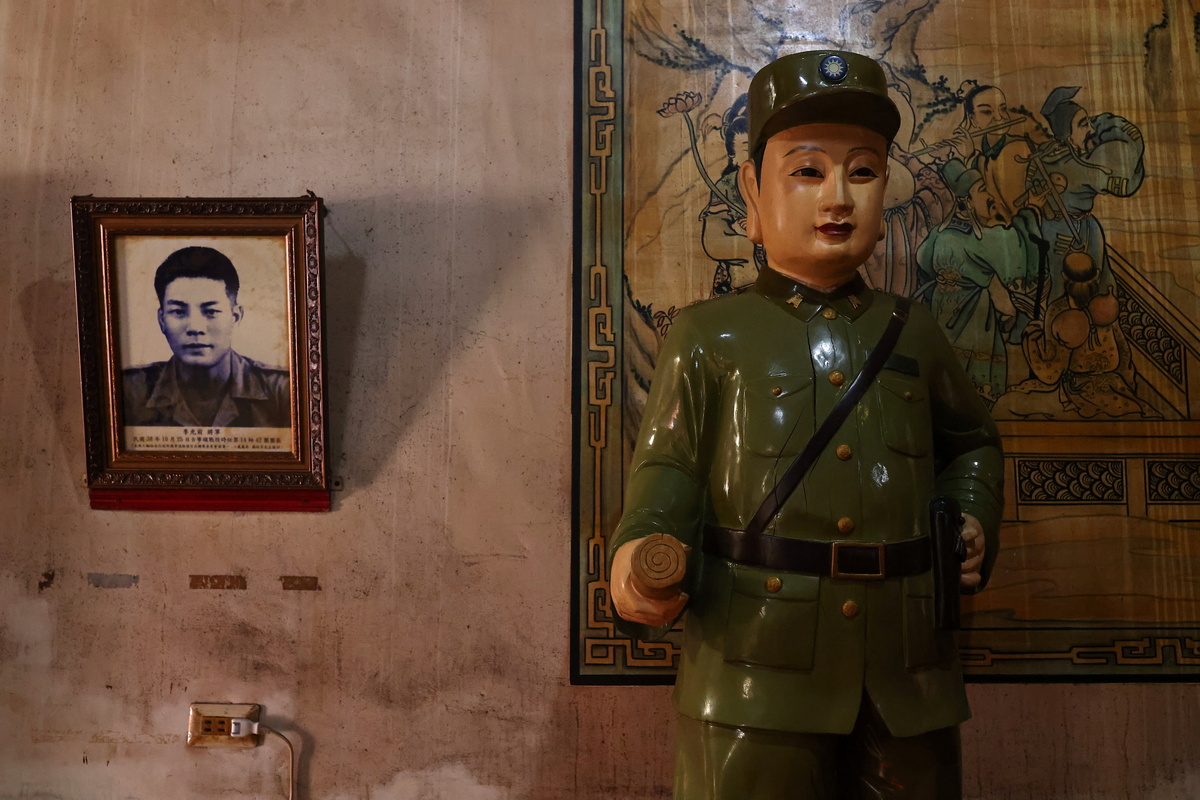
A statue and photo of General Li Guang-Qian are seen in the temple of General Li Guang-Qian, built in memory of a regimental commander who died fighting enemies in the Battle of Guningtou, on Kinmen, Taiwan October 17, 2021. REUTERS/Ann Wang
A much-reduced military garrison remains, way down from 100,000 at the height of fighting, with tanks on occasion rumbling through back roads and soldiers guarding hidden entrances to command posts dug under the thick rock.
With new weapons, including precision missiles, any Chinese attack now would likely bypass Kinmen and go straight to military targets on Taiwan, though Kinmen, which relies on China for a stable water supply, could easily be blockaded.
Kinmen's government is working hard to promote the island as more than just a war monument, hoping to entice younger visitors to see its otters and go bird watching, to stay in trendy new boutique guest houses and enjoy the local oysters.
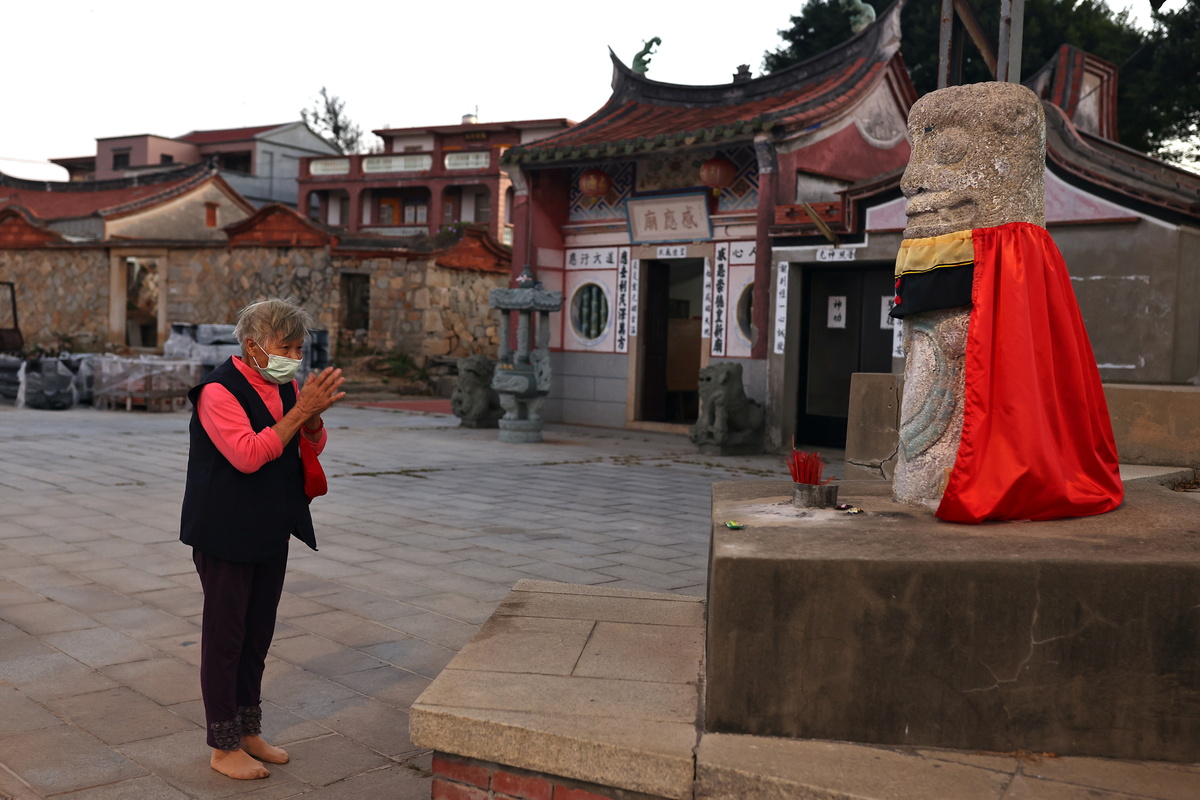
A woman prays to a wind lion guardian at a temple in Shanhou village on Kinmen, Taiwan, October 19, 2021. Sitting on the front line between Taiwan and China, Kinmen is the last place where the two engaged in major fighting, in 1958 at the height of the Cold War, and where memories of war are burned into minds decades later. REUTERS/Ann Wang
The time warp Kinmen exists in is everywhere to see, though much of that is intentionally kept for the tourists.
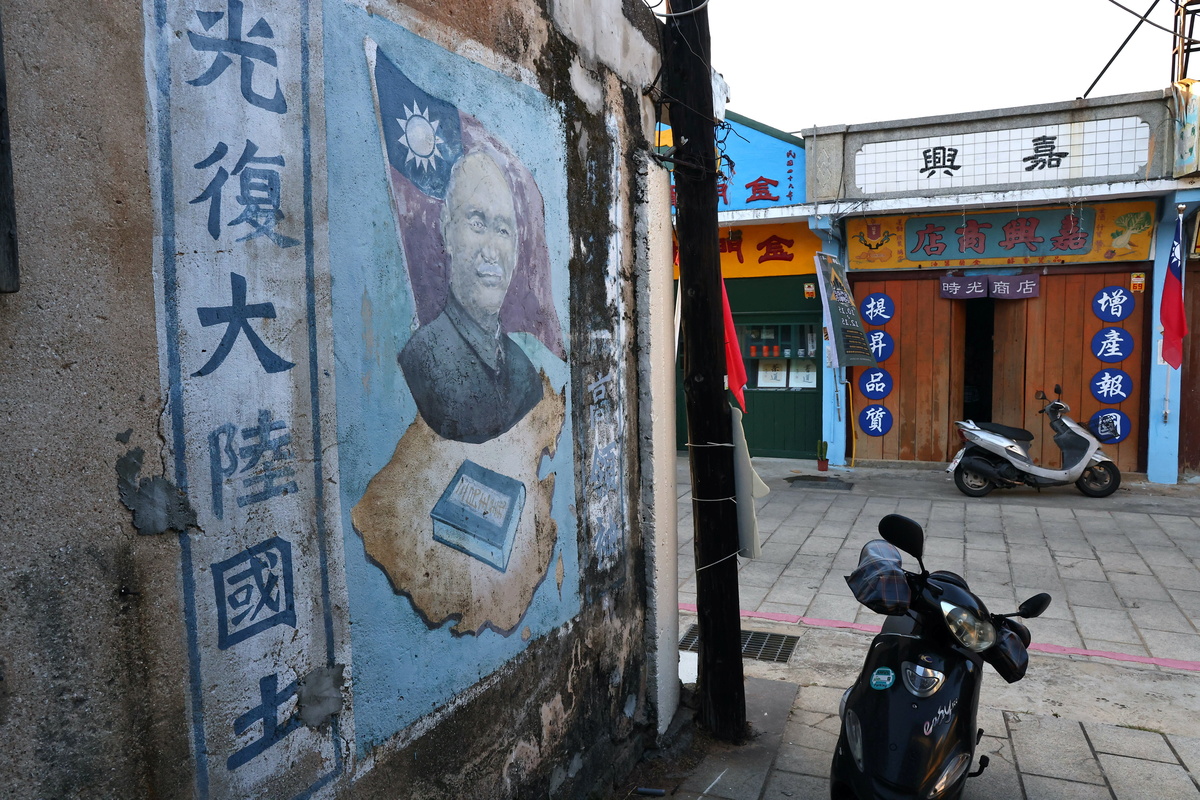
The old-fashioned language on carefully preserved propaganda signs calls the Communists "bandits", and statues of late leader Chiang Kai-shek, a man now vilified by many Taiwanese for his often brutal dictatorship, laud him as the "people's saviour".
Some have turned the past tensions into profit, like Kinmen's renowned makers of knives from old shell casings, even if they too do not want to go back to the old days of hiding in air raid shelters from Communist attacks.
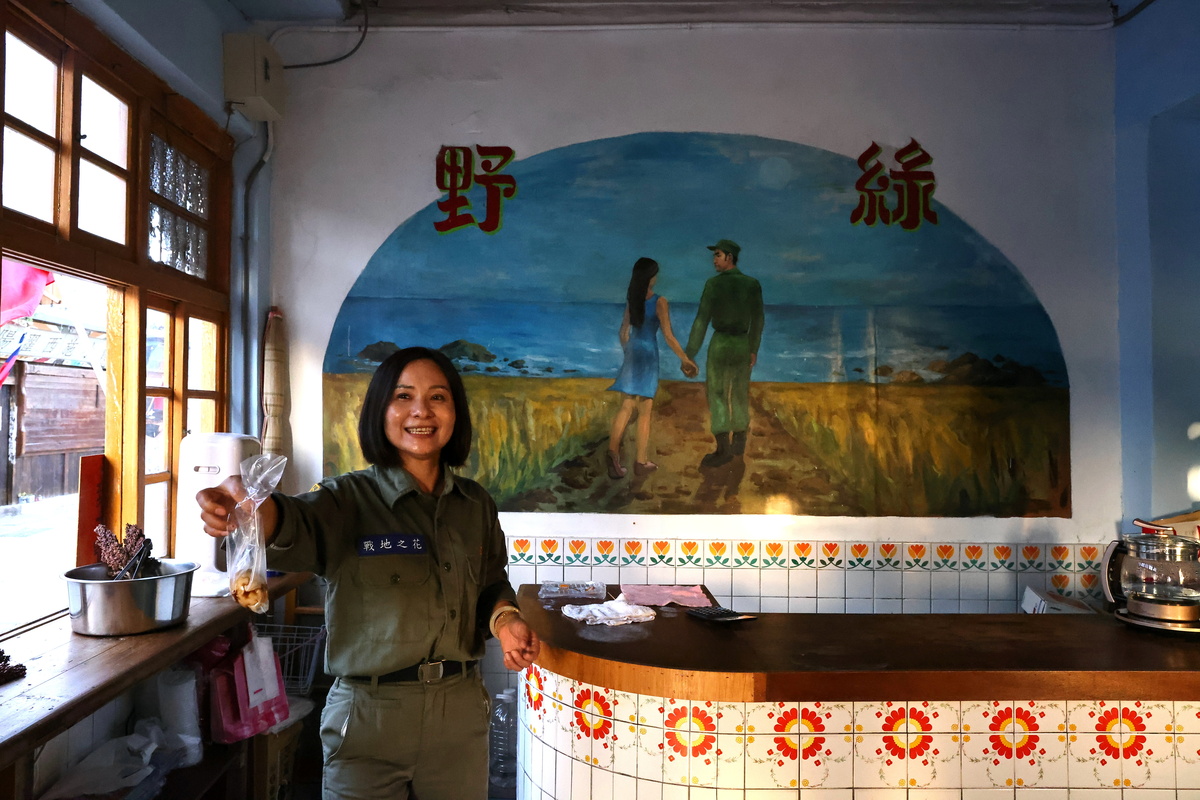
A shop owner dressed in replica military uniform sells tea eggs to tourists on Kinmen, Taiwan, October 16, 2021. Sitting on the front line between Taiwan and China, Kinmen is the last place where the two engaged in major fighting, in 1958 at the height of the Cold War, and where memories of war are burned into minds decades later. REUTERS/Ann Wang
"Reunification is best - not war," said knife maker Lin You-hsin, 60. "Peaceful coexistence is much better."
(Reporting by Ben Blanchard and Ann Wang; Editing by Mike Collett-White)
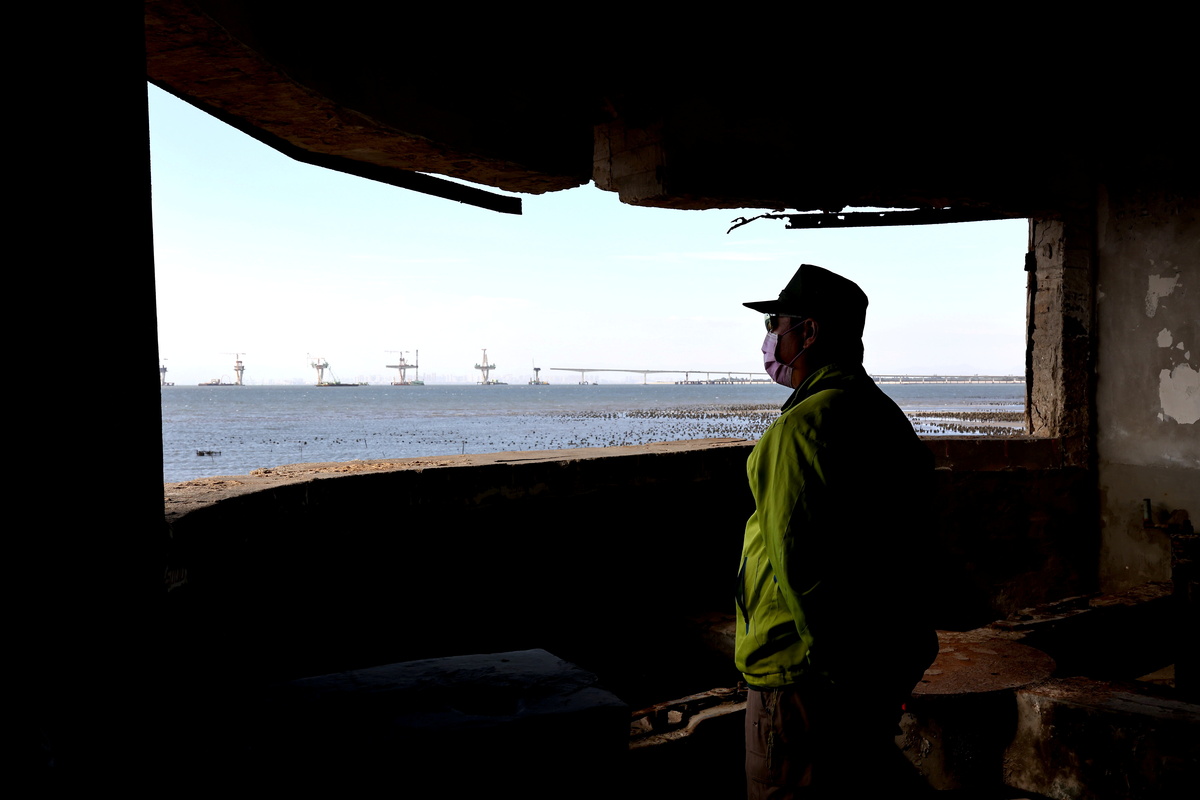
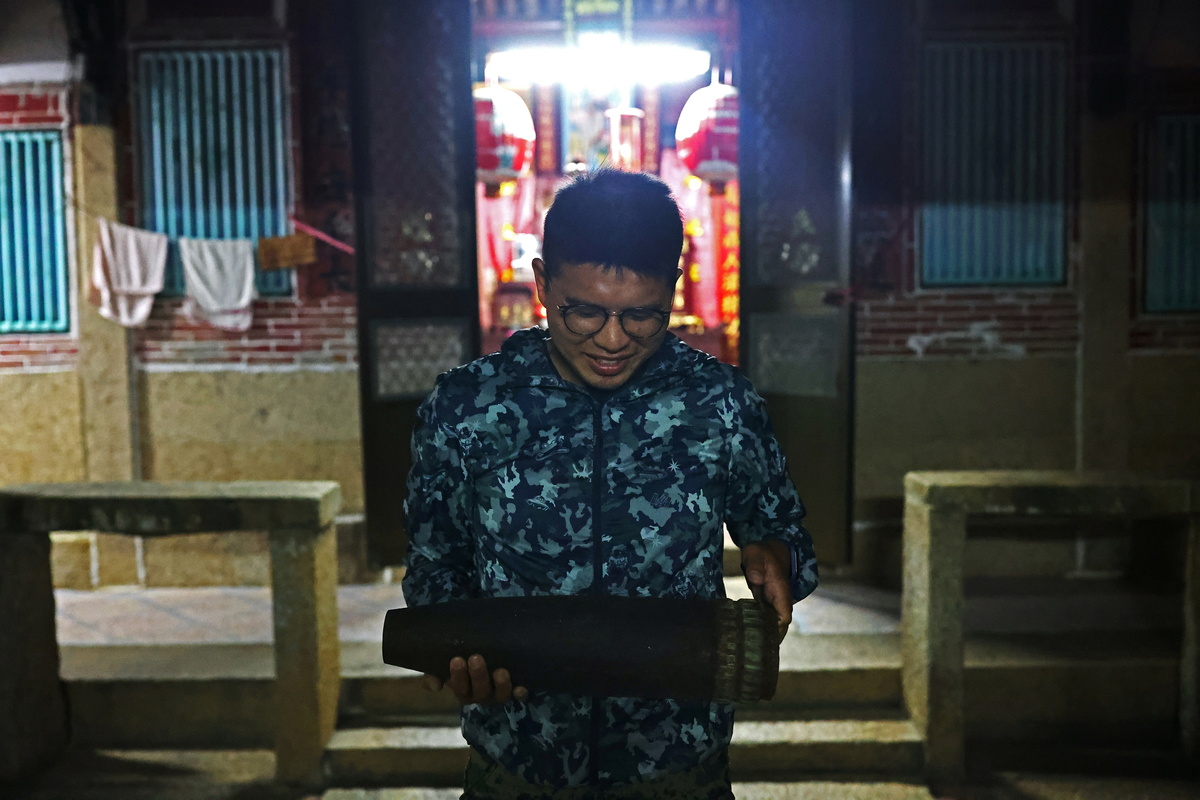
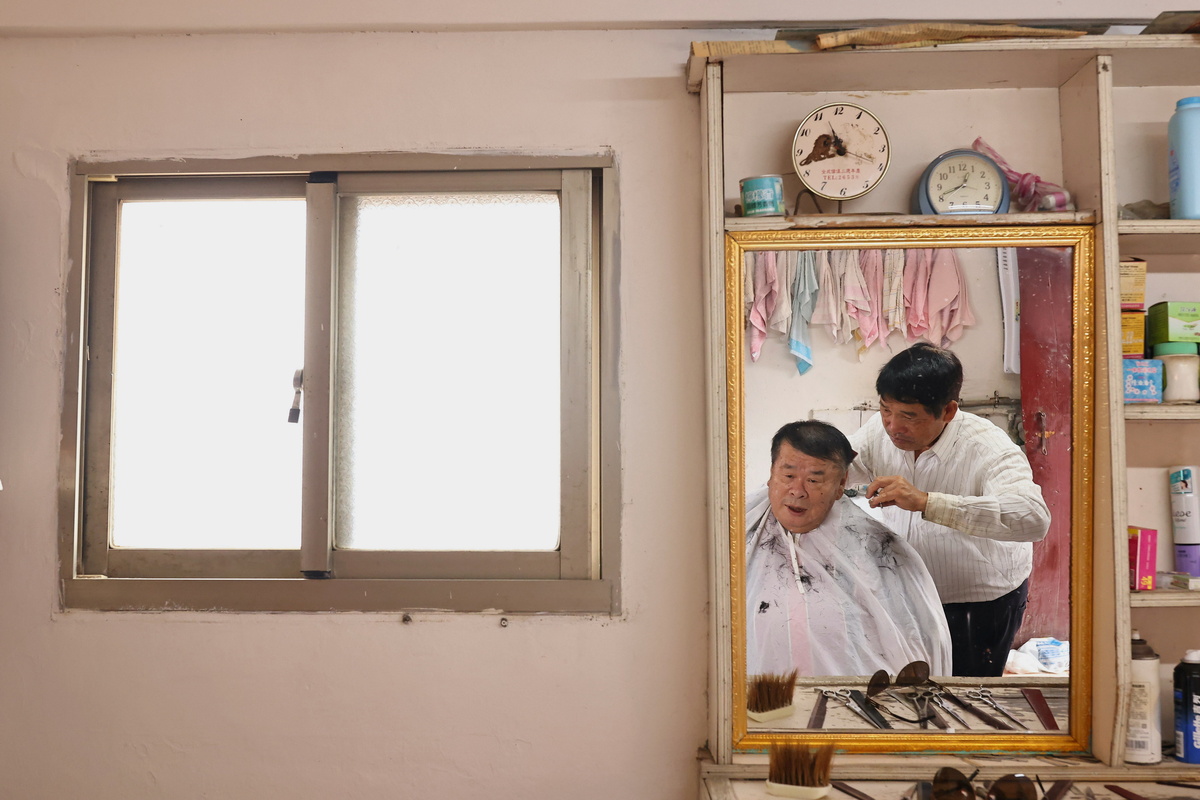
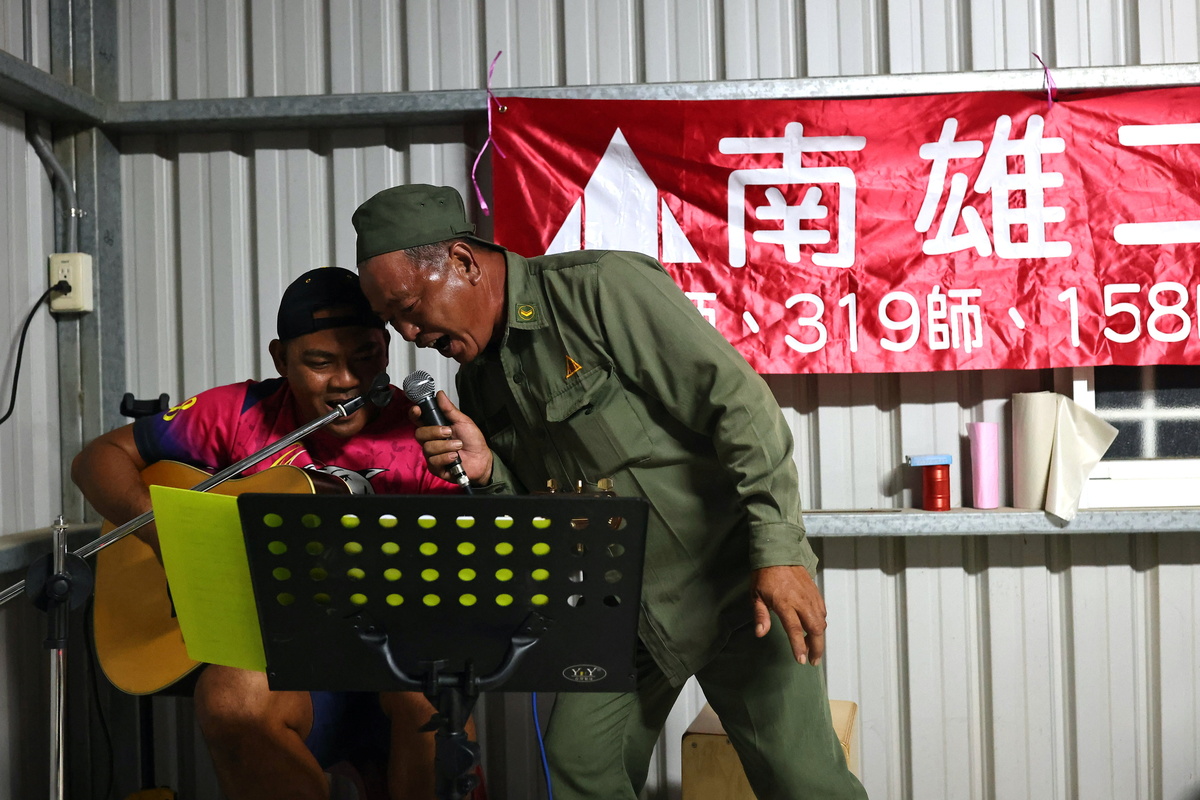
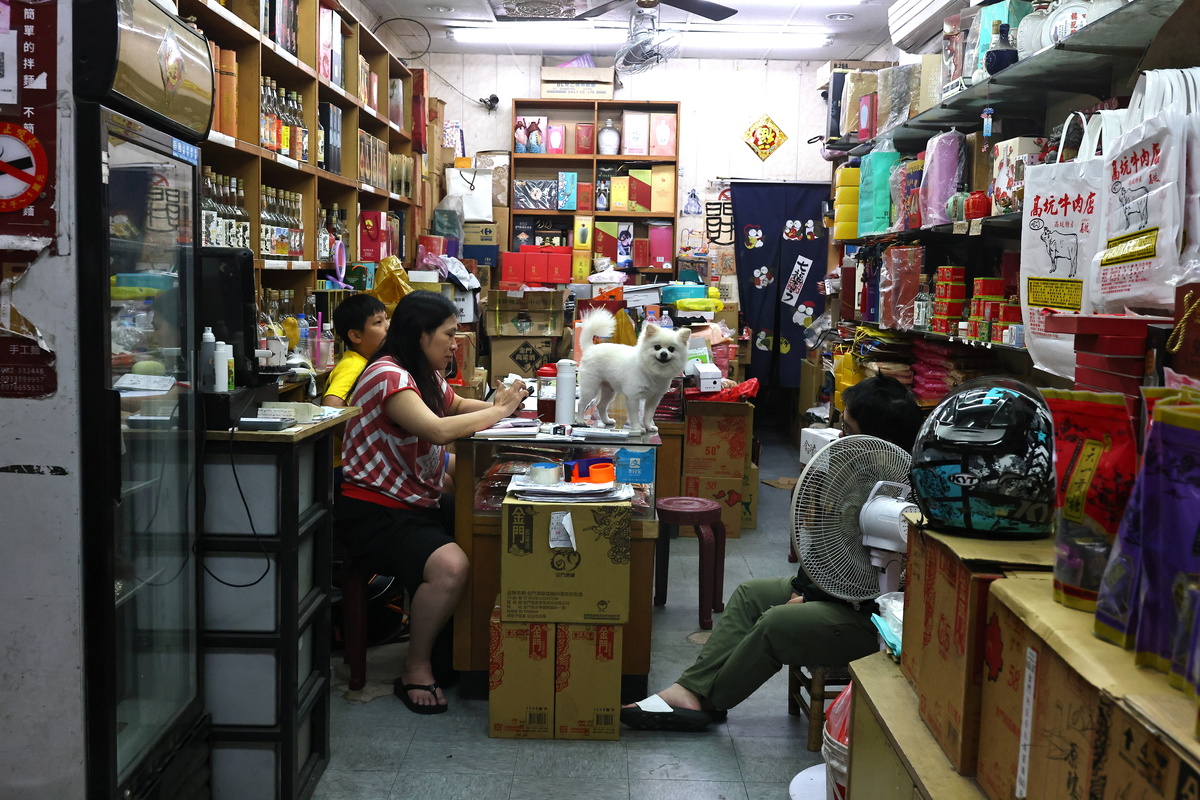
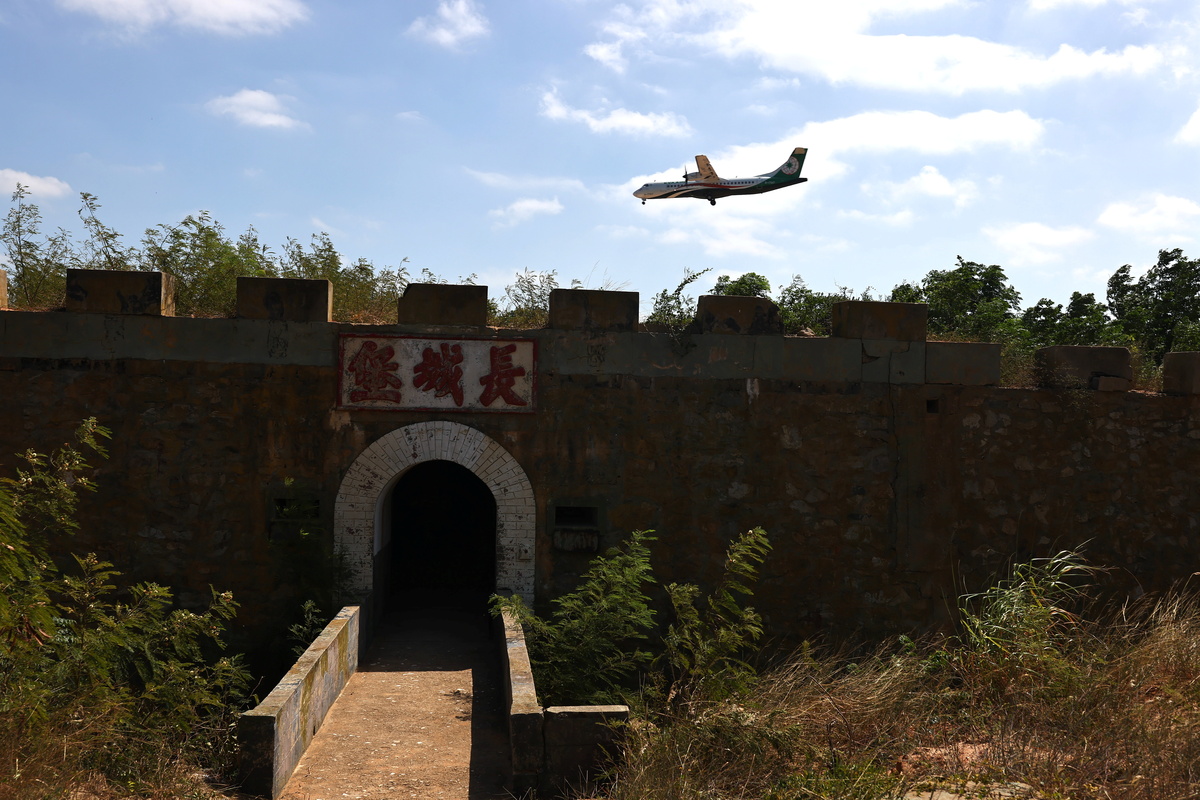
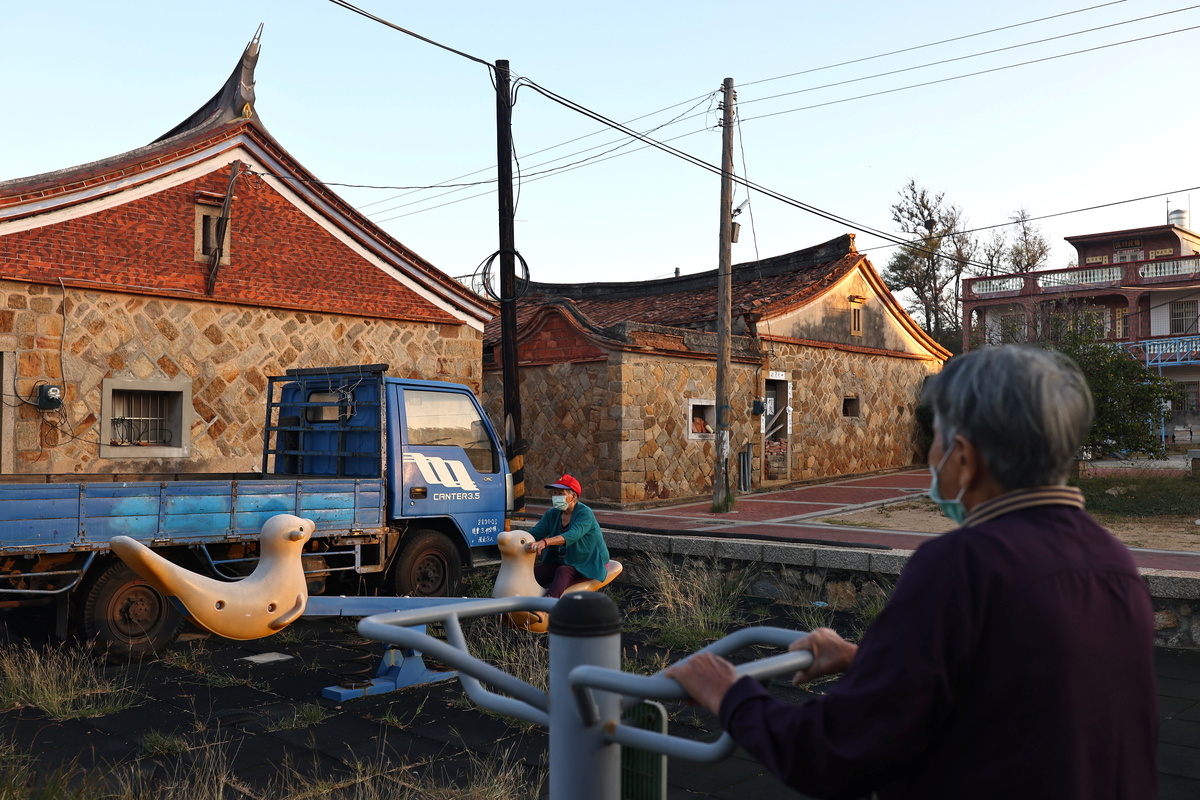
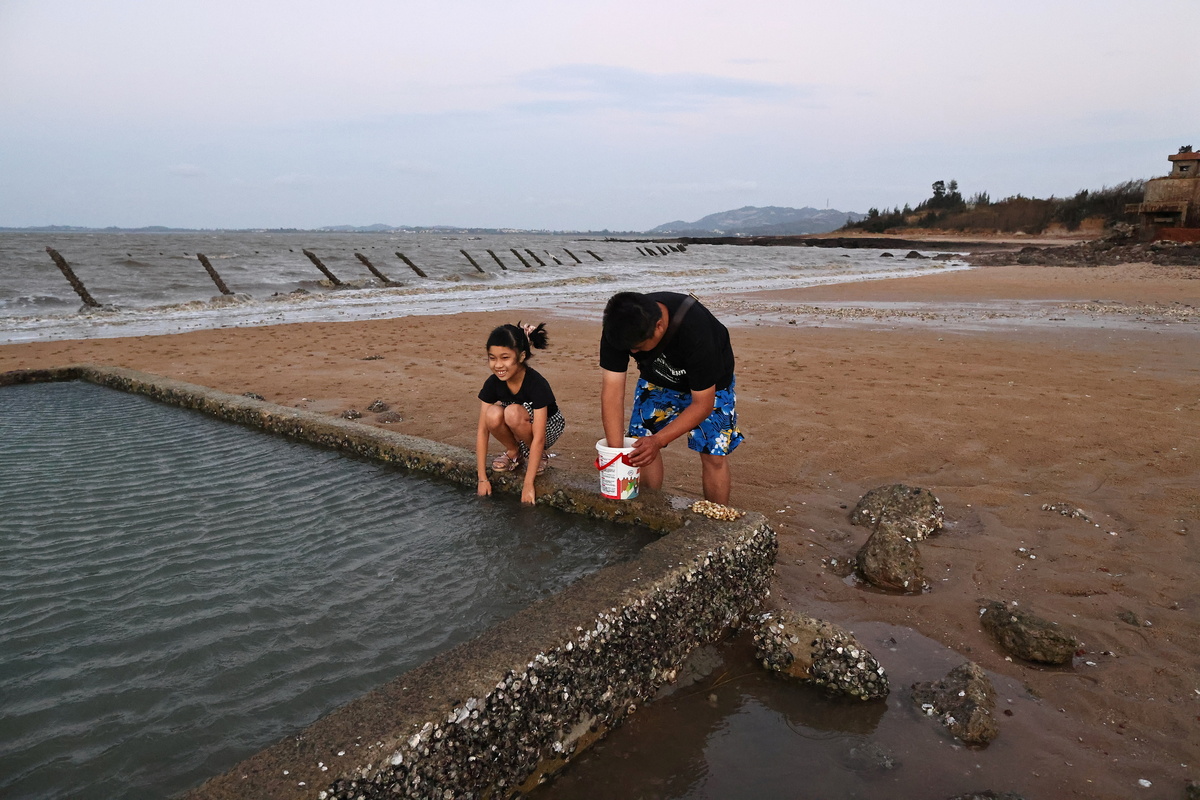
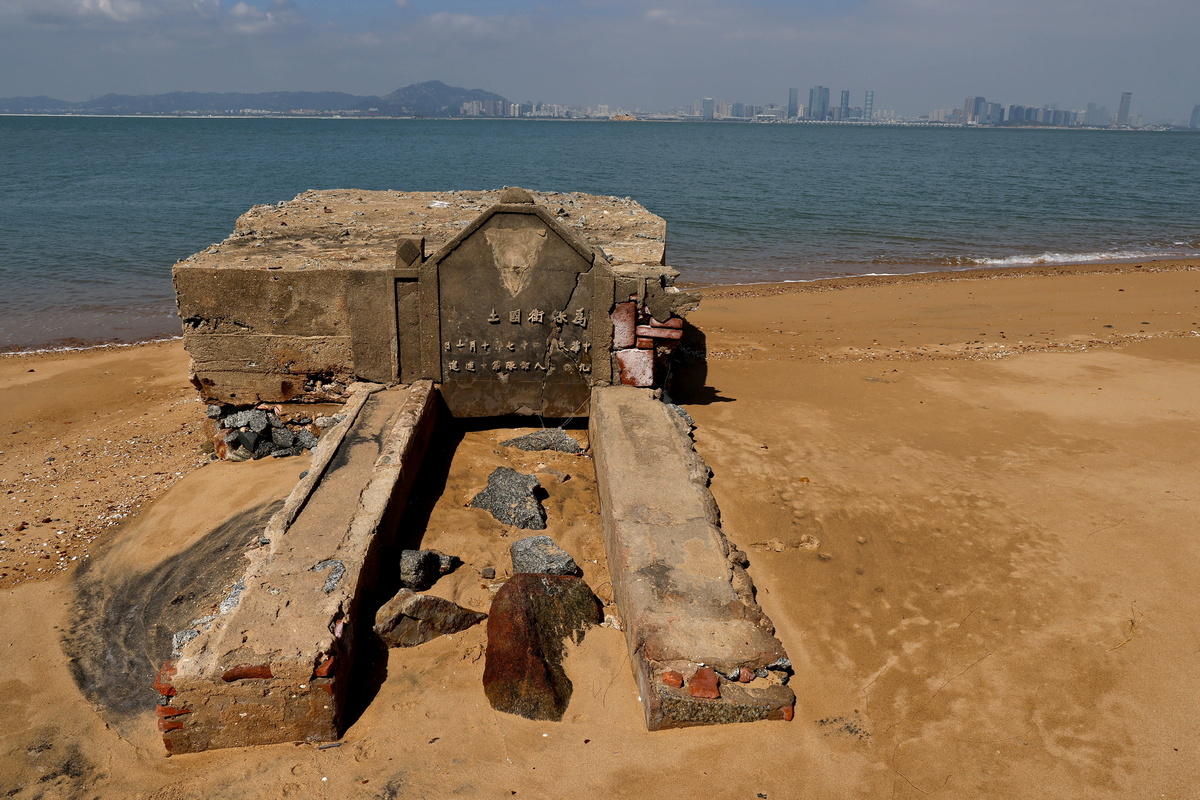
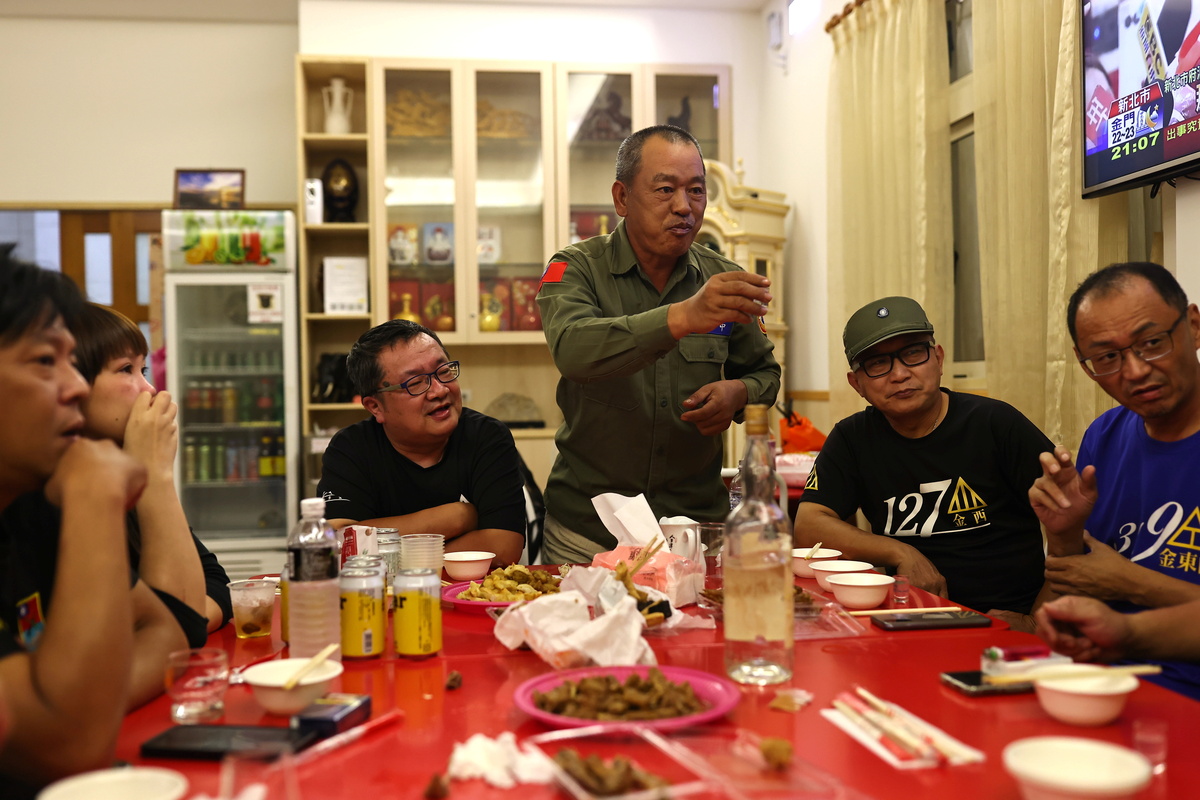
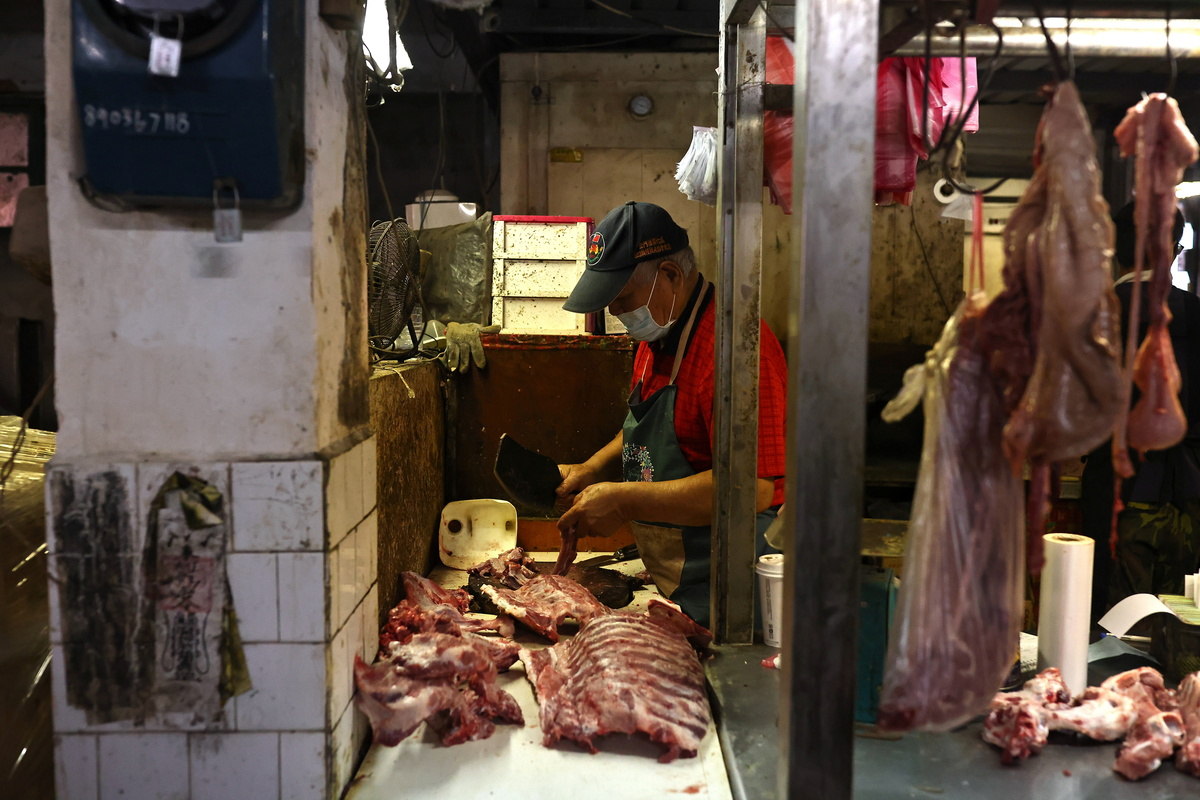
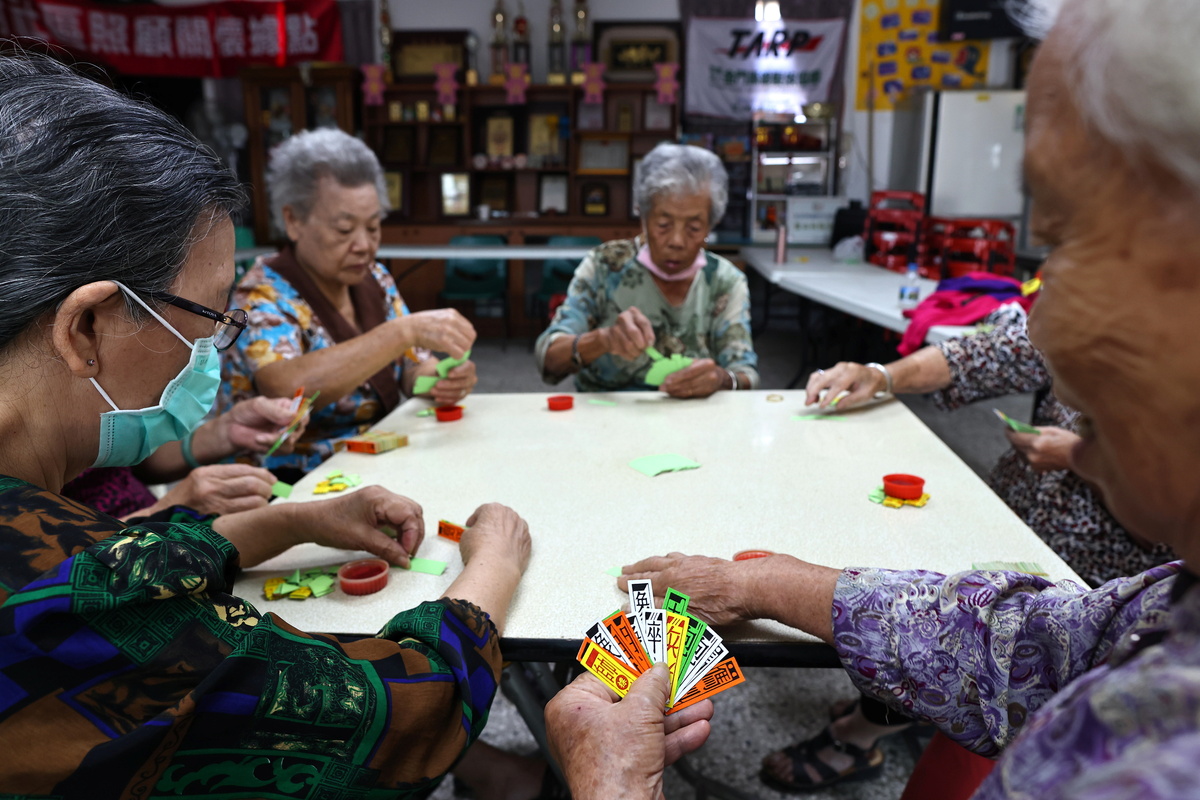
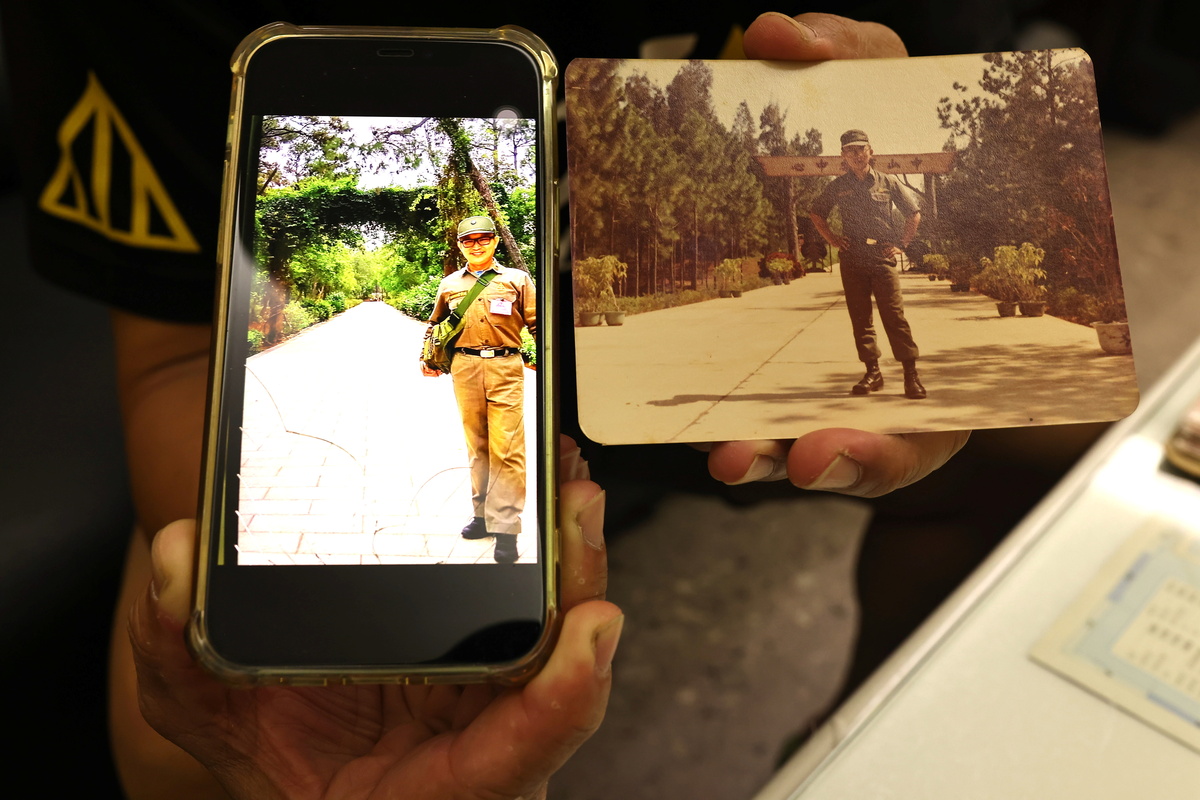
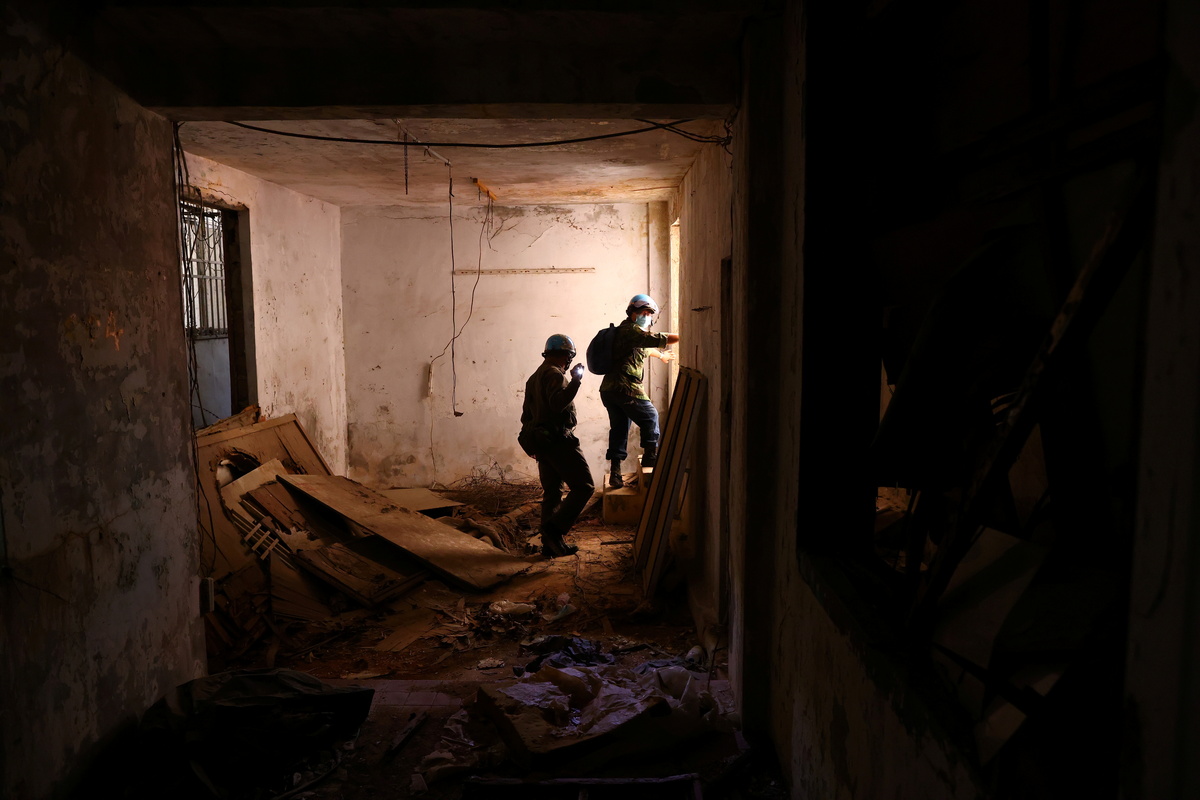
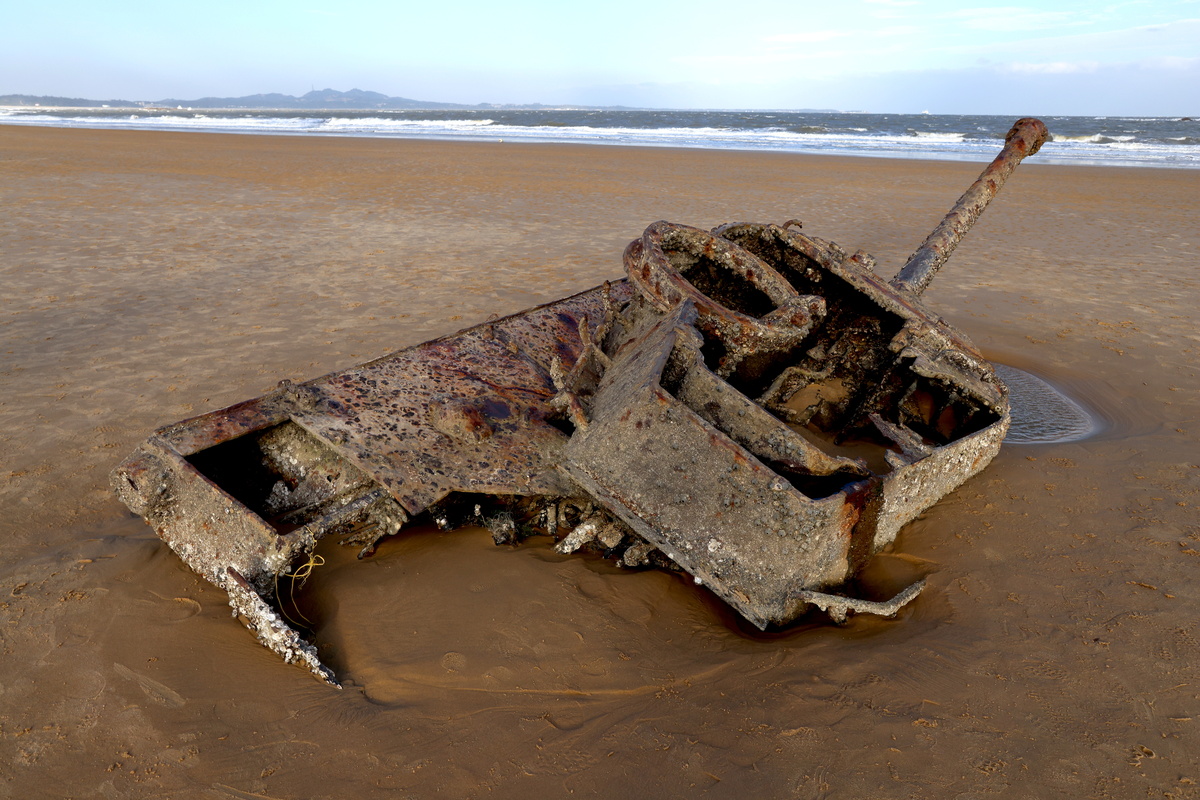
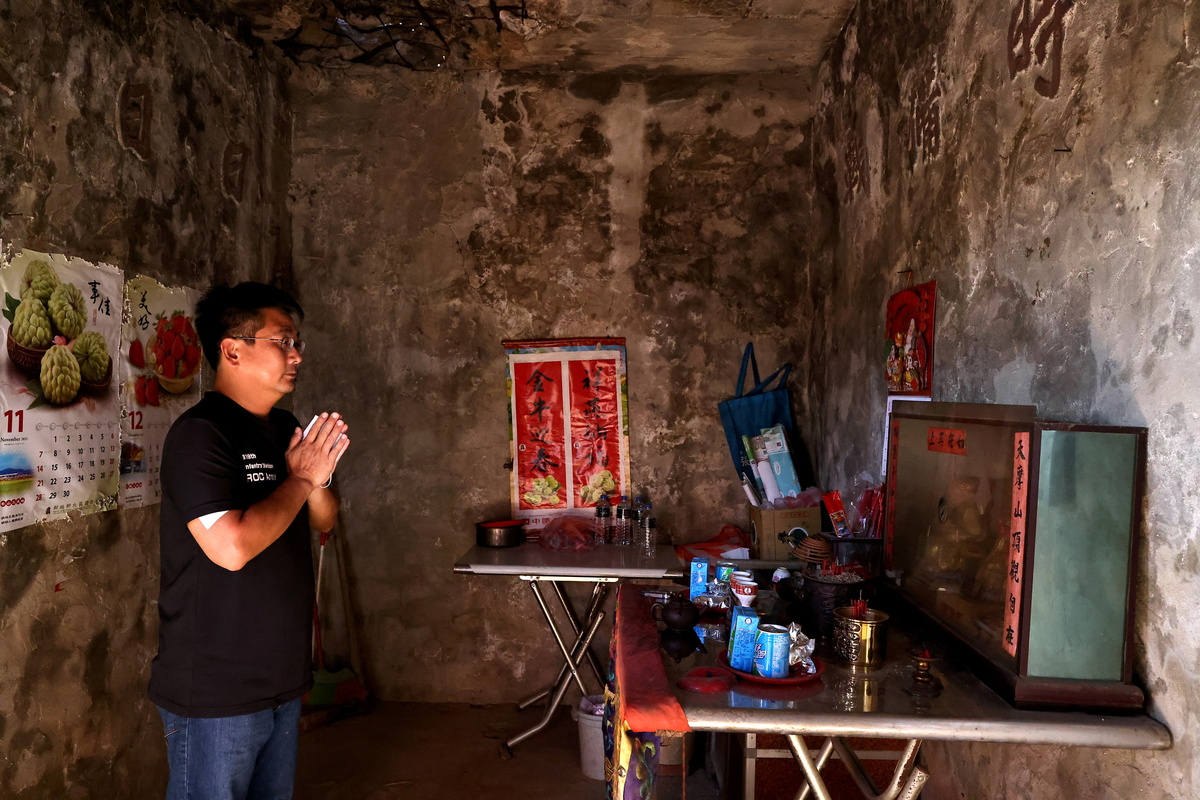
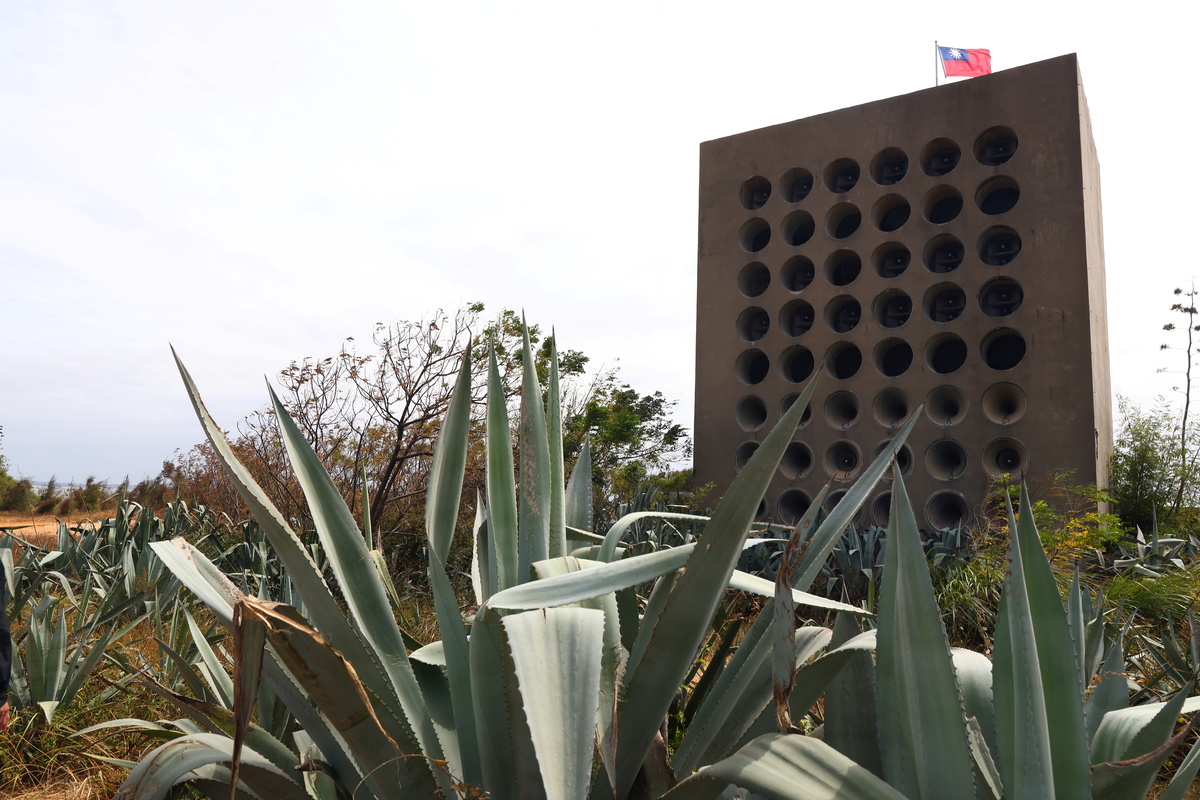
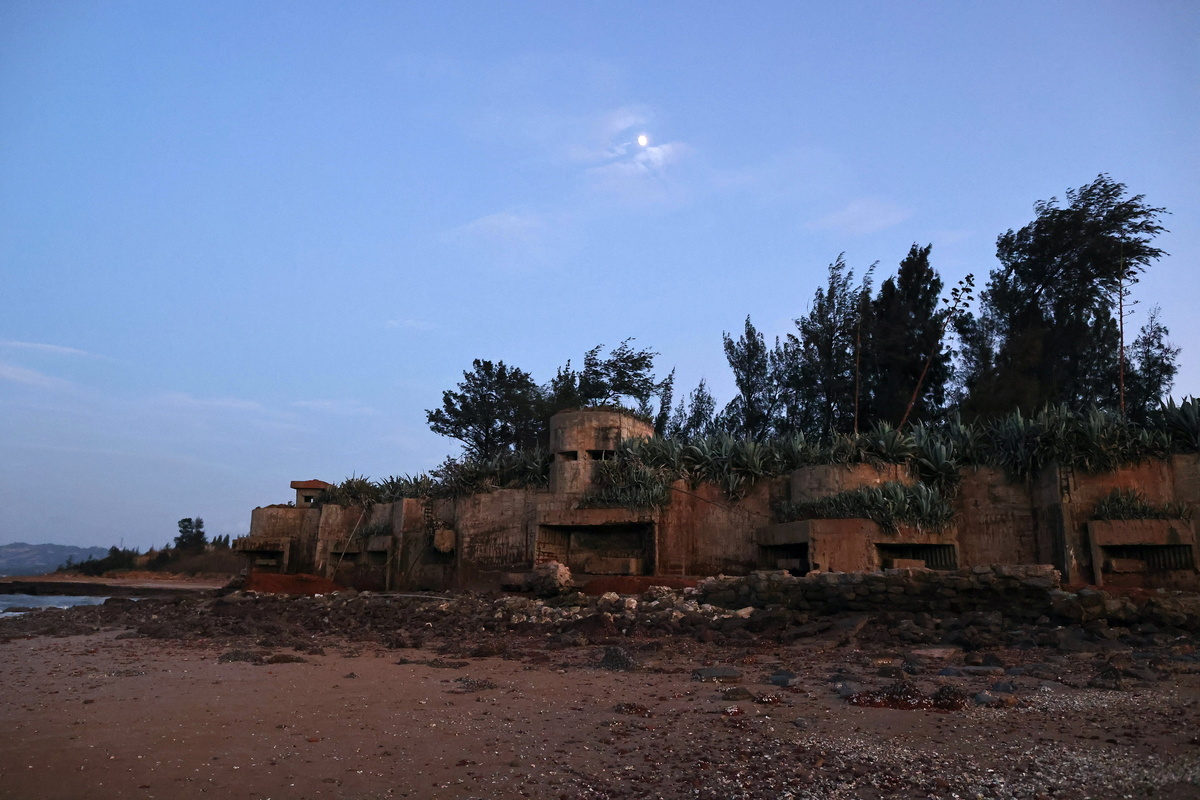
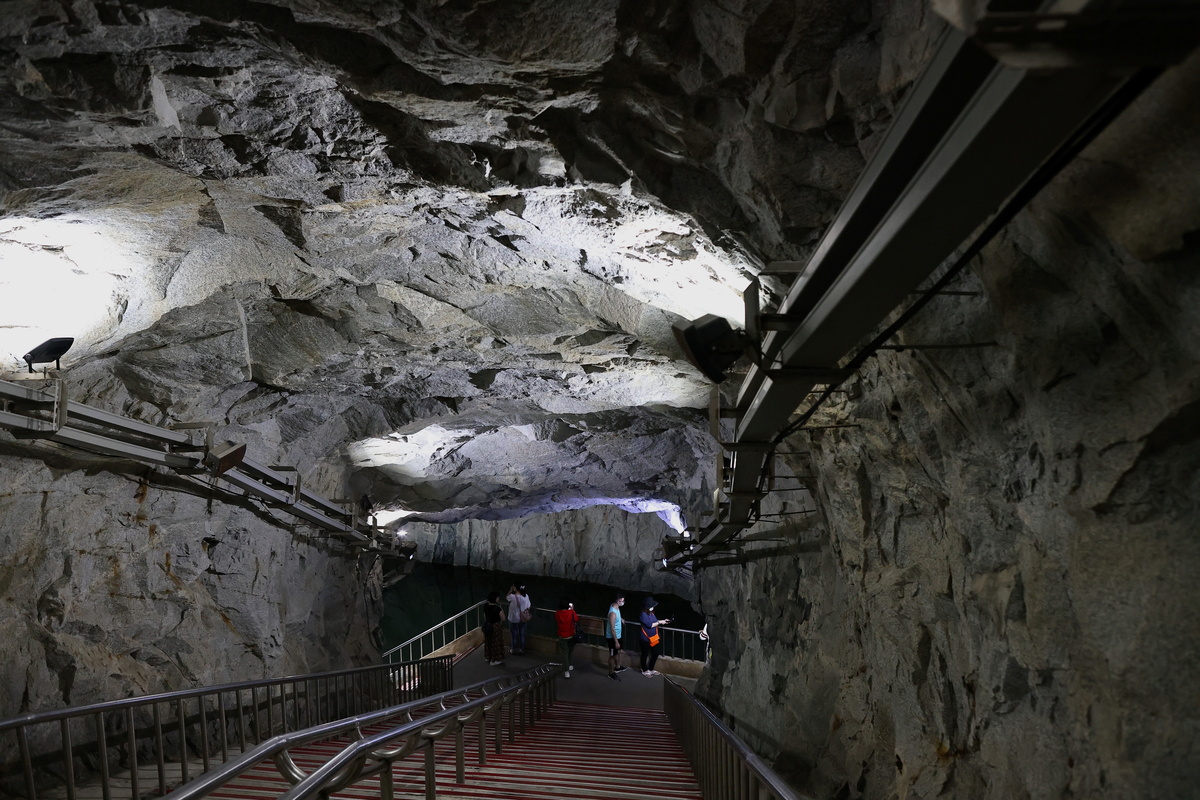
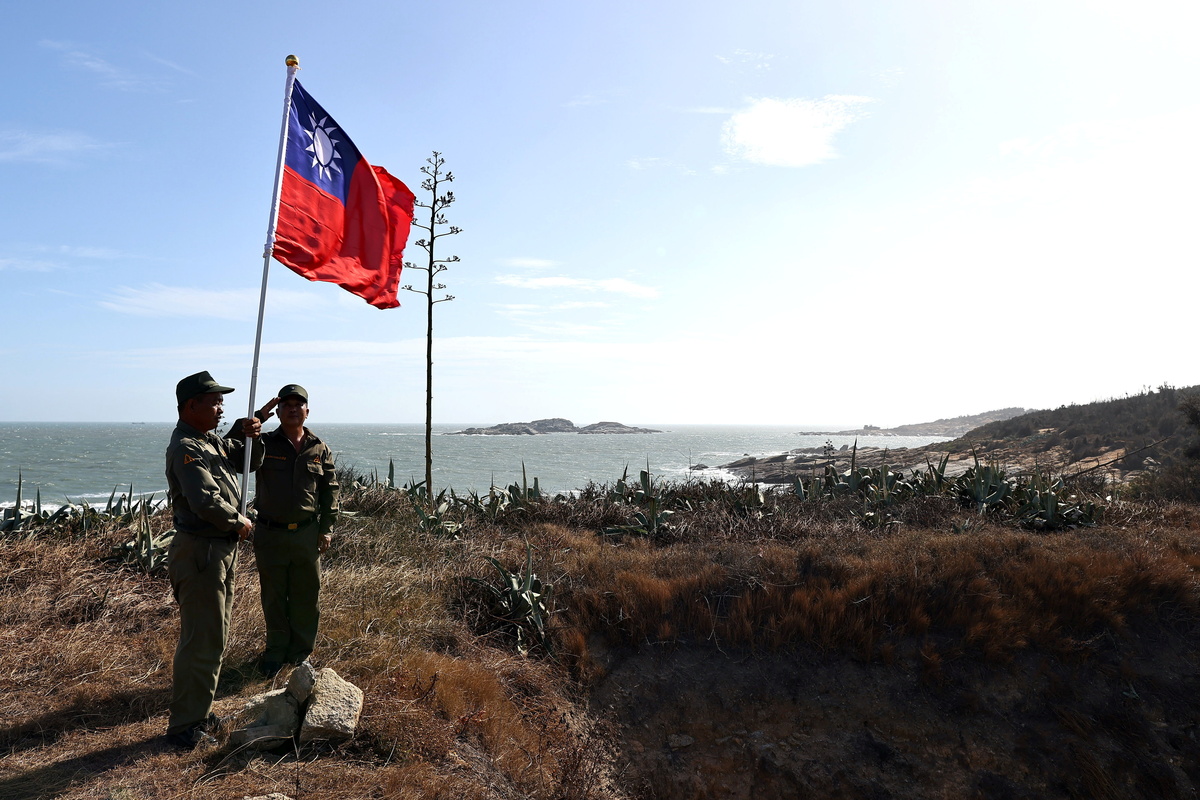
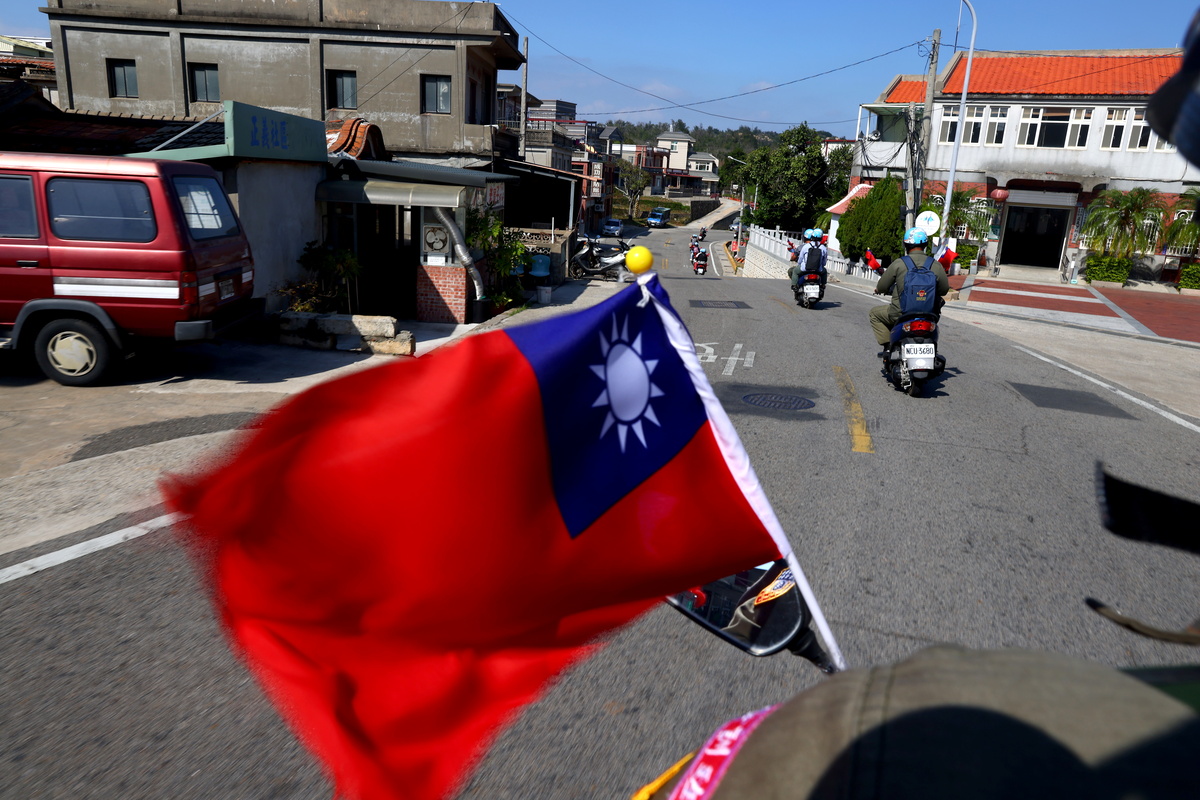
A mannequin of a soldier stands inside a bunker facing Xiamen, a coastal city in China, in Lieyu Township, Kinmen, Taiwan, October 19, 2021. Sitting on the front line between Taiwan and China, Kinmen is the last place where the two engaged in major fighting, in 1958 at the height of the Cold War, and where memories of war are burned into minds decades later. REUTERS/Ann Wang Chen Hong-Ren, 58, a veteran, poses for a photo while wearing a replica of the military uniform he wore during his service on Kinmen, Taiwan, October 16, 2021. Sitting on the front line between Taiwan and China, Kinmen is the last place where the two engaged in major fighting, in 1958 at the height of the Cold War, and where memories of war are burned into minds decades later. REUTERS/Ann Wang The flag of Taiwan is seen painted on Shihyu Islet in front of Xiamen, a coastal city in China, in Lieyu Township, Kinmen, Taiwan, October 19, 2021. Sitting on the front line between Taiwan and China, Kinmen is the last place where the two engaged in major fighting, in 1958 at the height of the Cold War, and where memories of war are burned into minds decades later. REUTERS/Ann Wang A veteran wears a replica of his military uniform while looking out from a bunker, during an annual trip back to Kinmen, Taiwan, October 17, 2021. Sitting on the front line between Taiwan and China, Kinmen is the last place where the two engaged in major fighting, in 1958 at the height of the Cold War, and where memories of war are burned into minds decades later. REUTERS/Ann Wang Wu Ja-shin, 37, holds an old shell fired from China during the 1960s at his uncle's home on Kinmen, Taiwan, October 18, 2021. Regular shelling did not end until 1978, when Washington formally recognised Beijing over Taipei. REUTERS/Ann Wang A resident gets a haircut at a barber shop on Kinmen, Taiwan, October 17, 2021. REUTERS/Ann Wang Veterans celebrate their reunion with beer, BBQ and karaoke on Kinmen, Taiwan October 16, 2021. Sitting on the front line between Taiwan and China, Kinmen is the last place where the two engaged in major fighting, in 1958 at the height of the Cold War, and where memories of war are burned into minds decades later. REUTERS/Ann Wang A dog stands on the counter of a souvenir shop on Kinmen, Taiwan, October 17, 2021. REUTERS/Ann Wang An aeroplane flies over a former military bunker towards the airport on Kinmen, Taiwan, October 18, 2021. Sitting on the front line between Taiwan and China, Kinmen is the last place where the two engaged in major fighting, in 1958 at the height of the Cold War, and where memories of war are burned into minds decades later. REUTERS/Ann Wang Residents use equipment in the park to exercise on Kinmen, Taiwan, October 19, 2021. Sitting on the front line between Taiwan and China, Kinmen is the last place where the two engaged in major fighting, in 1958 at the height of the Cold War, and where memories of war are burned into minds decades later. REUTERS/Ann Wang A family collects clams on the beach on Kinmen, Taiwan, October 16, 2021. Sitting on the front line between Taiwan and China, Kinmen is the last place where the two engaged in major fighting, in 1958 at the height of the Cold War, and where memories of war are burned into minds decades later. Landmines were cleared from the beaches in 2013, but anti landing barricades remain.REUTERS/Ann Wang An old bunker bearing the words "fight to protect the country" sinks into the sand in Lieyu Township, Kinmen, Taiwan, October 19, 2021. Sitting on the front line between Taiwan and China, Kinmen is the last place where the two engaged in major fighting, in 1958 at the height of the Cold War, and where memories of war are burned into minds decades later. REUTERS/Ann Wang A group of veterans exchange stories about their time in military camp over a late night drink at their guesthouse on Kinmen, Taiwan, October 17, 2021. Sitting on the front line between Taiwan and China, Kinmen is the last place where the two engaged in major fighting, in 1958 at the height of the Cold War, and where memories of war are burned into minds decades later. REUTERS/Ann Wang A butcher prepares meat at his stall at a morning market on Kinmen, Taiwan, October 19, 2021. REUTERS/Ann Wang Local women gather to play the game Four Colour Cards, in the lobby of Panshan village office on Kinmen, Taiwan, October 19, 2021. REUTERS/Ann Wang Hong Jow Hong displays a photo of himself as a young solider in 1984 and a more recent photo of him taken in 2020 standing at the same spot on Kinmen, Taiwan, October 17, 2021. Sitting on the front line between Taiwan and China, Kinmen is the last place where the two engaged in major fighting, in 1958 at the height of the Cold War, and where memories of war are burned into minds decades later. REUTERS/Ann Wang Two veterans explore an old assembly hall that they visited as young men during their military service on Kinmen, Taiwan, October 18, 2021. Sitting on the front line between Taiwan and China, Kinmen is the last place where the two engaged in major fighting, in 1958 at the height of the Cold War, and where memories of war are burned into minds decades later. REUTERS/Ann Wang An abandoned military tank sinks in the sand on Kinmen, Taiwan, October 17, 2021. Sitting on the front line between Taiwan and China, Kinmen is the last place where the two engaged in major fighting, in 1958 at the height of the Cold War, and where memories of war are burned into minds decades later. REUTERS/Ann Wang A painting of Former Taiwan President Chiang Kai-shek and Taiwan flag, calling for the reunification of China remains on the wall of a house on Kinmen, Taiwan October 16, 2021. Sitting on the front line between Taiwan and China, Kinmen is the last place where the two engaged in major fighting, in 1958 at the height of the Cold War, and where memories of war are burned into minds decades later. REUTERS/Ann Wang Chen Ing-wen prays at a temple inside a bunker that was once his dormitory as a young soldier on Kinmen, Taiwan, October 16, 2021. Sitting on the front line between Taiwan and China, Kinmen is the last place where the two engaged in major fighting, in 1958 at the height of the Cold War, and where memories of war are burned into minds decades later. REUTERS/Ann Wang Beishan Broadcasting Wall, a propaganda loudspeaker facing China, stands on Kinmen, Taiwan, October 17, 2021. The structure was designed to broadcast songs by Taiwanese singers and speeches inviting enemy soldiers to defect. It was used until the late 1970s. REUTERS/Ann Wang A former military outpost stands on the beach on Kinmen, Taiwan, October 16, 2021. Sitting on the front line between Taiwan and China, Kinmen is the last place where the two engaged in major fighting, in 1958 at the height of the Cold War, and where memories of war are burned into minds decades later. REUTERS/Ann Wang Tourists visit the Zhaishan Tunnel, built to hide supply boats in 1961 and opened to the public in 1998 on Kinmen, Taiwan, October 16, 2021. REUTERS/Ann Wang Veterans take part in a flag raising ceremony at a former military post on Kinmen, Taiwan, October 15, 2021. Sitting on the front line between Taiwan and China, Kinmen is the last place where the two engaged in major fighting, in 1958 at the height of the Cold War, and where memories of war are burned into minds decades later. REUTERS/Ann Wang The flag of Taiwan flies on a scooter driving through a village on Kinmen, Taiwan, October 18, 2021. Sitting on the front line between Taiwan and China, Kinmen is the last place where the two engaged in major fighting, in 1958 at the height of the Cold War, and where memories of war are burned into minds decades later. REUTERS/Ann Wang
Sign up to read this article
Read news from 100’s of titles, curated specifically for you.