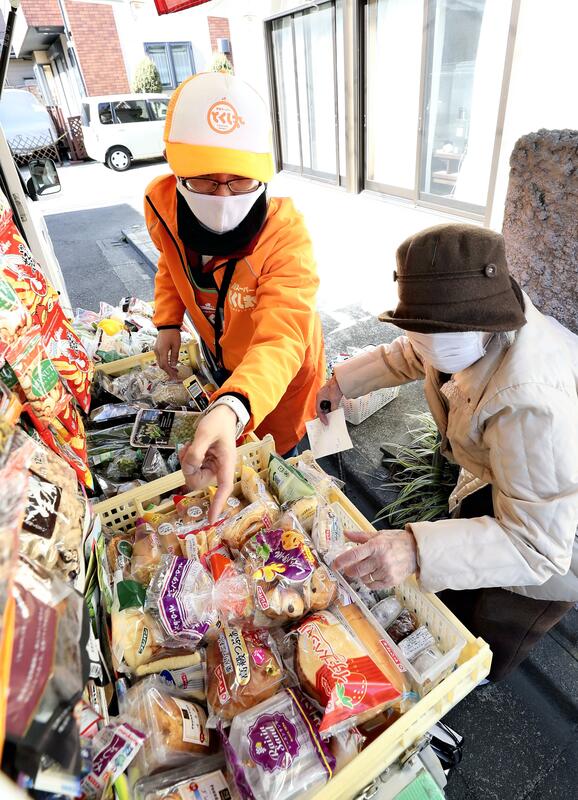
Mobile supermarkets, which are lightweight trucks loaded with various items, have been attracting more customers amid the coronavirus pandemic.
Although the main clientele for these mobile supermarkets has traditionally been elderly residents of rural areas who are unable to get to a store, it is now also attracting those living in urban areas who want to avoid crowds. As a result, supermarket operators are reexamining their sales strategies.
-- Being able to safely shop
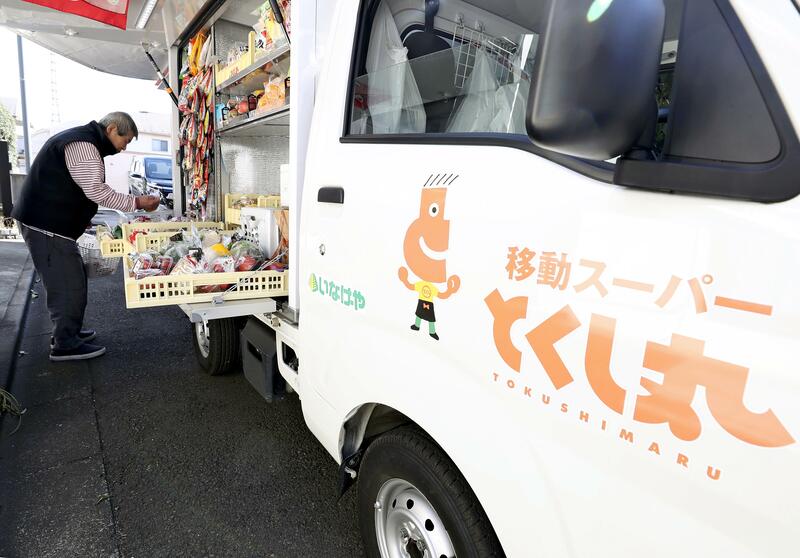
A lightweight truck with the Inageya supermarket logo arrived at a residential area of Kodaira, Tokyo, around noon on Tuesday. Soon, elderly women from the neighborhood came to the truck and bought groceries including vegetables, bread and fish fillets.
Inageya Co. sells groceries using these mobile supermarkets for an additional 10 yen per item in a tie-up with Tokushimaru Inc., a mobile supermarket operator based in Tokushima Prefecture.
"I can safely go shopping because it is outdoors and I don't have to wait in line," said a 77-year-old woman who shops at the mobile supermarket every week. "I also like it because I can actually look at the items and choose what I want by myself."
A 43-year old driver of the mobile supermarket makes about six to 20 stops a day, including at residential areas, parks and near the front doors of customers. The truck is loaded with about 400 types of groceries totaling about 1,200 items, including non-refrigerated, refrigerated and frozen foods, as well as detergents and sunscreens.
The average amount spent by a customer at a mobile supermarket tends to be more than the average spent at a brick-and-mortar supermarket because elderly customers tend to buy more expensive items such as wagyu and kamaboko fish cakes for their children and grandchildren who visit them on a holiday, said the driver.
-- Tie-ups with 140 firms
A total of 10 mobile supermarket vehicles operate in the Tokyo metropolitan area under the tie-up between Inageya and Tokushimaru. Their sales and the number of customers have grown steadily since the pandemic, which resulted in a 20% increase in daily sales per vehicle in January compared to the same period last year.
The operators are planning to increase the number of mobile supermarket trucks to 40 in the near future. As opposed to online shopping, the operators say the advantage of the mobile supermarket is that customers can actually see the items they are buying.
Tokushimaru, which began operating mobile supermarkets in 2012, is now in tie-ups with about 140 supermarket operators nationwide, including Ito-Yokado Co., and provides sales know-how.
Some local governments in rural areas offer grants to attract mobile supermarkets, however, these types of supermarkets are profitable in urban areas even without grants, according to the company.
"A growing number of elderly people are feeling isolated because of the pandemic, making mobile supermarkets a valuable resource [to the community]," said Ayumu Shingu, the president of Tokushimaru.
-- Household goods, services go mobile
Household goods retailer Ryohin Keikaku Co., known for its Mujirushi Ryohin brand, has also embarked on mobile sales and started operating in Yamagata and Niigata prefectures last summer. The real estate developer Mitsui Fudosan Co. sold on-site services, such as shining shoes and massage, at condominiums on a trial basis between September and December last year.
According to the Agriculture, Forestry and Fisheries Ministry's data in 2015, there were about 8.24 million people aged 65 and over whose home was 500 meters or more away from a grocery store and did not own a car. Of them, 4.91 million live in urban areas, accounting for 60%.
Given this, the prolonged coronavirus pandemic might increase the demand for mobile sales of goods and services mainly in urban areas, where the population is aging.
Read more from The Japan News at https://japannews.yomiuri.co.jp/