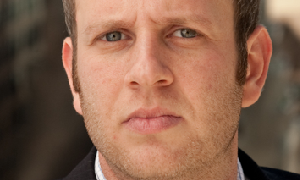

Paul Gelb is an experienced leader in mobile. Most recently, he was a head of programmatic and marketplace development at Twitter, joining through the acquisition of MoPub, the mobile exchange where he had served as chief of strategy. Now at xAd, we asked him to provide perspective on the changes in advertising, shifts in mobile marketing and the promise of programmatic.
What first attracted you to advertising?
I was a history nerd before I became a technology nerd. From a high level perspective, it seemed to me like most of the other key functions of business had undergone technology-driven transformations, including manufacturing and finance.
These transformations were the growth drivers of the global economy for the past 100 years. I believed that marketing was next. I hoped being a part of it would provide a rewarding career path in which I could significantly impact the future of industries.
What’s the key to success in mobile advertising?
In terms of mobile practice, the key to success is striking the right balance between doing one hard thing really well (like location) and leveraging a holistic approach to data, media and creative to unlock return on investment (ROI) performance.
From a marketer’s perspective, the key to success is viewing all digital marketing from a mobile perspective. Within a year, mobile will account for the majority of digital ad spend. It has been the growth driver of social, video and native ad formats.
eMarketer recently revealed that mobile advertising will be a $100bn business by 2016. The most successful marketing teams today are leveraging mobile as the connective tissue and central hub for their planning, media buying, targeting, measurement and analysis.
Why is programmatic such a buzzword in mobile?
This is the only time I have seen, in any business, that the practical path and the aspirational path are one and the same. A WPP executive once told me that if they bought mobile the way they buy TV, the holding company would have to hire 8 billion people.
At the same time, I saw at MoPub that ad buyers demonstrate every day how automating execution processes enables unprecedented opportunities to creatively align message, experience and targeting. “Social” and “mobile” were once buzzwords. There is usually a topic or concept important enough for large numbers of people to meaningfully talk about it behind the buzzword label. When too many people enter the conversation, the meaning gets lost and it gets characterised as a buzzword.
Cookies (or lack thereof) are always referred to as a barrier for mobile – is the industry still hung up on that issue?
Mobile makes everything it touches move faster. Most marketers that I have worked with quickly moved past connecting mobile devices to web cookies, to thinking about how to connect data from several consumer touch points, including in-store.
In fact, they are now starting to look at it from the opposite direction, since mobile location provides the best intent signals and audience insights.
Thus, the biggest investment opportunity in terms of impact to their overall marketing ROI is finding a way to align these insights and signals via identifier (IDFA) to their planning, buying, measurement and reporting across non-mobile channels. Liveramp, Bluekai, Datalogix and Adobe are just a few companies addressing this.
How does location fit into mobile advertising?
The most valuable thing for me is time. The time I spend visiting offline locations, including getting my toddler into the car, makes the places I choose to go an exponentially greater source of actionable insights about me than my online behaviour. Today, more than 90% of commerce occurs offline. The convergence of location, commerce and payments has created the biggest opportunity I’ve seen in this space.
We’re seeing location accuracy being used to enable targeting and retargeting based on visits to specific locations. This allows location to evolve from a tool to target people where they are near, to a platform of real-time insights about their true intent and actions.
Location has evolved beyond “marketing in the moment” to now enabling marketers to create specific audience segments based on actual behaviours. Location is going global because the key to global success is local. Location has the power to understand and influence audiences based on their real-world actions and provide direct attribution to prove its value.
Paul Gelb is VP of global brands and agencies at xAd
To find out more about the potential of location marketing, get in touch with the xAd team at contactus@xad.com
This advertisement feature is brought to you by xAd, sponsors of the Guardian Media Network’s Future of advertising hub.