For most competitive Mobile Legends: Bang Bang players in North America, the path to international glory hinges on a single annual tournament, with very little in between.
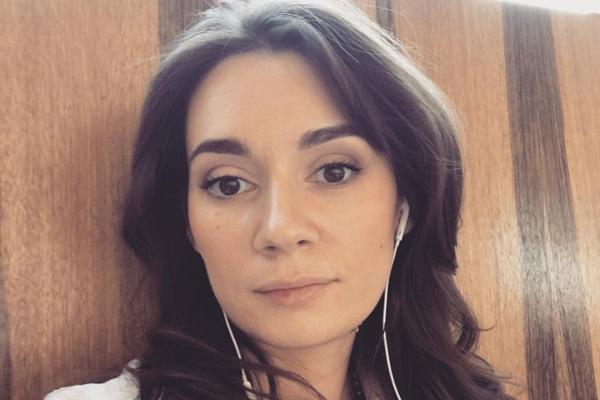
Last year, Ashley "Ashlay" Ann helped Gaimin Gladiators become the first North American team to reach an MLBB international final, finishing second at the 2025 Esports World Cup Women's Invitational. The team's roster featured four American players: Ashlay alongside Nicole "Nicholette" Huang, Cindy "Panda" Zhou and Jessica Qi-Yao "Sayori" Cao. It was a landmark result for a team who were the huge underdogs and expectations suddenly surged. Then, for most of them, competitive play essentially stopped.
As Esports Insider reported, Ashlay's former Gaimin Gladiators teammates went close to a full year without competing on any publicly announced competitive stage after that historic second-place finish, with most showing no logged events on Liquipedia beyond the EWC qualifier and the invitational itself.
A catch-22 with no easy exit
The structural problem can be pinpointed at North America itself, which doesn’t have the same cultural appetite for mobile gaming that fuels MLBB's massive ecosystem in Southeast Asia. The game remains one of the world's most-viewed esports titles, yet it commands extremely scant mainstream attention in the West, where it’s considered as something of a joke —- or, at least, something not to be taken too seriously. Without an audience, organizers won't run events. Without events, there's no audience to build.
Ashlay's solution is simply to run more tournaments, which, she says, will in turn increase exposure. Gen.G signing the core of the Gaimin Gladiators squad ahead of the 2026 MLBB Women's International was a notable vote of confidence in North American talent. But one org's commitment won’t (and hasn’t) shifted the wider landscape.
Three orgs, three years, one event that matters
𝟐𝟎𝟐𝟔 𝐌𝐋𝐁𝐁 𝐖𝐨𝐦𝐞𝐧’𝐬 𝐈𝐧𝐭𝐞𝐫𝐧𝐚𝐭𝐢𝐨𝐧𝐚𝐥 🏆
— 𝐀𝐜𝐞 𝐌𝐚𝐧𝐚𝐥𝐨 💛 (@itsacewinner) July 17, 2026
Natus Vincere 🇵🇭 def. Galaxy Phoenix 🇰🇭
Natus Vincere advances to the Grand Finals of the 2026 MLBB Women’s International! 🔥#MWIatEWC2026 pic.twitter.com/Y5p3iSggHt
This is Ashlay's third consecutive EWC cycle under a different banner. She played for Cloud9 Female in 2024, Gaimin Gladiators in 2025, and Gen.G this year. Sayori and Panda made the same trip across all three years under the same rotating org structure.
The pattern makes sense. The EWC Women's Invitational, now branded the MLBB Women's International, carries a $500,000 prize pool, dwarfing anything else available to players in the region. The lure of that prize money largely explains why orgs cycle in and out rather than commit long-term. Team Vitality is the notable exception, having locked in their women's MLBB roster through 2030, a level of stability that sustained winning tends to attract.
At the 2026 event, Gen.G finished 9th–12th after losing to both eventual finalists on back-to-back days — NAVI PH (2-0) and Team Vitality Fem (2-0).
What publishers need to do
Esports Foundation Deputy CEO and COO Mike McCabe addressed the structural challenge directly, placing shared responsibility on clubs, publishers and communities.
"The publishers have a big part to play in this because no one part can do this on its own," McCabe said. "We can't do it on our own. We need the publishers, we need the communities, we need the clubs to be able to build those pathways and build those opportunities."
That puts MOONTON in the spotlight. The MLBB publisher has built a thriving women's competitive structure in Southeast Asia and is seeing growing traction in East Asia and Western Europe, per McCabe's remarks. North America remains a clear gap.
Ashlay wants to be a champion, not an ambassador
Despite having an Instagram account, Ashlay has no interest in becoming a social media face for MLBB in the region. Well, at least not until the time is right.
"For me personally, I actually don't want to be an influencer or an ambassador or whatever it is. If I am, I want to win,” she said. "First, I want to be a champion, and I want to be known for that, rather than anything else."
Competing at the EWC each year means grueling travel and time away from home, neither of which Ashlay is a fan of. Fortunately, the competitive experience means she can handle the discomfort.
"The experience itself is what makes my job fun and special," Ashlay said. "I got to see all of these other professional players. I got to experience social media, [doing] this content thing that I normally do not do. And I also get to show my competitive side on a big stage.”
What comes next for NA's best
MOONTON holds most of the cards. Orgs like Gen.G demonstrate that Western organizations will invest in MLBB if the competitive structure justifies it. A meaningful regional circuit in North America, even a modest one, would give players like Ashlay, Sayori, Panda and Nicholette somewhere to compete year-round instead of waiting on a single annual qualifier.
Gen.G's 9th–12th finish at the 2026 MLBB Women's International resets the clock. The next EWC qualifier cycle will determine whether the squad stays together and whether North America produces another team capable of reaching the final.