
MLB nine-inning games this season are taking six minutes longer than they did through the same number of games last season and are on pace for the longest average game time in the four seasons under the pitch timer. But don’t be so quick to blame ABS.
The ABS challenge system, in which the batter, catcher and pitcher can ask for a review of the umpire’s ball or strike call, has added 63 seconds per game, based on an average of 4.1 challenges per game.
The first 421 games this year have clocked in at an average of 2:43, as compared to 2:37 through the first 421 games last year. That’s still faster than in any full season before the pitch timer since 1984. The reasons for the added time are more nuanced than pointing the finger at ABS. Here are some of those reasons:
- There are five more pitches per game, from 289 last year to 294 this year. The early increases this year in the strikeout and walk rates (call it the ABS break-in period) have flattened. Based on minor league trials, MLB expected the walk rate would increase slightly under the ABS system. That has been true. The strikeout rate has stabilized to about what it was through 421 games last year.
- Pitchers are bleeding the pitch timer more. When the pitch timer first began, pitchers were in a hurry to avoid a clock violation. With each year, the average remaining time on the clock when a pitch is thrown has decreased. Hitters must be set in the box and alert to the pitcher with eight seconds on the clock. Pitchers have grown more comfortable with running the clock down further. Many now use the timer as a tool to “freeze” or disrupt hitters, even with no runners. They can be seen eyeing the clock countdown before turning their attention back to the plate.
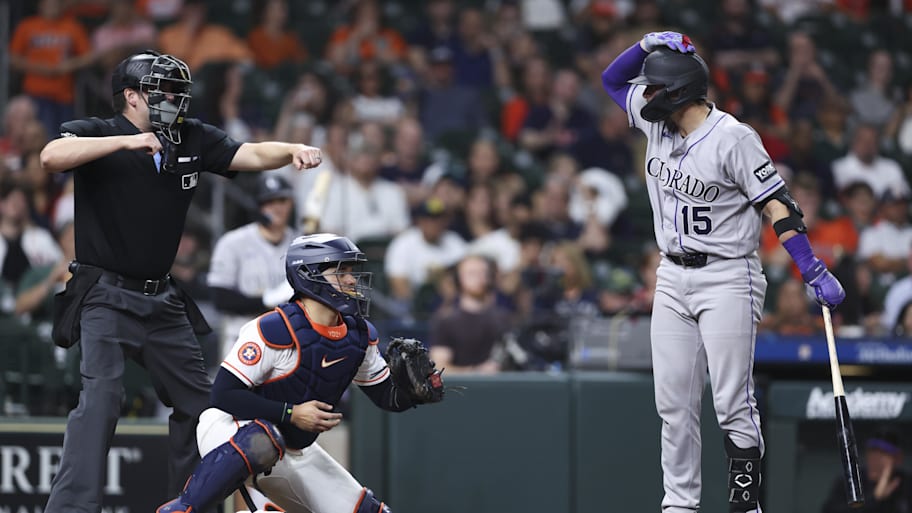
- Hitters are also more comfortable with playing under the timer, and it shows with their increased use of timeouts. (Batters are afforded one timeout per plate appearance.) Batter timeouts have increased every season through 421 games. They have grown from 7.7 per game in 2023 to 12.8 in 2024 to 14.4 last year to 16.9 this year.
- More pitches are being called from the dugout. The Marlins and Rockies do this, while other clubs may do it occasionally (even if they don’t publicize it). The Marlins have added one second to their average time per pitch. The Rockies have added 1.5 seconds per pitch, which equates to 3 minutes, 41 seconds added to a Colorado game.
The pitch-calling plan has worked well for the Marlins and Rockies. Miami has lowered its March/April ERA this year from last year by 1.85. Colorado has cut its March/April ERA by 1.23. Given their success, it is reasonable (and unfortunate) to expect other teams to adopt the pitch-calling program. Anything that removes player-centric competition (base coaches stealing and relaying signs, laminated defensive position cards, calling pitches from the dugout, etc.) is a bad look for the sport.
Four ABS challenges, five more pitches, pitchers bleeding the clock more, two or three more batter timeouts, catchers waiting to get pitch calls from the dugout ... little by little it begins to add up—in this case to six minutes.
More MLB from Sports Illustrated
- Juan Soto Had an Unusual Question for Catcher During His At-Bat
- SI:AM | The NL East’s Other Trainwreck
- Breaking Down the Extremely Complicated ABS Challenge That Gave Everyone a Lot to Think About
- Phillies' Three Biggest Mistakes Since Making the 2022 World Series
This article was originally published on www.si.com as MLB Games Are Taking Longer Again, and It's Not Just Because of ABS.