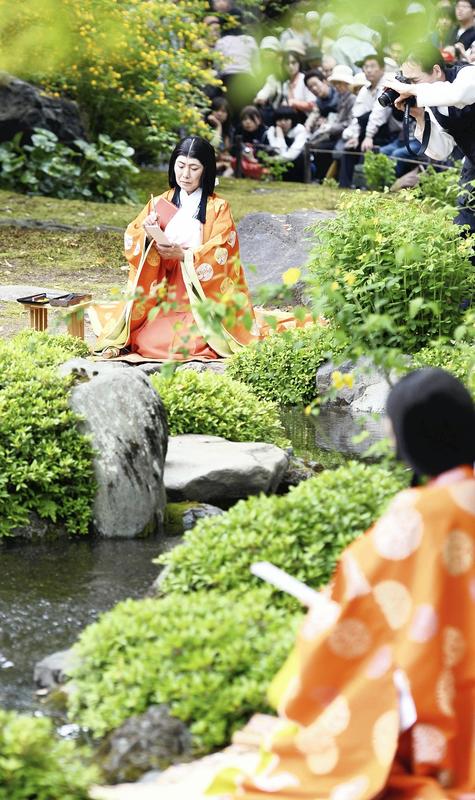
KYOTO -- When thinking of the Japanese sense of beauty, the first concepts that come to mind are likely "wabi" and "sabi." As a specific example, cultural historian Isao Kumakura defines this as "admiring the faint moon between the clouds, rather than the full moon."
At the same time, there is a sense of beauty in Japan that admires the amorous, sultry shine of the full moon, like the skin of a beautiful person. This is called "miyabi."
Wabi and sabi are found in cultural elements that originated in medieval times. These include the chanoyu tea ceremony, noh and kyogen farces acted out as part of a noh play cycle, and renga linked verse that later led to haikai seventeen-syllable verse.
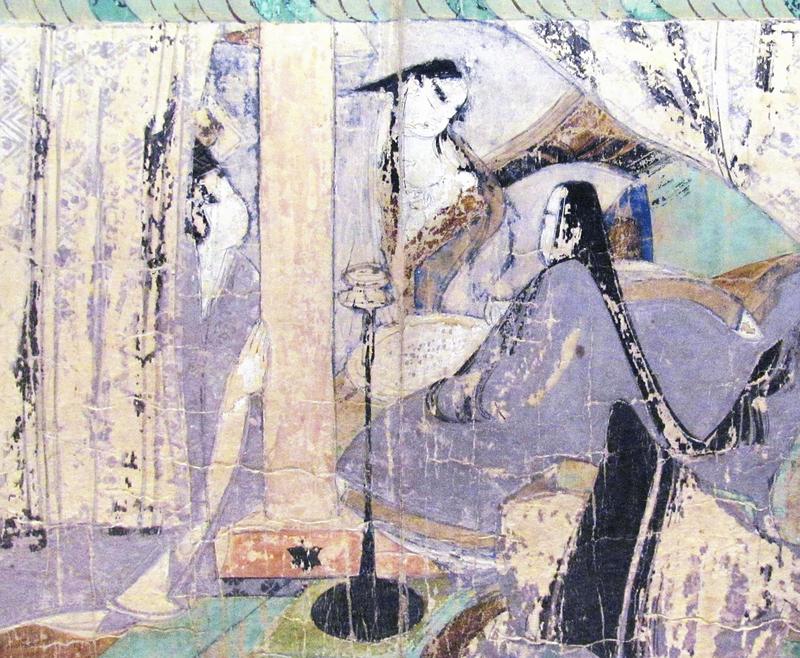
Miyabi, for its part, honors the dynastic culture of ancient Kyoto. Miyabi is court style. The opposite of miyabi is rusticism. Japanese people have a tendency to look down on the countryside.
Suppose you visit Kyoto as an important guest. How do the people of Kyoto treat you?
One choice is chakaiseki. You are admitted to a tatami-mat room without furniture, and you probably do not know where to sit.
Kaiseki ryori cuisine and sake are served on a tray table in front of you, as you sit down in a humble manner at the designated place. It looks good but the portions are small. Japanese sweets and green tea follow. Tea prepared in front of you by a master is carried to you and placed directly on the tatami. Restrained conversation is considered to be best, and there is little chance of spirited interaction between guests.
This is the basic way of serving tea. The tea utensils and the calligraphy and paintings hung in the tokonoma, an alcove where art or flowers are displayed, may provide some explanation of the culture of wabi and sabi.
Another form of hospitality is also performed in a tatami room. Here there is a large lacquered Japanese table that is low to the floor, and you can sit on a soft zabuton cushion in a quiet corner. I forgot to say that there are no zabuton in the tea ceremony mentioned above. Your feet may get numb because you sit on hard tatami mats.
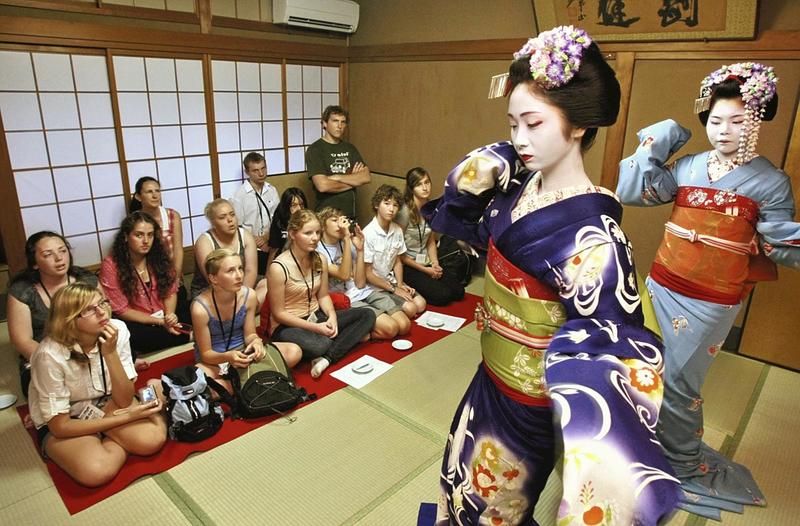
When you sit on a zabuton, a geiko (also known as a geisha), and a maiko apprentice geiko come next to you and pour sake. Even if you can only speak a little Japanese, the conversation will be lively. Dishes are served one after another.
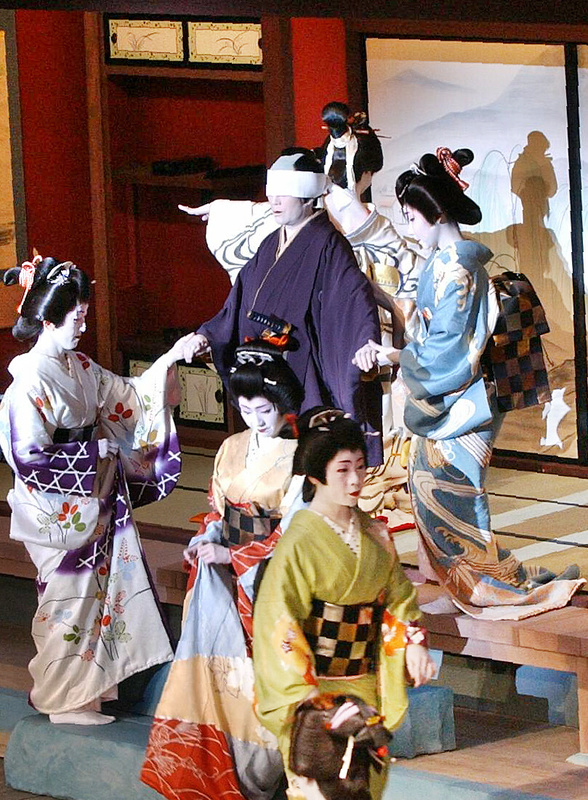
Before long, an experienced geiko plays the shamisen and a young maiko dances (the word maiko means "a woman who dances"). After that, guests usually enjoy a little game together. There are many games that test people's reflexes, so if you get too drunk, you can't win.
According to historian Tatsusaburo Hayashiya, dynastic culture was amorous and lustful. Most of the dynastic poems and stories extol love.
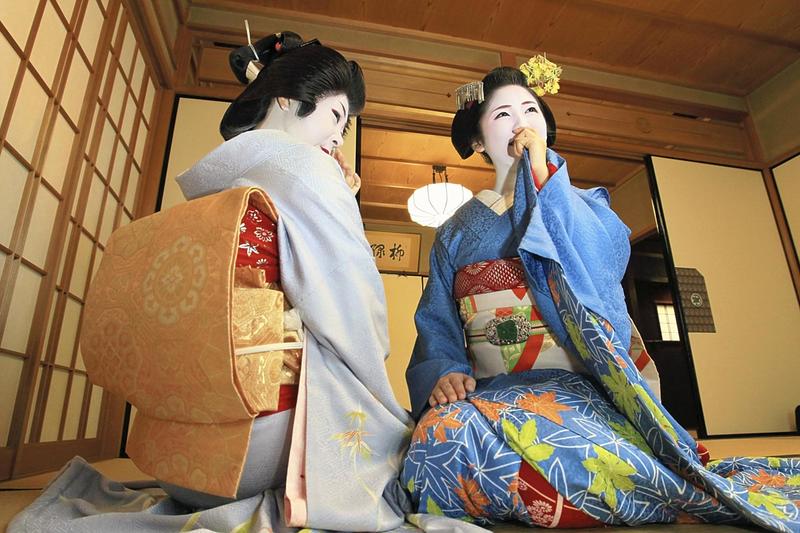
There is no need to fall in love with maiko and geiko, but you can enjoy this atmosphere a little.
The patterns of the kimono worn by geiko and maiko contain elements of dynastic culture, which admired the beauty of nature. The colors are rich but absolutely elegant. The room includes a checkered alcove with alternating blue and white squares, and on the small fusuma screen is a painting by an artist of the Maruyama Shijo school that does not hide its yearning for dynasty.
Kimiko Reizei, the wife of the head of the Reizei family of Kyoto and a former court noble, said: "Miyabi is the mainstream of Japan. Wabi is a culture created on the side by people who were not satisfied with it."
"Though foreigners like it because it's mysterious," Reizei said with typical Kyoto irony.
Read more from The Japan News at https://japannews.yomiuri.co.jp/