With the law on minpaku private lodging services having taken effect on Friday, private lodgings can officially open at ordinary houses, condominiums and other facilities. Minpaku owners -- those who successfully register with their municipality -- have enthusiastically voiced their desire to contribute to vitalizing local communities.
However, many of their neighbors are deeply concerned about minpaku services. Balancing the new system with a comfortable living environment for all remains a challenge.
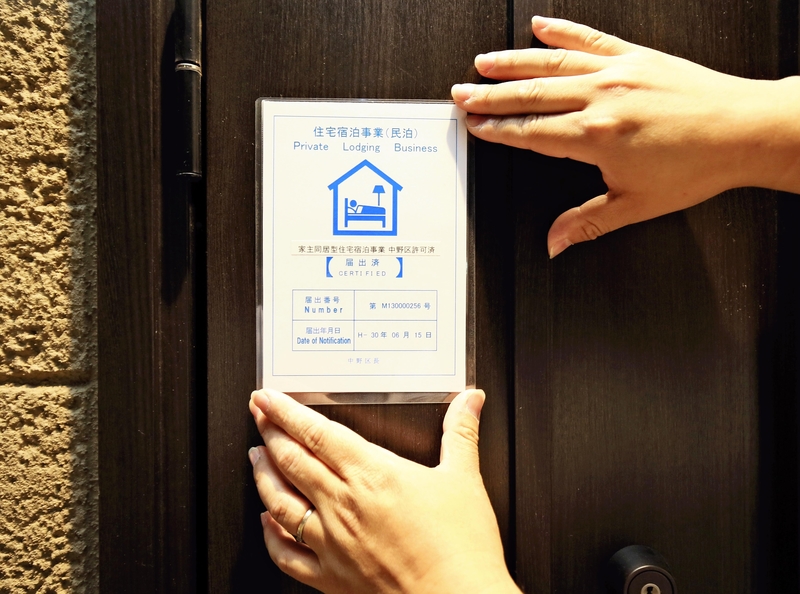
On Thursday night, a 35-year-old homeowner who plans to enter the minpaku business in Nakano Ward, Tokyo, put up a registration certificate from the Nakano Ward office at the entrance of their house.
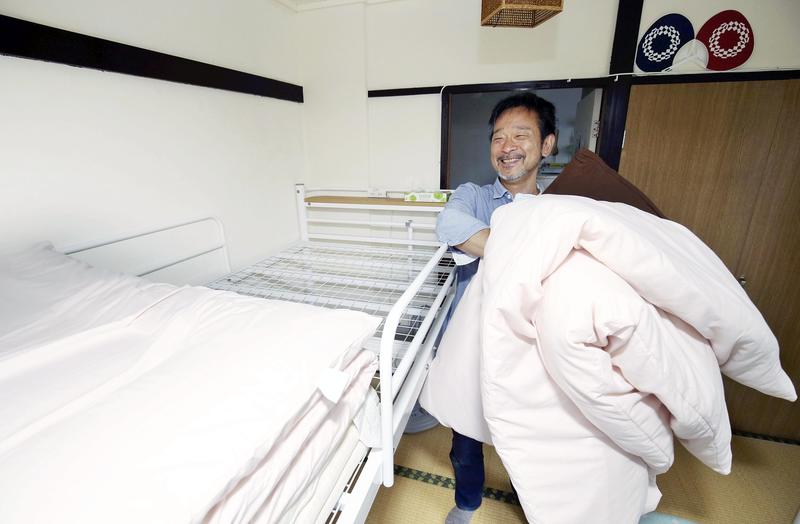
"I'm finally at the starting line," the homeowner said with a smile.
The owner lives in a two-story detached house. The owner and three family members live on the second floor, which has a living room and other rooms, while the three rooms on the first floor are rented out for minpaku private lodgings.
A six-tatami-mat room equipped with an electric kettle, bed, mini refrigerator and other furnishings is being offered for about 6,000 yen per night. A South Korean woman had made a reservation for Friday.
"I'm looking forward to meeting with guests," the owner said.
However, the owner was frustrated with the Private Lodging Business Law's stipulation that minpaku providers can only offer services for a maximum of 180 days per year, saying: "[This regulation] makes business difficult. I plan to do business in compliance with the rules, so I should be given more credit."
Meanwhile, a 59-year-old woman who will enter the minpaku business by renting out an unused room at her home in Shibuya Ward, Tokyo, said, "I'd like to introduce the charms of the Japanese way of life and other things to my guests."
The Shibuya Ward office requires minpaku providers to give written or face-to-face notification to nearby residents before starting their business.
"I visited each individual home and obtained their consent. I think they feel a sense of security because my minpaku business is a home-stay type, where the owner stays at home," she said.
According to a Yomiuri Shimbun survey, more than 50 municipalities across the nation set their own regulations in addition to those provided under the minpaku law.
In Minato Ward, Tokyo, minpaku providers are required to distribute a document containing information such as their name, address and emergency contact phone number to all residences within 10 meters of their minpaku facility.
In Gifu Prefecture, minpaku providers are obliged to confirm the identity of guests face-to-face or through telecommunication devices such as internet calling service Skype, while the Nishinomiya city government in Hyogo Prefecture requires providers to hold briefing sessions with residents within 15 meters of their minpaku facility before starting business.
Unlawful minpaku businesses
However, neighbors of minpaku providers often express strong concerns.
"I'm afraid minpaku rooms will continue to be used for crimes. I hope the government will adequately regulate minpaku providers," a man in Shinagawa Ward, Tokyo, said.
In a room opposite from his in his condominium building, a 25-year-old Canadian national was arrested in January this year by the Metropolitan Police Department for receiving about 2.2 kilograms of stimulant drugs imported by air, on suspicion of violating the antidrug special measures law.
According to the Shinagawa Ward office and others, the room used for the crime was an illegal minpaku lodging that violated the Inns and Hotels Law. The arrested man found the room via an intermediary website and picked up a room key that was placed in a mailbox of the condominium.
According to the Yomiuri Shimbun survey, 58 municipalities said they had received complaints about minpaku from residents, with 11,282 complaints received over three years from fiscal 2015 to fiscal 2017. A total of 4,145 administrative directives were issued by 42 municipalities, including exposure of illegal minpaku providers.
Isamu Mitsuhashi, professor of tourism at Shumei University, said, "Given the series of troubles involving minpaku businesses, certain regulations are necessary. However, if regulations are too strict and lead more people to give up minpaku businesses, it will be impossible to meet the accommodation needs of foreign tourists. Respective municipalities need to deal with minpaku businesses flexibly, such as by reviewing their ordinances in light of the circumstances."
Read more from The Japan News at https://japannews.yomiuri.co.jp/