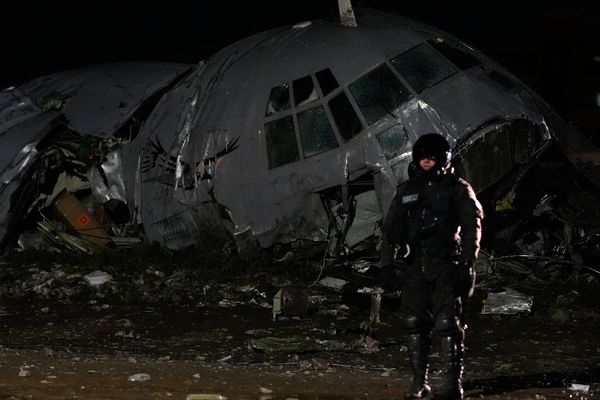
The family of a worker whose body remains trapped under the wreckage of Didcot A power station have criticised a plan to use explosives to demolish the rest of the building.
“We want the men back in one piece, not many pieces,” said Steve Hall, the son-in-law of Ken Cresswell, after RWE npower announced plans for the controlled demolition of the parts of the coal-fired plant that remain standing.
Cresswell, 57, was one of four demolition workers killed when Didcot A’s condemned boiler house unexpectedly collapsed in February. His body remains trapped under the rubble, which rescue workers have said is too unstable to search and engineers have said could collapse at any time.
RWE npower said it would ensure the debris from the blast would not fall on to the rubble from the previous collapse.
But Hall told BBC Radio Oxford: “We are totally against it and we will fight and do whatever we have to to stop that blast.”
He said the family was afraid the explosion could throw more rubble on to the wreckage beneath which Cresswell, from Rotherham, is trapped.
The bodies of John Shaw, 62, also from Rotherham, and Christopher Huxtable, 34, from Swansea, also remain missing since the collapse. The body of Michael Collings, 53, from Brotton, Teesside, was recovered.
RWE npower said no further recovery work could take place until the remaining boiler house structure was demolished.
“Having explored other manual options, our experts have made it clear that the quickest and safest way to bring the building down is by controlled explosive demolition,” a spokesman said.
After the collapse, sniffer dogs, listening devices and drones were used to inspect the wreckage in an overnight rescue operation involving more than 100 people.
Initial recovery efforts were hampered because engineers had said the building was unsafe. In early March, officials said it could be “many months” before the bodies of the missing men were recovered.
Thames Valley police and the Health and Safety Executive have been treating the site as a crime scene while they investigate the reasons for the collapse. The firm carrying out the demolition, Coleman & Company, had never done a job involving a power station.