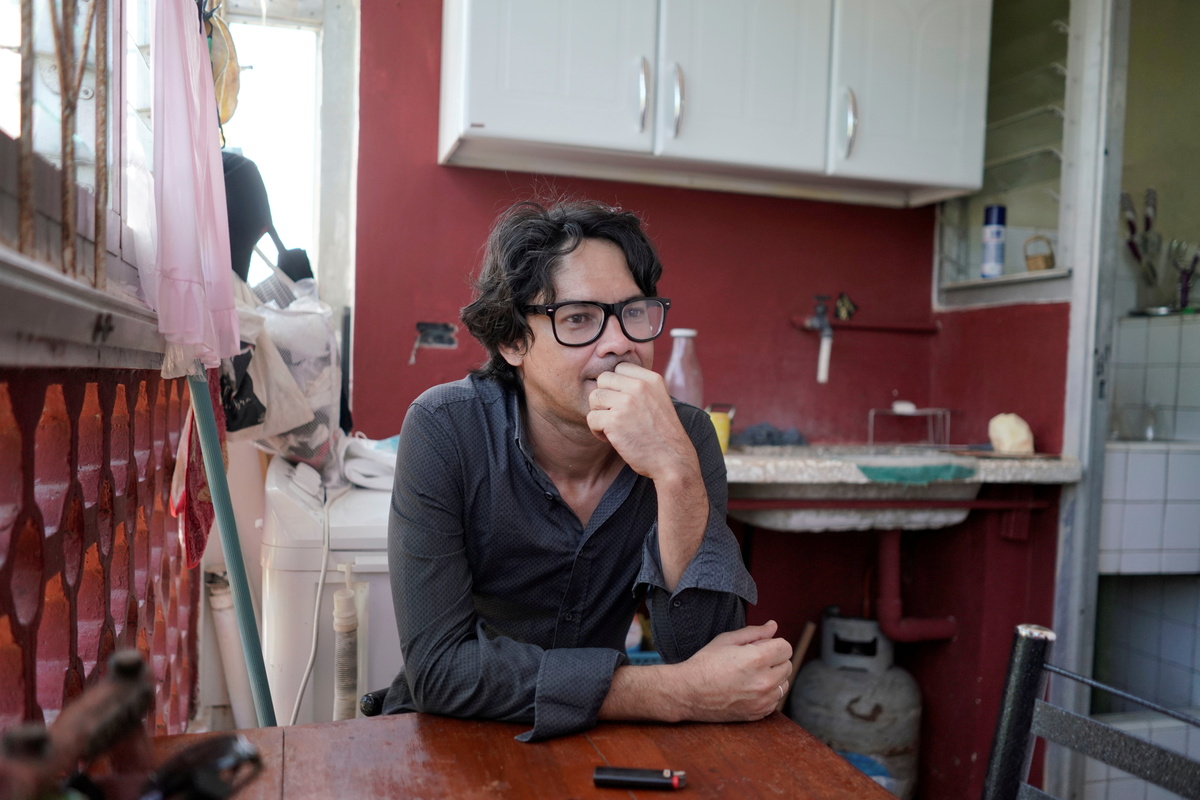
Cuban protest leader Yunior Garcia and his wife landed at Madrid's Barajas airport on Wednesday afternoon, a source from the Spanish government said, putting an end to uncertainty over his whereabouts.
Garcia, who left Cuba two days after the government blocked a planned major protest, flew on a commercial flight and entered Spain on a tourist visa, the source said.
A Cuban government spokesman confirmed Yunior Garcia was in Spain.
Spanish newspaper El Pais quoted sources close to Garcia as saying he left due to the "brutal police pressure" he had suffered in recent weeks ahead of the planned demonstration.
He did not immediately respond on Wednesday to a request for comment.
Garcia's home in Havana was surrounded by state security and government supporters on Sunday, when he had planned to march down one of the capital's central streets with a white rose in hand, to draw attention, he said, to the non-violent nature of his movement.
By Monday, the day he and other dissidents had called for widespread protests, his neighborhood was largely quiet. Fellow activists on social media had since said they had not heard from him since Tuesday morning.
U.S Secretary of State Antony Blinken condemned what he called intimidation tactics from the Cuban government on Monday, while Spanish news agency EFE said authorities had revoked press credentials for several of its journalists in Havana.
Garcia was a central figure in a wave of protests that rocked Cuba in July and drew thousands onto the streets to demonstrate against shortages of basic goods, curbs on civil liberties and the handling of the coronavirus pandemic.
The protests, Cuba's largest in decades, provoked a harsh backlash from the government, which arrested hundreds of demonstrators.
(Reporting by Belén Carreño in Madrid, Nelson Acosta and Marc Frank in Havana, Dave Sherwood in Maine, writing by Nathan Allen, editing by Andrei Khalip and Gareth Jones)