
If you’ve opened your phone today and seen talk of missiles in Iran and Israel, you’re not alone in wondering how this all escalated again so fast.
Around 100 days into the current phase of the Iran war, and only days after a new ceasefire framework for Lebanon was floated in Washington, the truce has been tested by fresh strikes, warnings and political phone calls.
In the space of about 24 hours, Iran has fired a barrage of missiles at northern Israel, Israel has launched airstrikes deep inside Iran, and the already fragile situation in Lebanon has become even more unstable.
Here’s everything we know so far.
Sunday afternoon: strikes on Beirut
The latest escalation started in Lebanon. On Sunday afternoon local time, Israel bombed a densely populated part of Beirut’s southern suburbs, an area known as Dahiyeh that’s widely seen as a Hezbollah stronghold but is also home to thousands of civilians. Lebanon’s state National News Agency reported that at least two people were killed and 11 injured after two apartments in two separate residential buildings were hit.
Israel’s Prime Minister Benjamin Netanyahu and Defence Minister Israel Katz said in a joint statement that the army was targeting “terrorist headquarters” and framed the strike as a response to Hezbollah fire into northern Israel earlier in the day.
In accordance with the directive of Prime Minister Benjamin Netanyahu and Defense Minister Israel Katz, the IDF has just struck terrorist headquarters in the Dahieh district of Beirut, in response to Hezbollah's firing at Israeli territory.
— Prime Minister of Israel (@IsraeliPM) June 7, 2026
For Hezbollah and Iran, it was another air raid in a civilian neighbourhood, and it landed just days after a new ceasefire arrangement involving Lebanon was announced in Washington and quickly rejected by Hezbollah. Iranian officials had already warned that if Israel extended its attacks in Beirut, they would respond directly against Israel.
Sunday night: Iran launches missiles at Israel

After the Beirut strikes, Iran followed through on those warnings. On Sunday night, Iran’s Islamic Revolutionary Guard Corps (IRGC) launched a barrage of ballistic missiles at northern Israel. Iranian officials say they targeted Israel’s Ramat David airbase near Nazareth, describing the operation as a response to “the extensive crime of the usurping Zionist regime in southern Lebanon, the killing and mass displacement of the oppressed people of Tyre, Nabatieh and other areas, including Dahiyeh Beirut, the Ramat David airbase, the origin of these aggressions, was targeted by ballistic missiles of the IRGC Aerospace Force”.
In its statement, the IRGC called the launches “a warning”, saying that if Israeli “aggressions are repeated, the responses will be more extensive and will include all American‑Zionist interests in the region”.
The Israeli army, meanwhile, said it had “intercepted all missiles from Iran thus far”, after sirens sounded across parts of the country and residents were told to move into shelters. The Home Front Command later allowed people to leave protected spaces and there were no immediate reports of casualties in Israel from Iran’s barrage.
you said that all the missiles were intercepted. 😎 pic.twitter.com/s19DdaBpyl
— Iran Embassy SA (@IraninSA) June 7, 2026
Overnight into Monday: Israel hits targets inside Iran
In the early hours of Monday morning, only hours after the Iranian launches, the Israel Defense Forces (IDF) announced on Telegram that its air force had hit “military targets belonging to the Iranian terror regime in western and central Iran”.
Shortly after, Iranian state media and international outlets reported explosions in several Iranian cities, including Tehran, Isfahan, Tabriz, Karaj and Najafabad. Iran temporarily closed the airspace around Tehran’s Imam Khomeini International Airport, its main international hub, while authorities assessed what had been hit. Iran’s Revolutionary Guard accused Israel of using air‑launched ballistic missiles but did not immediately release detailed information on the specific targets or the level of damage.
Where does Trump’s call fit into this?
Around the same time Iran was firing its missiles, the United States was supposedly trying to slow things down. US President Donald Trump told Israeli journalist Barak Ravid he was going to call Netanyahu “right now” to tell him not to hit back at Iran. In that interview, Trump said: “The Iranian strikes didn’t hurt anybody. Hopefully, Israel is not going to retaliate… We are very close to a final deal with Iran. It is going to be a good deal. I don’t want it to blow up because of what is happening now.”
🚨🚨More quotes from my phone call with president Trump: “The Iranian strikes didn’t hurt anybody. Hopefully Israel is not going to retaliate. If Bibi strikes them back it’s just gonna keep going like the last 47 years, or the last 3000 years"
— Barak Ravid (@BarakRavid) June 7, 2026
🚨🚨Trump added: "We are very close… https://t.co/zesy2EF0Qi
A senior US official, speaking anonymously to the Associated Press, said Trump believed he had convinced Netanyahu to “hold off for the time being”. For several hours, that seemed to be the case: Israel focused on intercepting the missiles and updating safety guidance at home, but did not immediately announce any direct strike on Iranian soil. By early Monday, that restraint had obviously ended.
In the UK, foreign secretary Yvette Cooper posted on X that “the resumption of conflict between Iran and Israel is in no one’s interest” and called on both sides to “show restraint and de‑escalate immediately”.
From Australia, Prime Minister Anthony Albanese has repeated that his government wants “de-escalation” and a sustained ceasefire, warning the conflict is having “a devastating impact on the global economy, not least here in Australia”. He also said that he backs the United States and Israel in their actions.
“Iran can’t be allowed to get a nuclear weapon, that was the position we took, that’s the right position,” Albanese said in a press conference this morning.
Defence Industry Minister Pat Conroy told the ABC that all parties need to “take a breath”.
“It’s in the interest of the world the entire globe and the sooner this conflict gets resolved the better,” he said to the ABC.

What’s happening with the Strait of Hormuz?
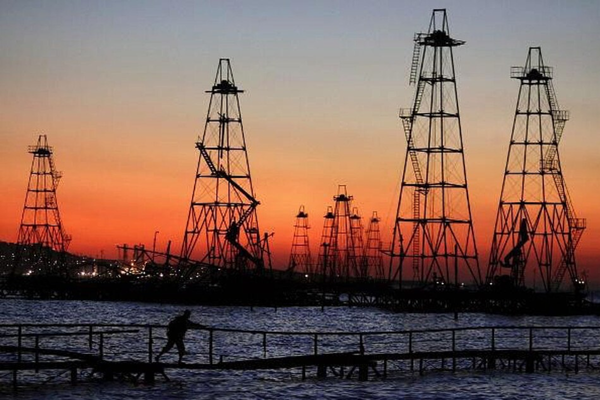
Away from the missile footage, there is a separate standoff over the Strait of Hormuz, the narrow waterway between Iran and Oman that a huge share of the world’s oil and gas exports must pass through. The US-Israel war on Iran has already sharply reduced flows through the strait, with only some tankers managing to move and overall oil and liquefied natural gas exports heavily constrained.
Iran’s ambassador to Moscow has now said the strait “will be open, but with new conditions to be determined by the Iranian and Omani authorities”, including a transit fee for ships using the passage. He argued that Iran and Oman provide key services to vessels in those waters and are entitled to charge for them. The US strongly opposes any system of tolls and has publicly warned Oman not to help Iran impose fees, saying freedom of navigation must be protected.
Oil prices reacted quickly to news of the latest strikes, with benchmark Brent crude rising by more than three percent after reports of Israel’s attack on Iranian territory. For countries like Australia, that flows through to higher costs and more uncertainty around fuel and shipping, even if the fighting feels very far away.
So where does that leave things?
For now, both Iran and Israel are still describing their moves as responses and warnings rather than formal declarations of all‑out war. At the same time, missiles and airstrikes are crossing borders, Lebanese, Israeli and Iranian civilians are living with sirens and displacement, and a crucial energy chokepoint is being pulled into the mix. The situation is continuing to unfold, and the timeline may yet get more crowded in the hours and days ahead.
Lead image: Getty / AP
The post Missiles, Airstrikes And A Shaky Ceasefire: What’s Going On With Iran And Israel Now appeared first on PEDESTRIAN.TV .