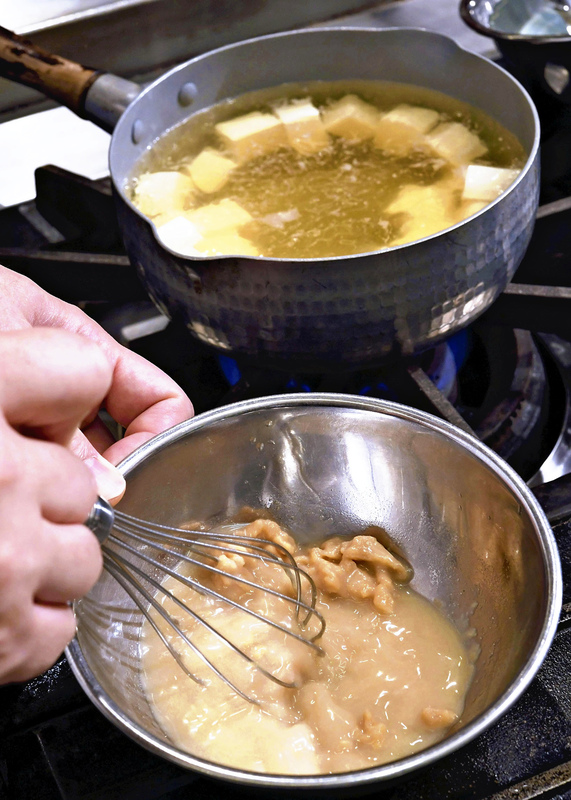
This series introduces basic information and tips for making washoku dishes. In this installment, we talk about miso soup.
"Miso soup is a typical dish of Japanese home cuisine," said Kiyoyuki Ichimaida, chief professor of Japanese cooking at Hattori Nutrition College. "As you can make broth with commercially available packed dashi products, I hope people will make miso soup every day if possible."
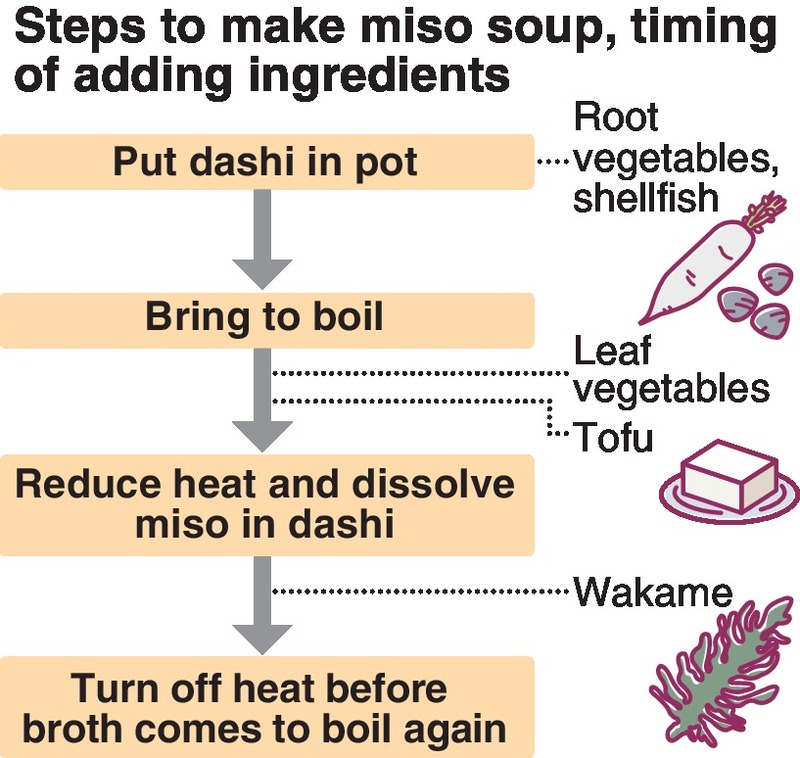
Ichimaida shared recipes for miso soup with tofu and wakame seaweed and miso soup with daikon radish.
The basic steps for both recipes are heating dashi broth, reducing the heat when it comes to a boil, dissolving miso in the dashi, then turning off the heat before the broth comes to a boil again. Once miso is added, it is important not to boil the soup so that the seasoning will not lose its aroma. After dissolving miso, turn off the heat when ripples appear on the surface of the soup.
"This phenomenon is called 'niebana,' and you can enjoy the most delicious miso soup in this condition," Ichimaida said.
If some time is to pass before drinking miso soup, make it first and then reheat each serving. For making miso soup, roughly a cup of dashi and about 10 grams of miso are needed for each serving. You can also take a small amount of dashi broth in a bowl, and dissolve miso in it before adding the mixture to a pot.
The timing of adding ingredients differs depending on how long it takes to cook through. Daikon should be added to the dashi from the beginning. The leaves and stems of daikon should be added to the broth after it comes to a boil. Tofu should be added just before dissolving miso because it easily falls apart. Wakame loses its natural texture when it is overcooked, so add it just before turning off the heat.
Tips for tonjiru soup
Ichimaida also shared some pointers on making tastier tonjiru miso soup with pork and vegetables based on the basic techniques of miso soup making.
The first point is the timing of adding miso. "Add the seasoning in two batches," he said. Add half of the miso after the broth comes to a boil, the same timing as for ordinary miso soup. Then, add the rest just before turning off the heat.
"The flavor of miso penetrates into ingredients after the first miso is added," Ichimaida said. "Add the rest of the miso at the last minute so that you can enjoy the aroma of the seasoning."
Change the timing of adding ingredients depending on how long they take to cook through. Root vegetables that take more time, such as carrots, daikon and burdock, should be put into the broth from the beginning. The same goes for konnyaku.
For pork, put it in before adding the first miso so that it is cooked through while retaining its delicious flavor. For naganegi long onion, add it before dissolving the second batch of miso so the vegetable retains its original texture.
Miso soup with tofu and wakame
Ingredients (serves 4):
1/2 block tofu
10 grams rehydrated wakame seaweed
4 cups dashi broth
40 grams miso
How to cut:
Dice tofu. Cut wakame into bite-size pieces.
Miso soup with daikon
Ingredients (serves 4):
About 200 grams daikon radish
Daikon leaves and stems to taste
4 cups dashi broth
40 grams miso
How to cut:
Cut daikon into wide strips. Cut the leaves and stems into small pieces.
To find out more about Japan's attractions, visit http://the-japan-news.com/news/d&d
Read more from The Japan News at https://japannews.yomiuri.co.jp/