With a total of £1.2m, the amounts awarded to all eight of those who claimed damages against Mirror Group Newspapers dwarfs the highest amount previously paid out in a British privacy case, setting a new benchmark for payouts that will have a fundamental impact on the newspaper industry.
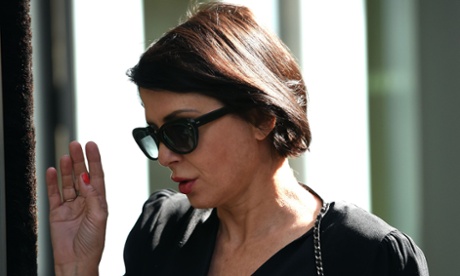
In awarding such high figures – from the highest of £260,000 given to Sadie Frost and £188,000 to Paul Gascoigne down to £78,000 to Lauren Alcorn – Mr Justice Mann appeared to accept the complainants’ view that each interception was an infringement of privacy and that the distress caused was enormous.
The previous highest payout in a privacy case brought against a newspaper was the £60,000 awarded to Formula 1 boss Max Mosley almost seven years ago after the News of the World falsely accused him of taking part in a “sick Nazi orgy”.
The amounts awarded will raise questions about the finances and responsibilities of not just Trinity Mirror, the publisher of the Mirror titles, but other newspaper groups such as Rupert Murdoch’s News UK, the publisher of the Sun.
James Heath, lead solicitor for the complainants in the Mirror phone-hacking case, said: “At the very least this is going to clarify damages in privacy claims ... It will have a knock-on effect on any unsettled cases at News Group or any other tabloid ... Everyone with a case will be waiting for this before they settle.”
In signing off the settlements, he was reacting to days in high court when all but one of the eight complainants broke down in the witness box when talking about the impact phone hacking had on their lives. Sadie Frost shook as she talked about being able to trust no one, suspecting even her own mother of selling stories to the papers, while Paul Gascoigne wept as he recounted his hellish descent into alcoholism and rehab.
Only Alan Yentob retained his composure as he angrily described how the discovery that his phone calls had been hacked into had made him feel as if his house had been repeatedly burgled. In what should have been seen as a sign of how sympathetic he felt, Mr Justice Mann later indicated that such evident anger was just as much an indicator of distress as tears.
Hacked Off and legal groups have estimated that at least 78 cases have already been filed, with many more expected given the extent of hacking described as “on an industrial scale” during this civil case.
Given this, the £12m set aside by Trinity Mirror was described as “farcical” by Evan Harris, director of Hacked Off, which has acted for many of the victims of phone hacking. The cost of this trial alone is expected to run into the millions, with lawyers for each complainant and most, if not all, of that is likely to be borne by the publishers of the Daily and Sunday Mirror. “This is the tip of the iceberg,” said Harris.
News Group, funded by a company with far deeper pockets, has set aside more than £500m to settle phone-hacking claims, with £15m reportedly paid out in the last quarter alone.
As well as setting a new benchmark in civil claims regarding privacy, criminal prosecutors are understood to be keen to study the judgment closely for any evidence of corporate negligence. The Crown Prosecution Service has not yet ruled out criminal charges against News or Trinity Mirror despite both companies finally admitting the extent of hacking after many years of denials.
It is worth noting in these cases that it was not the one front-page story but years and years of hacking into phones, listening in on calls and writing hundreds of stories. Evidence heard at the high court ranged from 1999 to 2010, the year before it was revealed that the phone of murdered teenager Millie Dowler had been hacked.
But it was only last summer that the Mirror group admitted phone hacking.