Language makes and breaks the world for Mira Schendel, a European refugee with Jewish heritage, who settled in Brazil and set about unpicking the system that gives meaning to our lives. Like other artists who came of age in the 1960s hers is an imagination immersed in Zen and concrete poetry. Her approach to language was often acutely physical, scratching out words with an ink-dipped fingernail or wearing sculptures she fashioned from knotted rice paper, a kind of physical manifestation of language’s net of words, which resembled a mass of stringy gum.
Tate Modern, SE1, Wed 25 Sep to 19 Jan
SS Photograph: PR
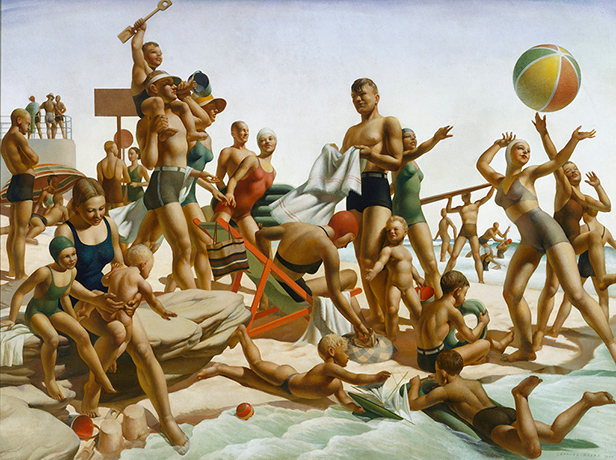
Australia’s landscape has always inspired artists, be that Aboriginal painters or the white settlers imposing European painting traditions. Tracing developments across two centuries, iconic works here include Frederick McCubbin’s impressionist triptych The Pioneer, with its aspiring, birth-of-a-nation yarn. It wasn’t until 50 years later that Sidney Nolan would give white Australian art a distinct voice with his depictions of beach life and Ned Kelly series, where Oz’s famed outlaw appears as an angular black silhouette against an Outback aflame with blues, reds and yellows. The work of Aboriginal artist Emily Kame Kngwarreye also appears with her intuitively realised paintings of dense constellations, ceremonial body painting, plant roots, scored earth and ancestral connections.
Royal Academy, W1, Sat 21 Sep to 8 Dec
SS Photograph: Charles Meere

Darren Banks’s videos are as formally convoluted as the stories behind their creation. The installation Evermore is based on the artist’s fascination with the life and work of Churton Fairman who apparently set out as a ballet dancer and photographer before metamorphosing into Mike Raven, a pirate-radio pioneer focusing on the blues. In the early 1970s he shifted roles once again by becoming a horror-film actor, appearing alongside Christopher Lee and Peter Cushing. Finally, he adopted the role of back-to-nature sculptor and sheep farmer at his Bodmin Moor retreat. Banks focuses his camera on Raven’s rather cliched, semi-religious, semi-erotic wood-carved figurines and – through filmic distortion techniques – warps their appearance to suggest balletic gestures and horror sequences.
Workplace Gallery, to 19 Oct
RC Photograph: PR
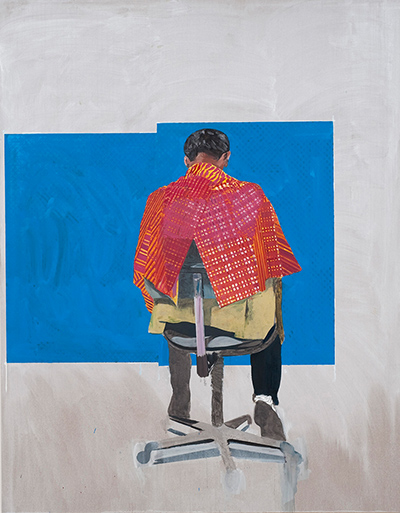
As a second-generation British-Jamaican growing up in the Midlands, Hurvin Anderson’s creative perspectives were informed by the lyrical reminiscences of Birmingham’s Caribbean community. A central focus here is Peter’s Series, a group of paintings focusing on a barber’s shop-cum-local community centre frequented by the artist in his youth with his father. There’s not an awful lot going on in terms of identifiable subject matter in the pictures (which also take in Trinidad’s coastline), yet the outcome is work of rare melancholic power, delightfully reminding us of our own deja vu moments.
Ikon Gallery, Wed 25 Sep to 10 Nov
RC Photograph: PR
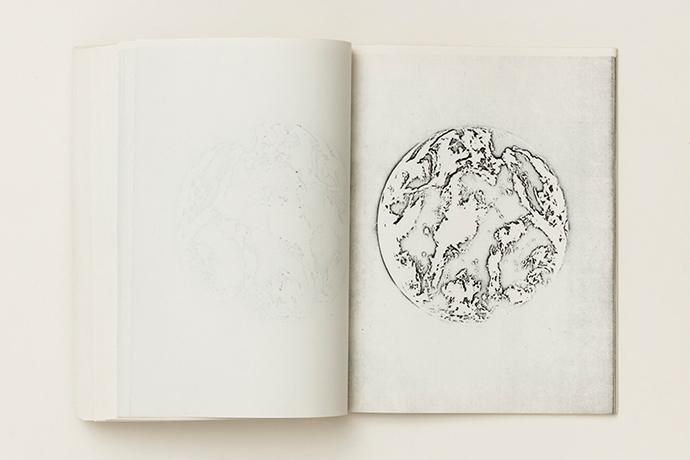
With the rise of paper-free offices, photocopiers might be fast becoming obsolete but back in the 1960s, when this survey of xerography’s impact on art gets going, using a photocopier was as exciting as 3D printing seems now. For artists such as Mel Bochner who famously copied his colleagues’ images to create ring-bound books-cum-sculpture, it presented a way to challenge art’s boundaries. Similarly, Seth Siegelaub and Jack Wendler’s Xerox Book was an exhibition in a book. More recent works include “toner drawings” which look like exploded cartridges, and a huge photocopied mural made for the show.
Firstsite, to 10 Nov
SS Photograph: Dave Morgan
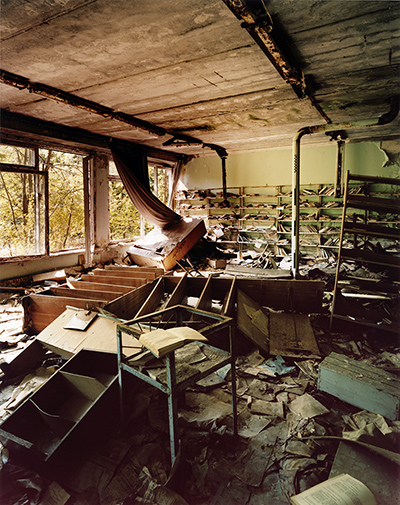
Places haunted by dark deeds are a magnet for Jane and Louise Wilson. In this show of recent film, installation and photography, the Ukrainian town of Pripyat – decimated by the Chernobyl reactor – and the lonely shingle of Orford Ness – the former H-bomb test site on the Suffolk coast – both feature. The inevitable decay of civilisation is a constant in their work but their most recent film explores how the team behind the 2010 assassination of Hamas military commander Mahmoud al-Mabhouh, were identified by using CCTV footage and face-recognition technology. Broadcast around the world via YouTube and the media, it turned the public into investigators.
Paradise Row, W1, Sat 21 Sep to 26 Oct
SS Photograph: PR
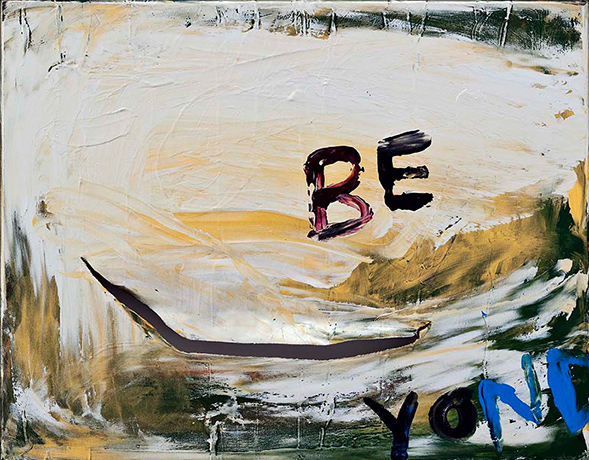
Sue Tompkins uses words as much for the expressive potential of their shapes and sounds as for their dictionary definitions. Here she makes pictures of them as if they are a form of primal calligraphy. Indeed, words appear to have been chosen almost at random and combined with canvas in some kind of creative game of chance. Yet through their embodiment in intensely worked paint they assume a mysterious significance. Tomkins smears the painted texts across the canvas with her bare fingers like fragments of crude graffiti; at times she’s even violently cut into the canvas itself with a scalpel. Yet the rather delicate atmosphere of her palette tends paradoxically to infuse everything with a distinctive lyrical grace.
The Modern Institute, to 11 Nov
RC Photograph: Keith Hunter
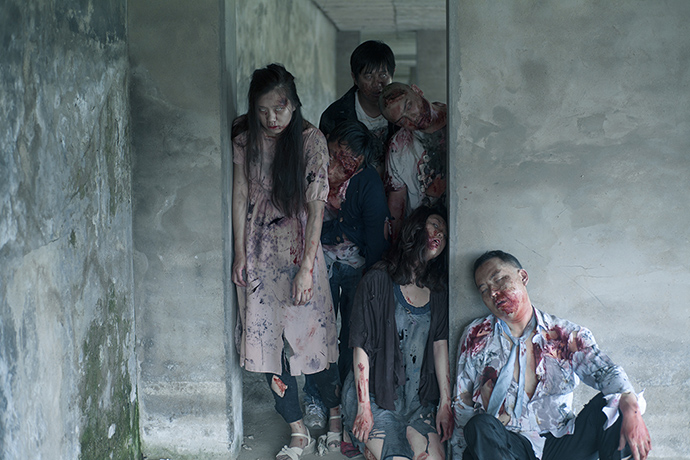
The Chinese artist Cao Fei’s work is a digitised shadow play of elusive and alternative realities. In the past she has borrowed techniques from the online virtual world of Second Life, cosplay cults, and hip-hop role-playing. Now she’s got into zombies; more specifically, she adapts images from the US TV show The Walking Dead, with its simply shocking blood and gore, and from the more misty spookiness of the Silent Hill video game. The resulting installation focuses on forms of magic-realist metamorphosis and – in true horror genre style – blurs the boundaries between the living and the walking dead; the creative spirit of the free and the conventions of the powers that be.
Eastside Projects, Sat 21 Sep to 16 Nov
RC Photograph: PR