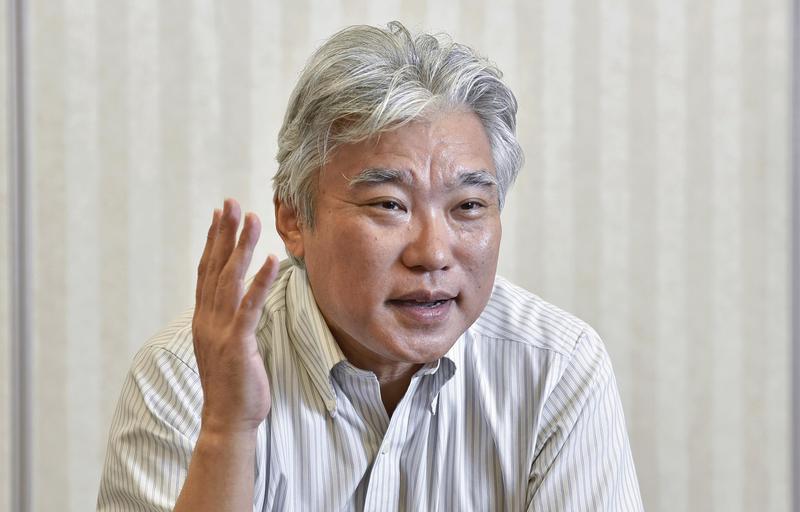
The Private Lodging Business Law (also known as the minpaku law) was enacted in June. Toru Azuma, a professor at Rikkyo University's College of Tourism, spoke with The Yomiuri Shimbun on the issue of the minpaku private lodging (home share) business. He pointed out current problems in the minpaku system and possible reform measures. The following are excerpts from the interview.
Sluggish growth in minpaku
As the number of foreign visitors to Japan has been increasing, a system known as minpaku -- short-term rentals to foreign visitors of vacant rooms in condominiums or other private residences -- has attracted people's attention. In June, the Private Lodging Business Law was enacted, stipulating the rules of business operation for such lodgings. Amid lingering concerns over a shortage of accommodation facilities, the minpaku system is expected to address the issue by hosting foreign visitors, although many issues remain unresolved.
The rapid expansion of minpaku has illustrated that there was unmet demand among foreign visitors that conventional accommodation facilities, such as hotels and ryokan inns, failed to satisfy.
It's cramped, for example, for a large group of family or friends to share a hotel room. Most ryokan inns' accommodation plans come with meal services, while a minpaku accommodation with more space and a kitchen offers a more relaxed atmosphere for a large group. Also, there were few accommodations available for foreign visitors who want to experience the everyday Japanese lifestyle.
However, illegal minpaku accommodations that did not comply with the Inns and Hotels Act increased to meet the demand. Many cases were reported of minpaku users causing trouble for the neighbors by making noise and [improperly] throwing out garbage. In June, the new law was enacted to expose such illegal minpaku activities and regulate the industry through law and order.
The law requires people who want to be private lodging operators to register with their local government and designate an administrator to manage the minpaku facility if the operator does not reside at the property. The maximum period of operation for a minpaku facility is set at 180 days a year.
The law was introduced to promote orderly growth of the minpaku business, but the number of registered minpaku facilities has been sluggish since its enactment.
Gap between central, local govts
This is probably due to difficulties gaining permission from condominium management associations or landlords, and concerns about low profitability due to the yearly cap of 180 business days. Outside urban areas, it's also difficult to find a private lodging administrator who can rush to the facility whenever a problem occurs.
The proliferation of illegal minpaku operators has also tarnished the image of the business. Some people had to give up registering their properties for minpaku, even though they initially hoped to run short-term homestay-style minpaku to interact with foreign visitors. Minpaku appears to be in a situation of "bad money driving out good."
There is also a stark difference between the enthusiasm of the central government and local authorities. The central government is trying to promote the minpaku business, eyeing the economic benefits of the sharing economy, while local governments are strengthening regulations to protect residents' living environment.
For local residents, the minpaku system may have appeared to be a threat to their way of life. Local governments have taken numerous steps to legislate ordinances setting additional regulations beyond the 180-day limit, restricting further the area and period of minpaku operations.
This shows the lack of a nationwide debate when formulating the new law. The central government should have listened more carefully to local governments' opinions. If tensions between the central government and local authorities develop further, there will be more serious questions about the rationale for establishing the new law.
Revitalize local economy
Many issues remain to be tackled to make the minpaku system take root. The system should be reconsidered, to begin with. The additional regulations introduced by local governments in addition to the minpaku law are diverse, and there are "special zones for private lodgings" based on the National Strategic Special Zones framework. The minpaku situation is complicated because regulations on designated places and days of operation for minpaku lodgings differ according to area.
The related government ministries and agencies should reexamine the minpaku law through dialogue with local governments. Establishing a unified set of rules for accommodation facilities, one that includes the Inns and Hotels Act, is also worthy of consideration.
Viewpoints on how to build the minpaku system as a sound business deserve much more attention. Making the minpaku system a new attraction in tourism can be one of the answers.
Bringing in tourists has largely depended on well-known sightseeing spots and large facilities such as ski resorts. If we can upgrade minpaku lodgings to be attractive enough to visit, foreign visitors will go there even if the venue has few touristic spots.
What is more important is how to realize a harmonious coexistence with local communities. Many residents -- reluctant to accept minpaku lodgings in their neighborhoods -- are not accustomed to foreign tourists, and many say they are afraid to interact with them. It's necessary to welcome foreign visitors as an entire community and not tolerate illegal minpaku lodgings that will cause trouble, through community-level cooperation among the private sector, local authorities and the police.
What I'm proposing across the country is "community-wide minpaku," the operation of minpaku lodgings with community support.
Under this idea, a community would consider a minpaku lodging as a satellite or an extension of business. Then various services including check-in procedures, such as handing over room keys and guest identification, could be done at a hotel in front of a station, for example. A local laundry would clean towels, sheets and other items from the minpaku accommodations. Tourists could find such facilities as restaurants, stores and laundromats, which they need while traveling in the community.
If a community successfully welcomes and entertains foreign visitors under this idea, their efforts would revitalize the local community.
-- This interview was conducted by Yomiuri Shimbun Staff Writer Hidetaka Yamamura.
--Toru Azuma/ / Professor at Rikkyo University
Azuma, 56, completed his doctoral coursework at Nihon University in 1989. His research is in tourism marketing. He has been in his current post since April 2010 and also served as the director of the Institute of Tourism at the university.
Read more from The Japan News at https://japannews.yomiuri.co.jp/