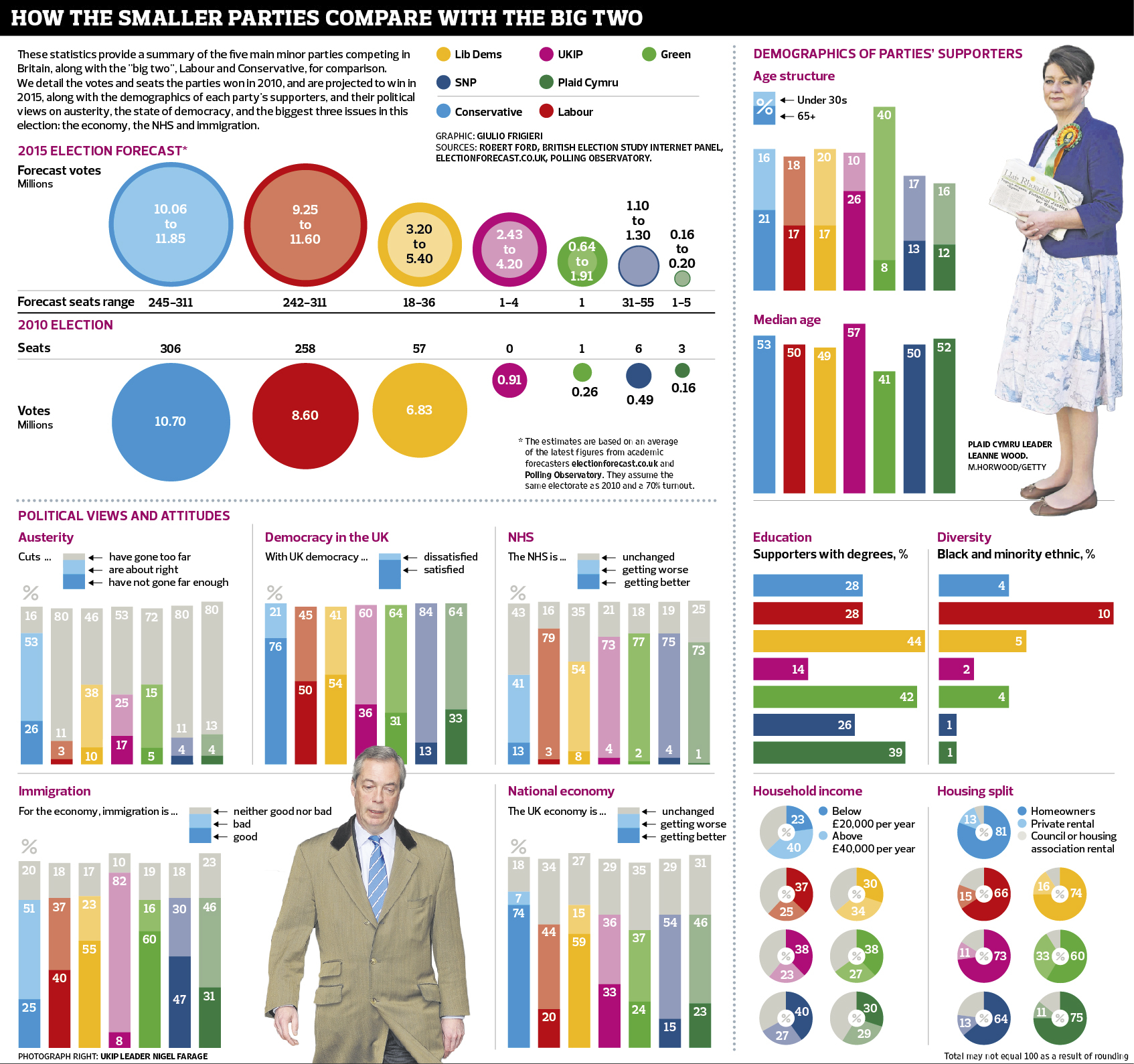
With less than four weeks to go, the general election result remains as uncertain as it was at the start of the year. Yet things are slowly taking shape – each successive week of deadlock between Labour and the Conservatives increases the likelihood of a truly hung parliament.
The main reason for this is the surge in support for the minor parties and the likeliest consequence is a dramatic increase in their influence. In a closely divided parliament, every seat will count. The spoils from a fragmented general election will fall to the party leader who can glue the pieces back together into a parliamentary majority. This will hand major power to the minor parties.
Imagine a dead-heat election, with both Labour and the Conservatives winning 273 seats each, quite close to Observer projections. Although the Commons has 650 seats, Sinn Féin does not take its five seats, and the speaker does not sit with a party. So the effective total is 644 seats, which makes the victory line 323 seats. In our scenario, getting a majority requires 50 votes from 98 minor MPs – a majority of minnows.
Labour starts with an advantage, as several of the minors are all but certain to align with it. The party can rely on three votes from Northern Ireland’s SDLP (an ideological stablemate), one from the Greens, and one each from George Galloway (who dislikes many Labourites but detests the Conservatives) and Lady Hermon (a Northern Ireland independent who left the Ulster Unionists in protest at its 2010 alliance with the Tories). Support from Plaid Cymru is also likely – the party has rejected austerity, its supporters’ attitudes resemble Labour’s and it has governed with Labour in the Welsh assembly. These additions bring Labour to 282.
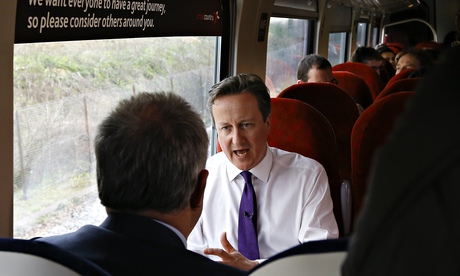
The Conservative party has natural allies too, but their support is less certain. The Democratic Unionist Party traditionally gravitates to the Tories, but Cameronian social liberalism leaves staunch DUP social conservatives cold. It will potentially be open to offers from Labour. Ukip also has a natural affinity with the Tories, from which it has won many of its voters and activists, and both of its current MPs. However, any alliance with the establishment will be risky for a fledgling party whose rise is driven in part by political alienation. The Tory party has not helped matters by repeatedly insulting Ukip and its supporters, but winning its two MPs over would take the Tories back to level pegging with Labour and its allies.
Both parties can advance by about 10 seats by rallying ideological stablemates – an easier task for Labour than the Tories. Yet this still leaves each 40 votes short of a majority. Only two other possible allies remain: the Liberal Democrats and the SNP. Lib Dem members will be the most important “swing votes” in the 2015 parliament – they have already worked with the Conservatives in coalition, but also share a lot of policy ground with Labour.
Party leadership has avoided expressing a preference, but Oxford academics Stephen Fisher and Eilidh MacFarlane recently argued that a Con-Lib deal would be more difficult and unstable than a Lib-Lab one. Policy differences, particularly over Europe, would be a roadblock, as would growing frictions between the two parties’ backbench MPs and activists. The policy barriers to a Lab-Lib deal are lower, and relations between the rank and file are easier. Yet in our scenario, neither party could get into power by striking a bargain with the Lib Dems, as even with its 25-30 seats, and those of smaller allies, both Labour and the Conservatives would be about 10 seats short of a majority.
There is only one source left for such votes in our scenario: the Scottish Nationalist party. If it wins between 40 and 50 seats, as projections suggest, it will be the largest minor party by far. It is thus no wonder the London media has been eagerly reporting every statement, public or private, from Alex Salmond and Nicola Sturgeon about their government preferences.
Yet, unlike with the Lib Dems, these preferences are not difficult to divine. Both the current and former SNP leaders have repeatedly stated in increasingly stark language that they will not support or enable a Conservative government. This leaves the party’s 50 or so MPs with only one place to go – backing, in some fashion, a Labour administration.
Unless something dramatic happens to break the deadlock, the minor parties will hold the keys to power after 7 May, and their MPs may provide Ed Miliband with an advantage in the race for No 10. Several minor parties, most importantly the SNP, have already ruled out working with the Tories, while none has ruled out working with Labour.
Yet instead of wooing minor party allies to reduce this handicap, the Tories are alienating them and potentially compounding it. The party opened its campaign with posters attacking the SNP, and last week Michael Fallon, the outgoing defence secretary, described the Lib Dems as “an irrelevant party”.
In a fragmented political system, nothing could be further from the truth. Thanks to the minor parties, Miliband could lose on votes, and on seats, yet still enter Downing Street. If he does, the Conservatives may come to regret their failure to make friends among the little guys.
- This article was amended on 12 April: it originally stated that a majority in parliament required “60 votes from 98 minor MPs”. That figure should have been 50 from 98.
Robert Ford is senior lecturer in politics at the University of Manchester