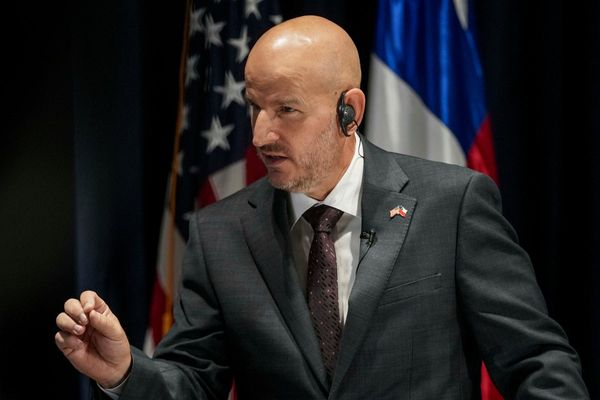
MINNEAPOLIS _ Minnesota Gov. Tim Walz on Sunday praised the aid of residents and neighbors in helping maintain calm and control the vandalism and destruction that had spread across the Twin Cities the previous three nights in the aftermath of the death of George Floyd in Minneapolis police custody."
"I want to thank everybody who participated in our ability to restore trust on our streets," Walz said, noting that by respecting an 8 p.m. curfew residents had helped "create space" for law enforcement to clear the streets and control troublemakers.
He said he would resume the night's road closings and curfew starting again Sunday night in preparation for the possibility of more protests.
Walz's remarks came at the end of a second night of curfew in the Twin Cities, where security forces moved aggressively through the streets to disperse protesters with tear gas, pepper spray and drawn weapons.
While most people stayed home, there were scattered reports of fires, looting and property damage, though not on the scale of the previous two nights when tensions exploded as people expressed their anger over Floyd's death on Memorial Day.
Walz acknowledged that the previous night had prompted "a day filled with tension unlike any other in Minnesota."
Officials credited the far larger presence of the Minnesota National Guard. The Guard said its force has grown from 700 deployed Friday to more than 4,100 on patrol or waiting their turn Saturday night and into Sunday morning. Walz called it "the biggest public safety operation in state history."
State Public Safety Commissioner John Harrington said authorities made as many as 100 arrests overnight, a significant increase over the previous two nights of arson and looting. "We used the curfew effectively," he said. He said about 20% of those detained appeared to come from out of state, a reversal of the previous night's estimate of 80%, which officials appear to have walked back.
Walz, however, emphasized the highly organized nature of the groups involved in the vandalism, theft and destruction, including what he called a cyber "denial of service" attack on state computer systems. "That's not somebody sitting in their basement," he said.
"There are outside folks in there," he added, whether or not they're from Minnesota. "We'll get more data on that," he said.
Minnesota Corrections Commissioner Paul Schnell said at an early Sunday press briefing the strategy was a comprehensive approach, combining an "unprecedented" Guard presence that had a clear mission, more first responders at the ready and help from community leaders in telling people to stay home.
Maj. Gen. Jon Jensen, adjutant general of the Minnesota National Guard, praised it as a "team effort" with the State Patrol and local police.
Minneapolis Mayor Jacob Frey, who has come under fire for ordering the evacuation of a south Minneapolis police station Thursday night that was later torched by looters, declared Sunday that the city had no "significant fires" Saturday night.
"Yesterday we asked a big thing of our residents," said St. Paul Mayor Melvin Carter. "We asked you to stay home."
While praising the absence of significant injuries, Walz apologized for a WCCO-TV reporter who was "inadvertently" arrested Saturday night while covering the protests. The incident followed the detention Friday morning of a CNN crew in Minneapolis.
Authorities also said they would review scattered complaints of excessive force, including a woman in south Minneapolis who said she was targeted by a National Guard marking round while she sat on her front porch abiding by the curfew.
Walz said he would take responsibility for any episodes of misconduct by law enforcement and would investigate. He also said he took a call Saturday from rapper Jay-Z, who he quoted as telling him that "justice needs to be served here."
But for the first time in the past five days of unrest in the Twin Cities, Walz began his daily press briefing on an upbeat note. "The promise of summer after a long winter is there," he said.