George Osborne mark I wasn’t much bothered about Whitehall. For him, it was all about controlling and cutting total spending. Efficiency and value for money was up to departments and (grudgingly) the Cabinet Office.
The message to central government was similarly blunt from Francis Maude, theCabinet Office minister until the election: you can do projects and procurement provided your efforts at co-ordinating departments don’t encroach on Treasury turf. In a remarkable letter to the Commons public accounts committee (PAC), the Treasury permanent secretary Sir Nicholas Macpherson spelled it out: Whitehall has no need of a corporate centre.
But now we have George Osborne mark II. As well as his train set for the north of England and enthusiasm for devolution, he is now taking a detailed interest in Whitehall costs and outputs. The 2015 spending review will not only cut departments’ budgets; it will also consider their efficiency and effectiveness.
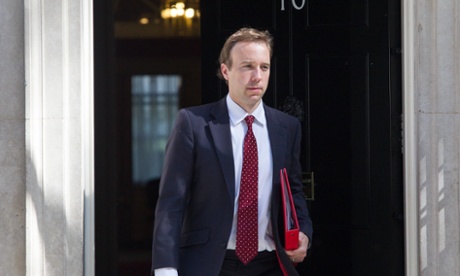
In the middle of this change sits the minister for efficiency, Matthew Hancock, newly arrived at the Cabinet Office. Does he have an agenda of his own or is he just Osborne’s agent? He is undoubtedly close to the chancellor. Before 2010, he was Osborne’s chief of staff and it is said that Osborne engineered his move to the Cabinet Office, for the sake of putting a young lieutenant at the apex of Whitehall’s infamous Bermuda triangle, the lost seas between Treasury, the Cabinet Office and Number 10.
The first indications from the new set up are ambiguous. Breaking cover early, Hancock made his first speech as a Cabinet Office minister at the Institute for Government on 22 May, using his presentation to flatter and reassure Whitehall. The dread phrase “the greatest civil service in the world” (measured how? and by whom?) passed his lips several times.
Perhaps Hancock was just doing his bit for the Tories’ post-election “one nation” campaign. Perhaps it’s a feint while they slice and dice civil service numbers. Even so, it was puzzling to hear not a word about shared services, transformation and improving effectiveness by redrawing departmental boundaries. Hancock made barely a nod towards the agenda of reform and modernisation set up by Bernard Jenkin, the Tory chair of the Commons public administration select committee during the previous parliament.
Hancock obviously likes a joke. He accused Margaret Hodge, chair of the PAC until the election, of partisanship, despite himself having been on the committee for two years and signing up to the PAC’s heavyweight set of criticisms of Whitehall departments. Subsequent reports, agreed by the committee’s Tory majority, have added to the criticsm.
Perhaps Hancock’s lapse of memory about his PAC experience is explained by the difficult political task that lies ahead for both him and Osborne. If they are going to bend and reshape Whitehall while also making dramatic cuts, they will surely have to contend with most of the Cabinet, chivvying, harrying and undermining their departmental autonomy.
Take Michael Gove, justice secretary. On the PAC, Hancock signed scathing reports lamenting a lack of financial management in the Ministry of Justice, such as its failure to collect outstanding fines. Will he now be prodding and pushing Gove to sharpen his act?
Hancock will need to ask this of transport secretary Patrick McLoughlin: where is your department’s strategy, without which spending is potentially misdirected and wasteful – and why, by the way,are you still spending so much on consultants and subsidies to Network Rail?
Hancock might share political vision with Michael Fallon at defence, but he will necessarily be asking pointed and persistent questions about costs and procurement? When he was on the PAC, it pointed out that most departments cannot adequately link costs to outputs. As for the NHS, does Hancock sit on his hands and allow health secretary Jeremy Hunt to spend the promised extra £8bn as he pleases, ignoring all those PAC reports on productivity and Private Finance Initiative in health?
But there was no mention of any of this in Hancock’s first outing. Instead, he talked about making the civil service more diverse, more “porous” to incomers from business, more digital. But that’s old hat. Today’s interesting question is how far John Manzoni, Whitehall’s chief executive, will be allowed to push departments. Hancock (with a straight face) said that because ministers have all signed up to the Tory manifesto they will henceforth work as a team to improve procurement and efficiency.
Perhaps Gove, Theresa May, Iain Duncan Smith and Sajid Javid have indeed instructed their permanent secretaries to abandon the pretence of departmental autonomy for the sake of united government. But the evidence of the past five years says that doesn’t sound entirely likely. Bloody battles lie ahead if Hancock as the new link man between Cabinet Office and the Treasury is to construct that fabled corporate centre and get it to exercise real clout.
Talk to us on Twitter via @Guardianpublic and sign up for your free weekly Guardian Public Leaders newsletter with news and analysis sent direct to you every Thursday.