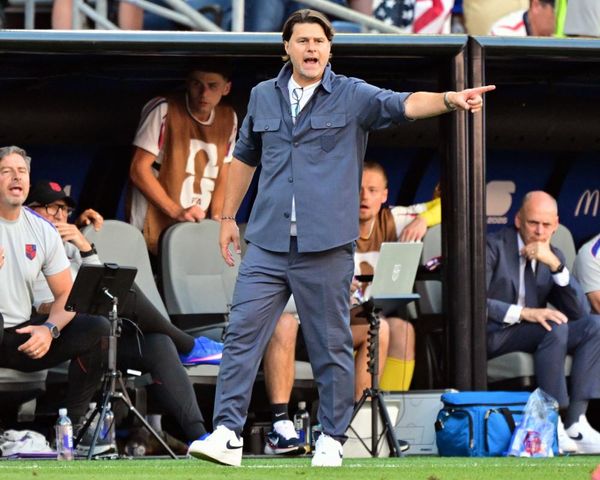
Once bitten, never shy. The Media Minister Paul Goldsmith has revealed to a select committee that he continues to take and make calls to chairs of public broadcasters with no taping, notes or public record.
Two months after a political firestorm over his private phone call with the TVNZ chair amid controversy over the broadcaster’s treatment of a story on crime statistics, Goldsmith fronted Parliament’s Scrutiny Week for questioning.
“It’s pretty fundamental” he told a Social Services and Community committee hearing on his media and arts roles. “I appoint a number of chairs and see it very much my job to call them up at random times to see what’s going on … put them on the spot.
“I do not carry a little notebook around with me when I do it … It’s about the free flow of information and it seems to work.”
Pressed by Labour broadcasting spokesperson Reuben Davidson if it was appropriate for the responsible minister to be continuing to fuel perceptions of direct political interference at the publicly owned TVNZ and RNZ news outlets, Goldsmith was dismissive.
He had not felt the need to give advice to chairs about what was appropriate to discuss with him, did not record or note the calls and did not believe the chairs would do so either.
“I would assume they don’t,” he said, before rejecting Davidson’s alternative. “It would be safer never to talk to your chair, or only do it when you have a formal meeting in place.”
Goldsmith’s informal and off-record conversations with his board chairs became publicly known when he took a call from TVNZ chair, Andrew Barclay, in which an attempt was made to discuss with Goldsmith over the phone a 1News story on gang numbers that didn’t include crime stats favoured by the Government.
Ministers are barred, by law, from directing the public broadcasters on editorial matters, or interfering with their journalistic decisions.
Barclay was supposedly turning his mind to trust issues over the crime statistics and gang membership stories covered by his 1News newsroom. His attempt to raise it was met by the minister “grunting” and offering no response, Goldsmith later told Parliament.
The minister assured MPs on Monday he had “every confidence in the people, and myself, to have the right side of the line”.
“The most frequent topic of conversation is about upcoming appointments to the board. These are the sorts of questions I quite often have.”
With TVNZ and RNZ, Goldsmith said he could be “making sure that they are attracting an audience and competing against the audience” of private media companies, and that the public broadcasters had a plan to increase the level of public trust in their content.
Asked by Davidson if the cut in the Budget to RNZ’s funding by $5.6 million over the next four years would start to reduce the capacity of the RNZ newsroom, the minister said RNZ was being trimmed back after having had a substantial increase under Labour.
“We have taken back some of that.”
Goldsmith acknowledged RNZ’s progress in growing its reach through its app and sharing its news feed nationwide. “I don’t think anyone can say RNZ is not having a real impact,” but he noted “competitive pressures” on the flagship Morning Report radio programme.
He said he did put pressure on RNZ over raising its performance.
Davidson wanted an assurance that the National-led coalition wouldn’t try to use RNZ’s financial dependence on the Crown to leverage favourable editorial decisions.
“Of course not,” Goldsmith retorted. “We certainly would not claim to deliver anything from the ‘podium of truth’ in this Government.” That was a reference to the previous government’s daily 1pm news conferences during Covid.
He would open RNZ’s new Auckland offices, on a previously vacant floor of the TVNZ building on Victoria St in the central city on Friday and “that’s a very exciting proposition for RNZ” expected to result in “synergies between the two companies.”
He was questioned over his statement a year ago that the Government would consider action to make global tech platforms like Google and Facebook share some revenue with local news organisations for using their content, and that he would be watching Australia’s legislative response closely.
Davidson: “How much longer do we have to watch for, to ensure, a news content revenue share?”
Goldsmith: “I continue to watch Australia very closely.
“In terms of the Fair Digital News Bargaining Bill, that’s still on the books but it’s not being progressed at the moment.”
The National MP chairing the hearing, Joseph Mooney, has been attempting to force an apology out of Newstalk ZB and morning host Mike Hosking for labelling him one of five renegade MPs leaking against leader Christopher Luxon around the time of a showdown caucus confidence vote on April 21.
Mooney asked Goldsmith what new complaints framework he had in mind for members of the public when the Government moves to abolish the Broadcasting Standards Authority.
Goldsmith offered him the “normal laws of defamation” which anyone “talking in the public sphere needs to be conscious of”.
Given the wide diversity of digital media, the Government had a choice between trying to regulate widely through the “whole new world of Tik Tok, YouTube and podcasts … down to every tiktoker” or simply relying on the existing, self-regulated industry body the Media Council, to hold journalists to a higher standards.
If consumers didn’t like a digital or broadcast product that had chosen not to subject itself to journalistic standards, he said, “maybe the best solution is to turn them off”.