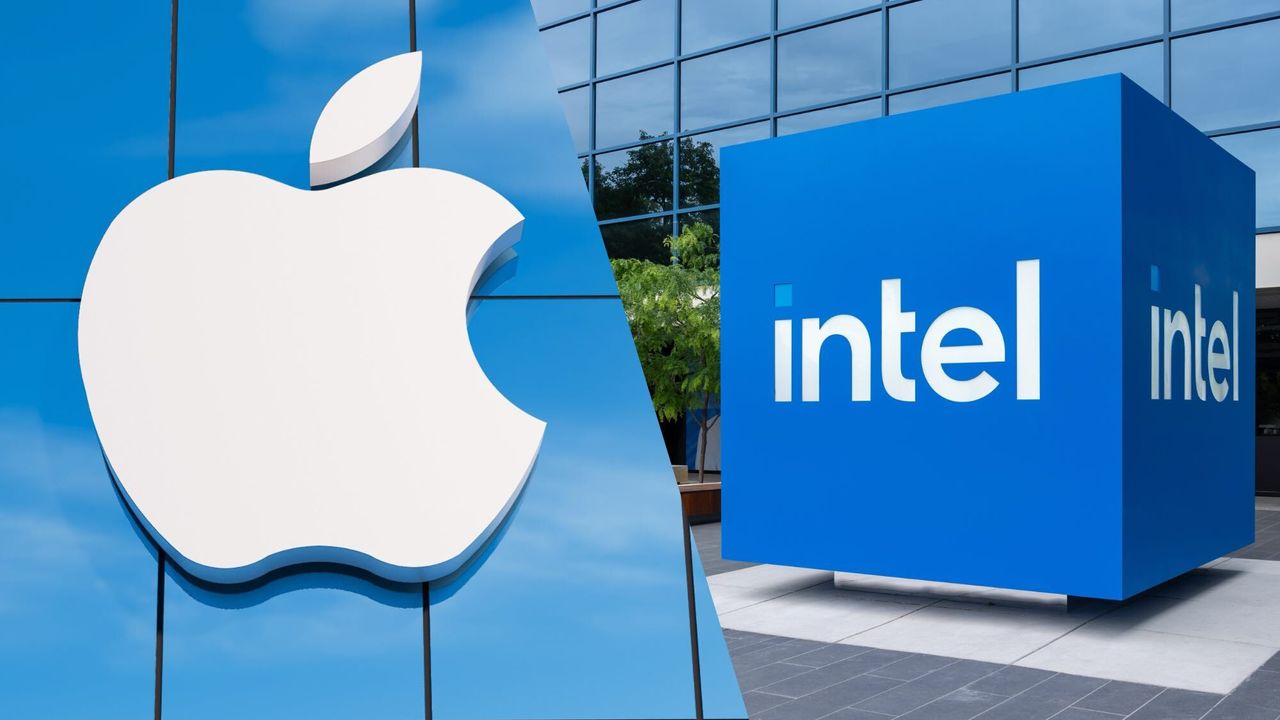
Six years after Apple dropped Intel in favor of its own M-series processors, the two tech giants are reportedly partnering again on new silicon.
Last week, The Wall Street Journal that Apple and Intel had struck a preliminary deal to produce chips after a year of bargaining. That report did not include what devices those processors would fill.
But now a new report from supply chain analyst Ming-Chi Kuo claims that Apple and Intel have already started initial production of processors for iPhones, iPads and some Macs. Per Kuo, roughly 80% of the chips are meant for iPhones.
Prior to 2020, Apple had a long history with Intel having switched to the company's chips in 2006. Intel-based Macs only just stopped receiving Apple support last year with the release of macOS 26. When macOS 27 drops later this year, it will not support any Intel Macs.
Kuo's report is a read and mostly covers how the Intel deal will impact Apple's partnership with TSMC which makes all of Apple's CPUs currently. But there are some noteworthy bits about where the Intel chips could end up.
The Intel chips are based on the 18A nodes which are used in the company's Panther Lake silicon. This deal apparently is using the chips for Apple's "low-end/legacy" devices.
Kuo's phrasing likely means that Intel is building chips for older models that are still on sale. TSMC would still "retain 90% of supply share" for Apple's more high-end processors.
If the deal works out, I expect we'll see a split between higher-end TSMC Apple devices like the Pro model iPhones and MacBooks. Intel would feature in the more budget-friendly devices like the e-series iPhones and the new MacBook Neo which is already struggling to keep up with demand due to a lack of chips.
More from Tom's Guide
- Apple may be building an AI App Store — and it could change the iPhone forever
- The Mac mini's ridiculously-placed power button just became irrelevant thanks to this new macOS 26.5 feature — here's how to activate it
- AirPods Pro 3 just got put on notice — JBL launches new premium earbuds that give Apple a run for its money