Success is often associated with working longer hours, making faster decisions and constantly staying on the move. But for Juhi Bhatnagar, Key Advisor and Founding Member of IAIRO, the biggest breakthrough came when she learned to slow down.
What began as a post-pregnancy fitness routine soon evolved into a powerful lesson in mental clarity, resilience and balance.
In this episode of Mind Over Money, Bhatnagar shares how Pilates transformed the way she approaches leadership, investing and motherhood—helping her replace hustle with intention, make better decisions under pressure, and embrace consistency over intensity.
She explains why true performance isn't about doing more, but about thinking more clearly when it matters most. Edited Excerpts –
Q) In a world that glorifies being constantly busy, you've found value in slowing down. When did you realise that hustle alone wasn't the answer?
A) I've always been driven. I love building things, solving problems, and staying busy. Early in my career, I thought productivity meant doing more - working longer hours, taking on more responsibility, and keeping every plate spinning. It felt like progress, and I genuinely loved that pace.
Then motherhood happened.
With two under two little boys, I couldn't solve every problem by simply working more. There just weren't enough hours in the day. I had to become intentional about where I spent my time and energy. Ironically, becoming a mother made me more productive because it forced me to separate movement from progress.
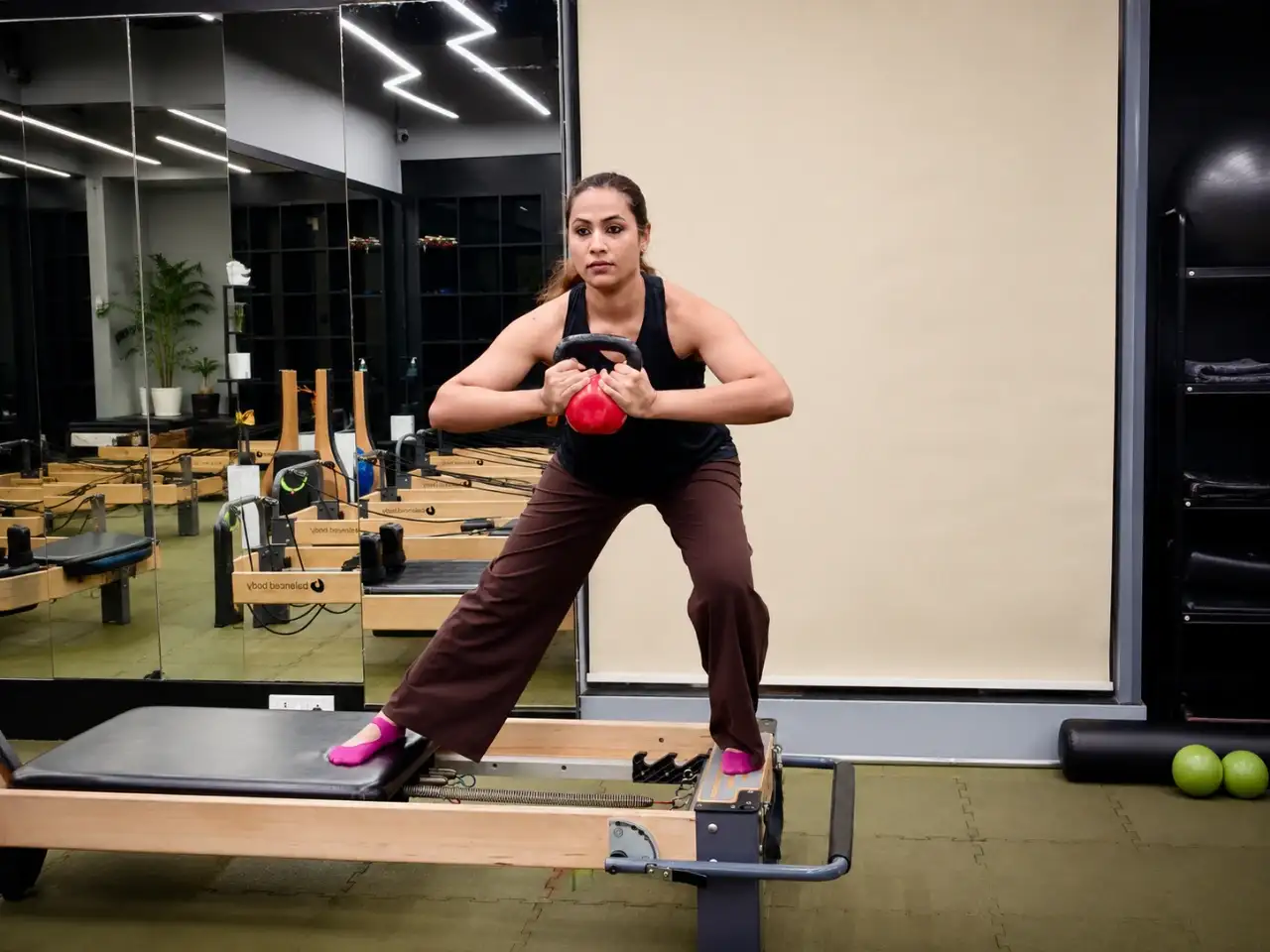
Around the same time, I started Pilates to rebuild my strength after pregnancy. I expected physical recovery. What I found was mental clarity. On a reformer, balance isn't about standing still; it's about staying stable while everything around you is moving. Life isn't very different. You're constantly balancing work, family, ambition, and yourself. Precision beats brute force.
I often joke that I went from being a commando to becoming a sniper. Earlier, success meant saying yes to everything and charging ahead. Today, it's about knowing which shot is worth taking. Fewer decisions. Better decisions.
I've realized that the highest-performing people aren't necessarily the busiest - they're the clearest. Now I seek clarity and consistency over busyness.
Q) You often credit Pilates for bringing mental clarity into your life. What inspired you to take it up, and how has that journey evolved over the years?
A) I actually started Pilates after becoming a mother. Like many women, I wanted to rebuild my strength after pregnancy and recover well. I thought I was signing up for a fitness class.
Instead, I found something that completely changed the way I think.
Today, I think of Pilates as one of my productivity habits. It's one of the few times in the day when nobody needs anything from me. I'm not replying to messages, making investment decisions or juggling meetings. I'm simply present. Making sure I survive.
Ironically, that's when some of my best ideas show up. It creates the mental space that a packed calendar never can.
For me, Pilates is as much about mental performance as physical fitness.
Q) Many people view Pilates as just a form of exercise, but you've described it as a tool for managing pressure. How does it help you reset mentally during demanding periods?
A) One thing I love about Pilates is that it's literally an exercise in balance.
You're on a moving reformer, sometimes balancing on one leg, sometimes holding dumbbells, constantly making tiny adjustments to stay stable. It feels a lot like life.
Whether I'm investing, advising startups, helping build the Indian AI Research Org, or raising two young boys, there isn't a day when everything is perfectly balanced. You're constantly recalibrating, giving a little more to work one day, a little more to family the next.
Pilates reminds me that balance isn't something you achieve once. It's something you keep practising. The goal isn't perfection. It's learning how to stay calm and centred while everything around you keeps moving.
Q) What does a typical Pilates session teach you about patience and consistency that also applies to your career?
A) Pilates is incredibly humbling. The movements don't look dramatic, but they're hard. Progress comes from showing up consistently, not from one exceptional session.
I've realised that's true of almost everything that matters.
Building companies is compounding. Investing is compounding. Reputation is compounding. Even parenting is compounding. The biggest outcomes are usually the result of hundreds of small decisions made well over many years.
It's a reminder I come back to often: consistency almost always beats short bursts of intensity. The quicker the climb, the quicker the fall. Real progress isn't built on sprints - it's built by showing up, with intention, every single day. That's hard.
Q) Do you believe that being physically and mentally balanced leads to better leadership and decision-making? Why?
A) Absolutely.
As an investor, I don't generate large outcomes from being busy - I generate them from making great decisions. That requires clarity, judgment and perspective, not just processing large amounts of information.
I've come to see Pilates as part of my work rather than time away from it. It helps me slow down enough to think clearly, listen better and avoid reacting emotionally. I leave each session calmer and more focused.
I think that makes me a better investor, a better leader and, perhaps most importantly, a better mother.
Q) Has Pilates changed the way you react to setbacks or uncertainty, both professionally and personally?
A) Definitely.
One of the biggest lessons Pilates has taught me is that balance isn't a permanent state - it's something you're constantly regaining. On the reformer, you wobble all the time. The goal isn't to avoid losing balance; it's to notice it early, make small adjustments, and keep moving.
Motherhood reinforces that lesson every single day. With two young boys, no day goes exactly as planned. You stop chasing perfection and become much better at adapting.
That mindset has carried over into my work as well. Investing, building organisations, and working with founders all involve uncertainty. You rarely have complete information, and very few things unfold exactly as expected. Earlier, setbacks felt like something to fix immediately. Today, I see them as signals to reassess, learn, and adjust course.
I've realised that resilience isn't about staying perfectly balanced. It's about finding your centre again, a little faster each time.
(Disclaimer: Recommendations, suggestions, views, and opinions given by experts are their own. These do not represent the views of the Economic Times)