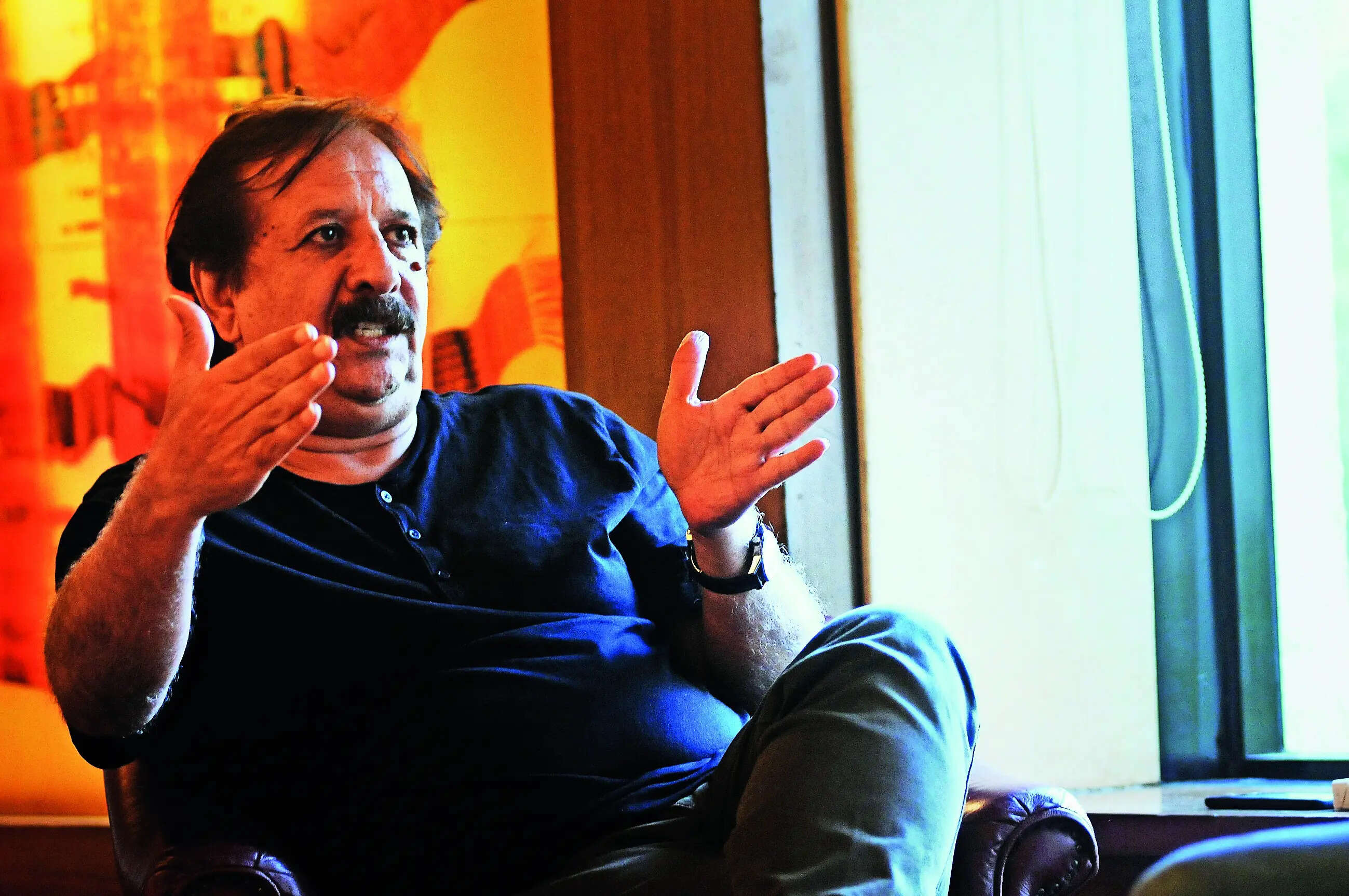
NEW DELHI: Amid a fragile ceasefire after the failed peace talks in Islamabad, one of Iran's best-known filmmakers, Majid Majidi, told TOI from Tehran—where he has stepped away from cinema and dived into relief work, attaching himself with the Iranian Red Crescent -- that the war he witnessed firsthand has irrevocably reshaped everyday life across cities in his homeland.
For Indian audiences, Oscar-nominated Majidi is not an unfamiliar voice. His cinema belongs to a tradition that resonates instinctively here. He has often spoken about his admiration for Satyajit Ray, exploring like the late 'master of world cinema' children’s worlds, their moral dilemmas, resilience amid poverty, family ties, and ethical choices.
Speaking about the ongoing conflict, Majidi said, "For over a month, cities have faced bombardment. While these are described as targeted strikes, in reality we are seeing homes, hospitals and schools affected.” He pointed in particular to the Feb 28 strike in Minab, which he said killed dozens of schoolchildren, an incident he believes "must be remembered and investigated in international courts"
The aftermath of that strike, which according to Iran killed over 150 children and teachers, has lingered in unexpected ways. Drawings recovered from the attack site were displayed on Monday by the Embassy of Iran in New Delhi in an exhibition titled 'Angels of Minab'. It captured a child’s world before the deaths: smiling families holding hands, bright houses under oversized suns, flowers and birds scattered across blue skies.
Majidi’s account of the war is defined by what he describes as both "proximity and participation". Having joined relief efforts on the ground, he spoke of shortages, displacement and the strain on civilian life. “Ordinary people are caught in the middle,” he said, adding that the impact of the violence extends far beyond immediate casualties.
Distinguishing between govts and people, he said, “We are isolated by govts, not nations...global public opinion, despite pressures and propaganda, stands with the Iranian people. There are widespread demonstrations in Europe, Asia, and even within the US...people are calling for an end to war.”
Across Majidi’s body of work, children are not passive figures but ethical centres. Known for simple themes of love and resilience, Majidi now finds his themes rooted in childhood innocence violently ruptured. “In reality, if there is any achievement [of this war] it is nothing but the killing of innocent children,” he said.
He framed this war as a test of Iran’s endurance and global conscience. “Residential areas are attacked daily, and many innocent civilians are killed. More than 150,000 housing units have been bombed,” he said, decrying the “deadly silence” of international bodies.
The filmmaker said Iranian resilience remains unbroken, despite the war being a “bitter and terrifying phenomenon”. He invoked the legacy of Ferdowsi, whose Shahnameh—the 1,000-year-old poem and 'national epic' of Iran—preserved Iranian identity and is still celebrated. “Throughout history, artists and thinkers of this land have stood firm even in the most difficult times. In our culture, surrender has no meaning. Our people show courage on battlefields and streets alike,” Majidi said, explaining Iran’s position as unprecedented—standing, in his telling, as confronting some of the most powerful armies in the world.
“While powerful, Iran has consistently respected other nations and cultures, and the current war can be understood within the framework of defending its land and independence,” he added.
“Throughout history, artists and thinkers of this land have stood firm even in the most difficult times,” Majidi said. "Western powers, blind to Iran's history, underestimate it. They must study our past before deciding our future."
Tied to his homeland, Majidi rejected the idea of ever leaving. “We are rooted in this soil. It is our duty to contribute to its advancement, and so is living and dying here.”
Even as he highlighted what he described as Iran’s strategic gains in confronting “global powers”, Majidi returned repeatedly to the human cost. “Unfortunately, in this aggression, the greatest harm has been inflicted on ordinary people… with many women and children killed.”
For Majidi, the war is not only a geopolitical crisis but a human one—one whose consequences, he warned, can extend far beyond Iran, risking widespread regional instability and triggering massive waves of migration involving millions of people. “Govts around the world must move beyond statements to action,” he said.
“I hope that despite the temporary ceasefire, issues can be resolved through diplomacy," he said, adding that distrust in the negotiation process remained.”
The maker of such films as Children of Heaven (which became one of the most widely watched Iranian movies in India), who had long expressed a desire to tell a story set here, a vision he realised with Beyond the Clouds that was shot in Mumbai, had one appeal for broadcast: “The delivery of humanitarian aid—especially medicine—has remained very limited. Iran needs that."