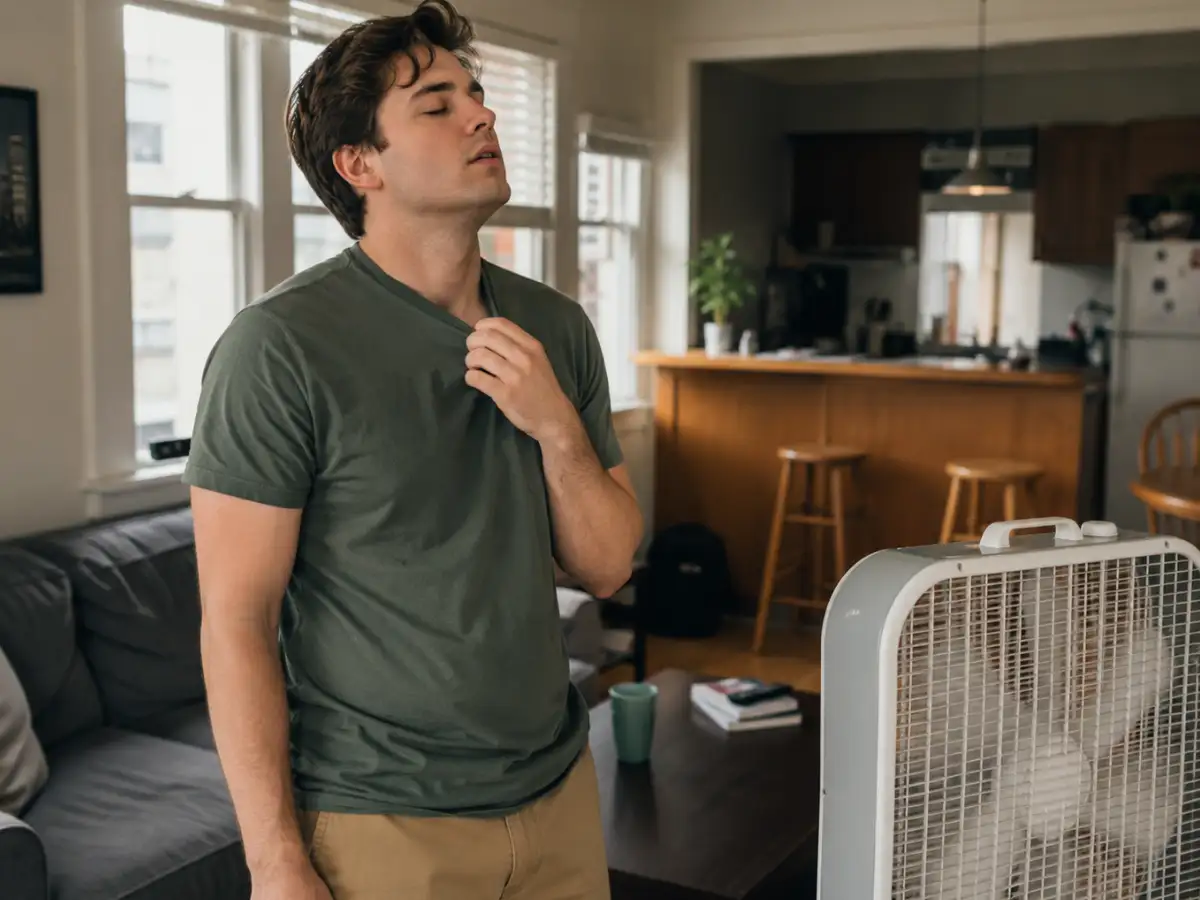
Summer in the US regularly pushes past 100°F, and for most of us, the reflex is probably the same: turn on a box fan and hope for relief. According to the EPA guidance on extreme heat and indoor air quality, that reflex has a built-in limit. The agency warns that electric fans stop preventing heat-related illness once a room temperature reaches the mid-90s or higher, because a fan does not cool the air; it simply moves it around. Here's what's really happening inside your body when a fan stops working, and what current research says about it.
Why does your fan have a temperature limit
A fan cools you by helping sweat evaporate off your skin faster, not by cooling the air itself. According to the EPA, portable electric fans “do not cool air”; they just circulate it, which increases evaporation and makes you feel cooler. That only works up to a point. The CDC sets its own line a bit lower. The CDC heat and health page notes that fans should be used only when indoor temperatures are below 90°F; above that point, a fan may actually raise body temperature instead of lowering it. The exact cutoff varies a little by agency, but somewhere between 90°F and the mid-90s, the advice flips from “use a fan” to “get somewhere cooler.”