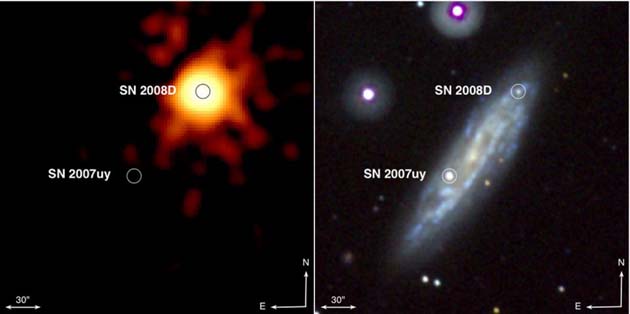
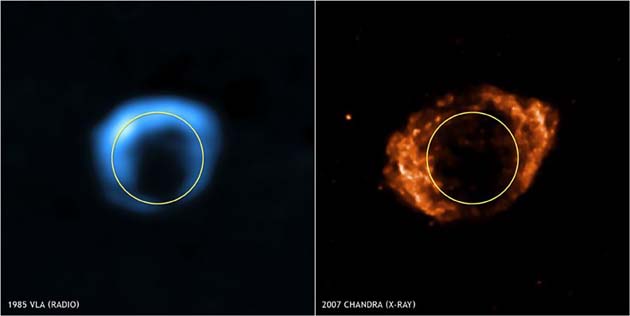
Supernova 2008D, as seen in ultraviolet and x-ray images taken by Nasa's Swift satellite. Astronomers have for the first time witnessed one of the most fiery events in the universePhotograph: Nasa/APA comparison of x-ray and very large array radio-telescope (VLA) images of a supernova. Astronomers used a radio observatory in New Mexico and Nasa's Chandra x-ray observatory in orbit to date the star's collapse at sometime around 1868Photograph: Nasa/APA composite image of the expanding remains of a supernova - shown in orange is an x-ray image from 2007, and in blue is a radio image from 1985. Combined, they show the expansion of the star as it falls apartPhotograph: AFP
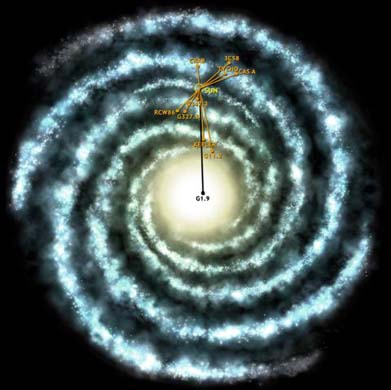
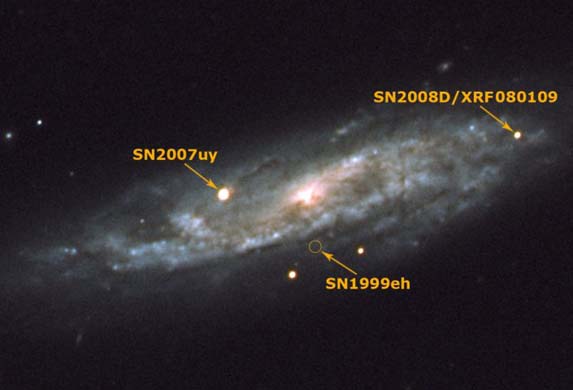
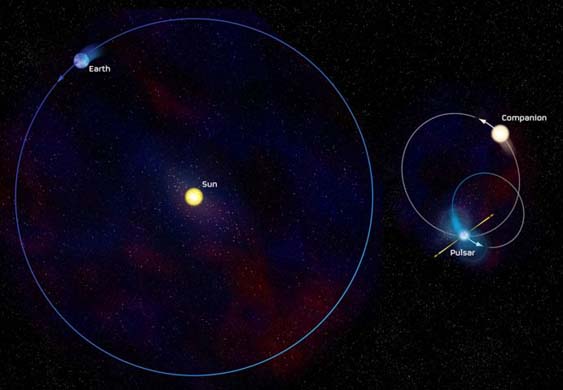
Artist's rendering of a view looking down on the Milky Way galaxy and the locations of historic supernovas. The position of the sun is shown, with the approximate positions and names in orange of past supernovas. All are thought to have occurred in the last 2,000 years. The estimated position of the new supernova is shown in blackPhotograph: Nasa/APThe spiral galaxy NGC 2770 has produced numerous supernovas recently. Three of them are indicated here. The galaxy is located 90m light years from the Milky WayPhotograph: Nasa/APA comparison between the sizes and strangely elliptical shapes of the orbits of the pulsar J1903+0327 and its apparently sun-like companion star, with the orbit of Earth around the sun. The rapidly spinning pulsar, a dense object created when a star exploded as a supernova, is 21,000 light years from Earth. The sizes of the sun and the possible companion star have been exaggerated by a factor of about 10, and the Earth by a factor of about 1,000Photograph: Reuters
Sign up to read this article
Read news from 100’s of titles, curated specifically for you.