The benefits of the grandparent-grandchild relationship go beyond pancakes and sleepovers. The moments they share can create lifelong memories and strengthen family bonds. Not to mention the help grandparents often provide to busy parents. But in some cases, they might also overstep important boundaries.
One woman, who went out with her husband and left their two girls with their grandma, came back to find the kids terrified. Grandma had been telling them that mommy was going to take them away from daddy—not because she was confused or mistaken, but because she was actively trying to tear the couple apart!
This woman was on pretty good terms with her mother-in-law

Image credits: Mikael Blomkvist/Pexels (not the actual photo)
But everything changed after the lady found out the truth about her sexuality








Grandma tried to turn the kids against their mom

Image credits: RDNE Stock project/Pexels (not the actual photo)



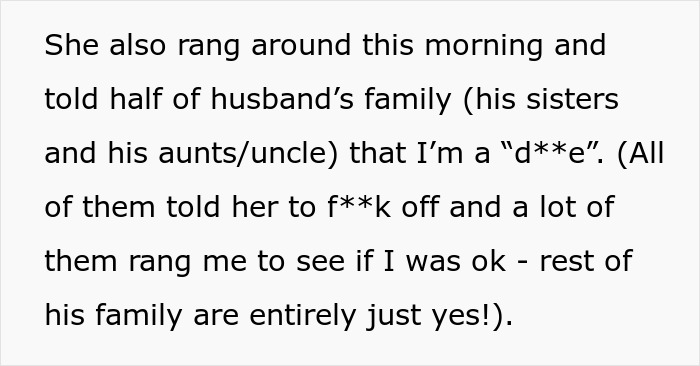
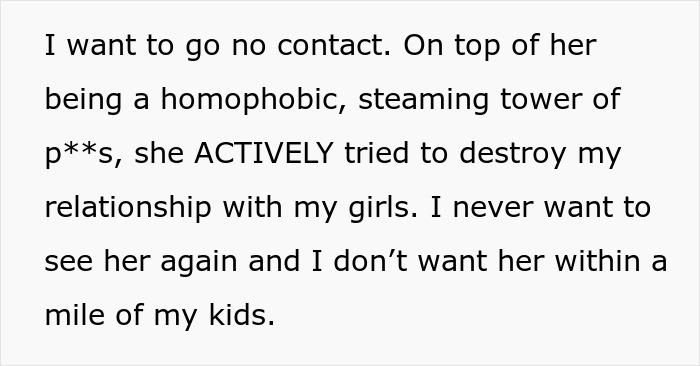



Image credits: totallybifurious
Most people actually get along with their in-laws
Image credits: Anna Shvets/Pexels (not the actual photo)
A new YouGov survey found that most married people have harmonious relationships with their in-laws. More than half (53%) of Americans say they have never quarreled with their mother-in-law. Meanwhile, 21% say they have done so rarely, 12% say they have sometimes argued, and only 4% say they have often quarreled with their mother-in-law.
At the same time, 62% of married Americans say they have never quarreled with their father-in-law. Another 14% say they have done so rarely, 7% say they have sometimes argued with their father-in-law, and just 2% say they have often quarreled with him.
Married people with children under 18, however, are more likely to fight with their in-laws. A quarter (25%) say they have often (4%) or sometimes (20%) quarreled with their mother-in-law, while only 10% of married people without children under 18 say the same.
Similarly, 18% of married people with children under 18 say they have sometimes or often argued with their father-in-law, compared with just 4% of married people without children under 18.
Very few say their mother-in-law (9%) or father-in-law (8%) has made it harder for them to have a successful marriage. In fact, 27% say their mother-in-law has made it easier for them to have a successful marriage, while 28% say the same about their father-in-law.
Unfortunately, this appears to be a situation in which everyone loses
Image credits: Teona Swift/Pexels (not the actual photo)
The grandmother’s behavior is harming the entire family, and if her daughter-in-law proceeds with her plan and cuts ties with her, the lady could seriously jeopardize her own well-being.
A survey conducted by the University of Michigan found that grandparents who see their grandchildren more often are less likely to feel isolated.
Overall, 78% of grandparents who see grandchildren under 18 every day or nearly every day said they hardly ever feel isolated, compared with 65% of those who see their grandchildren every few months or less.
Grandparents who see their grandchildren only every few months or less were also more likely to rate their mental health as fair or poor (13%) than those who see them at least once a week (4%) or once or twice a month (8%).
While the survey identifies an association rather than a cause-and-effect relationship, it suggests that maintaining regular contact with grandchildren is linked to lower levels of isolation and better self-reported mental health among grandparents.
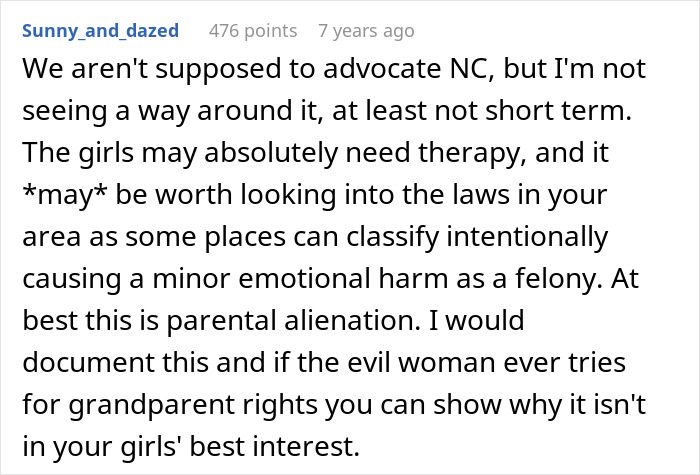
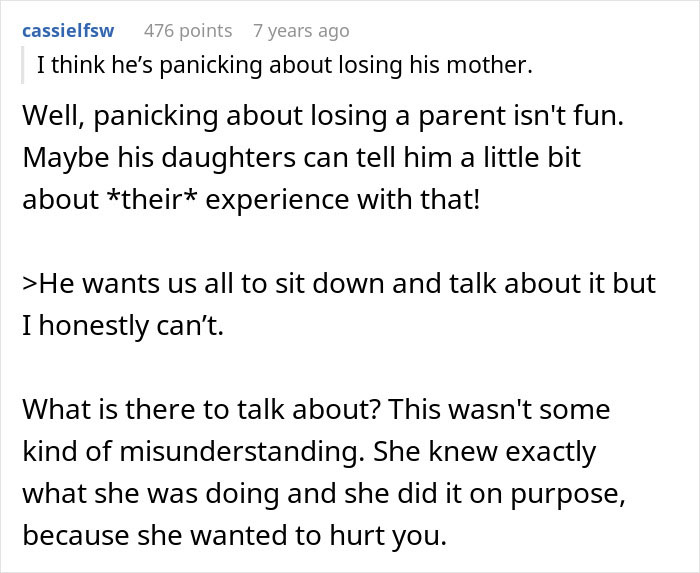
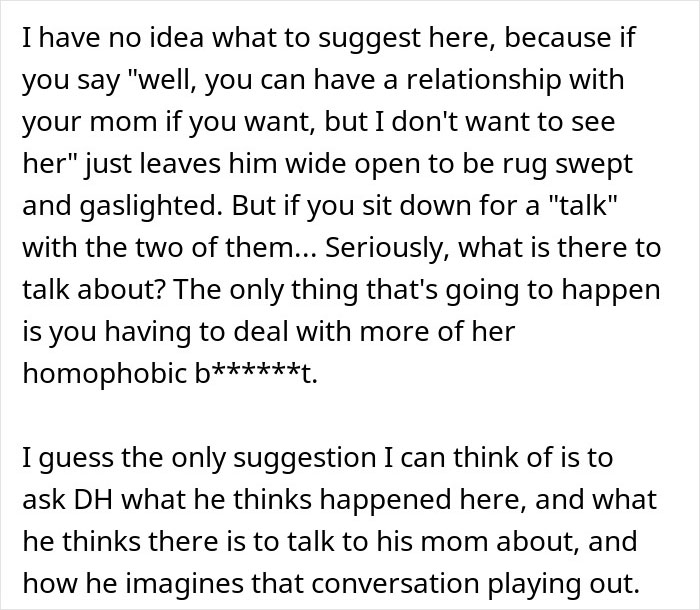
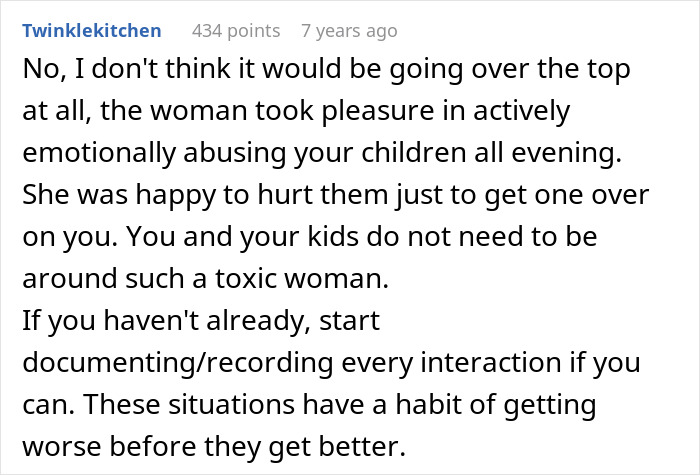
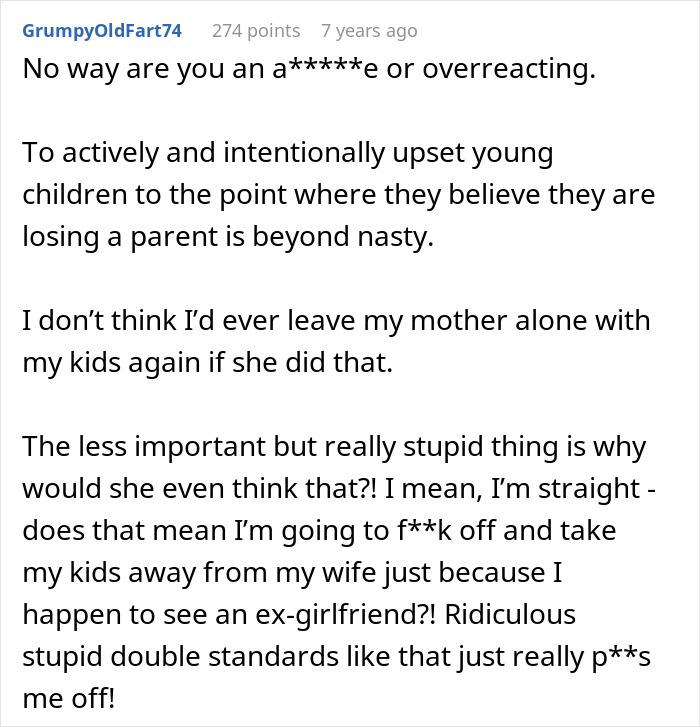
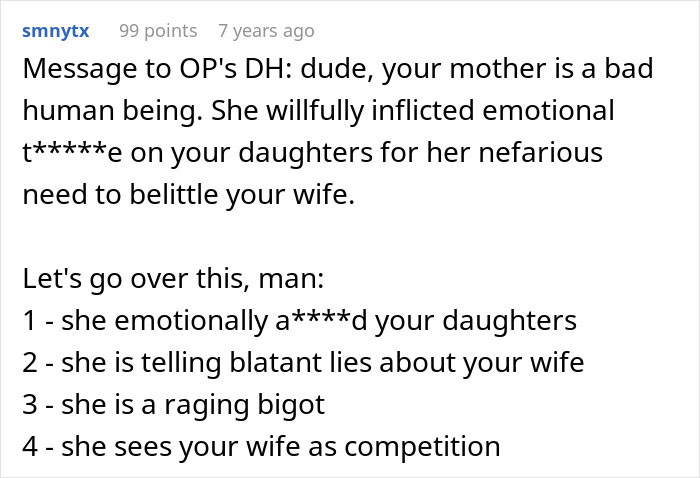
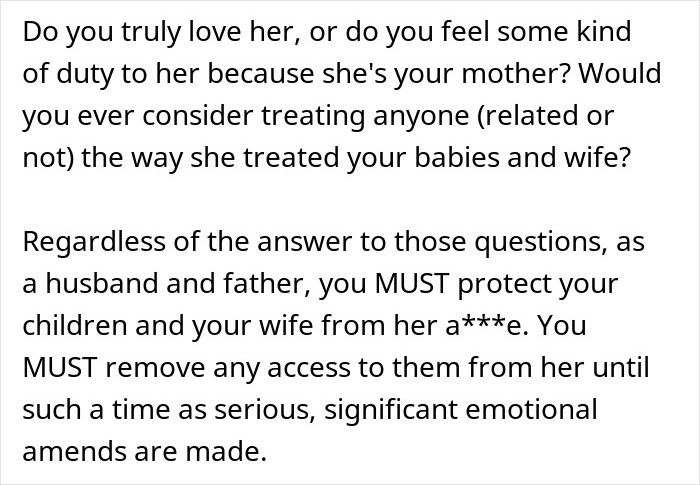
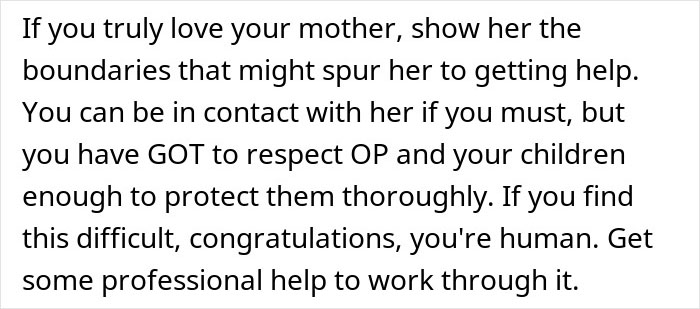
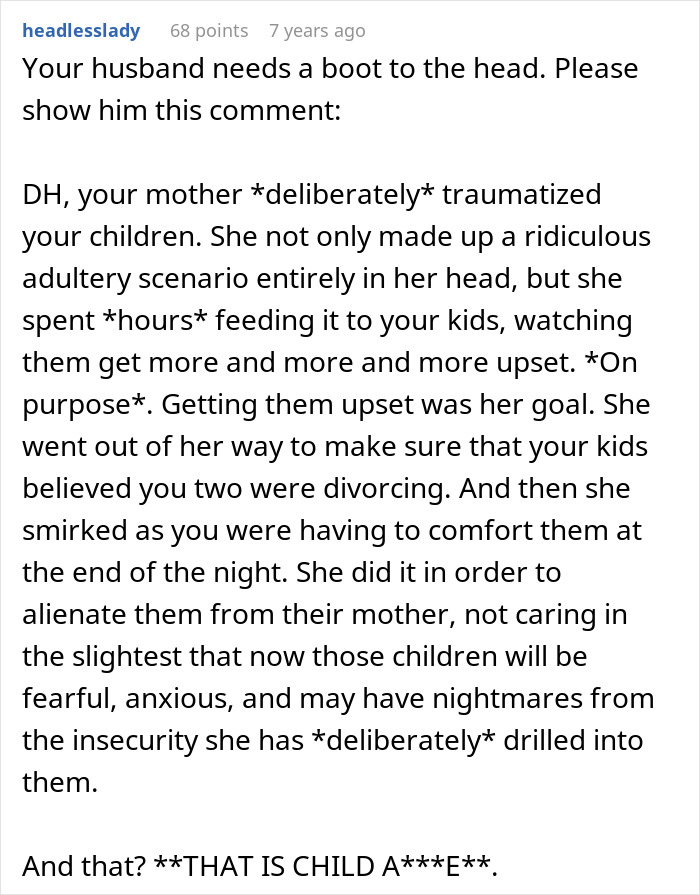
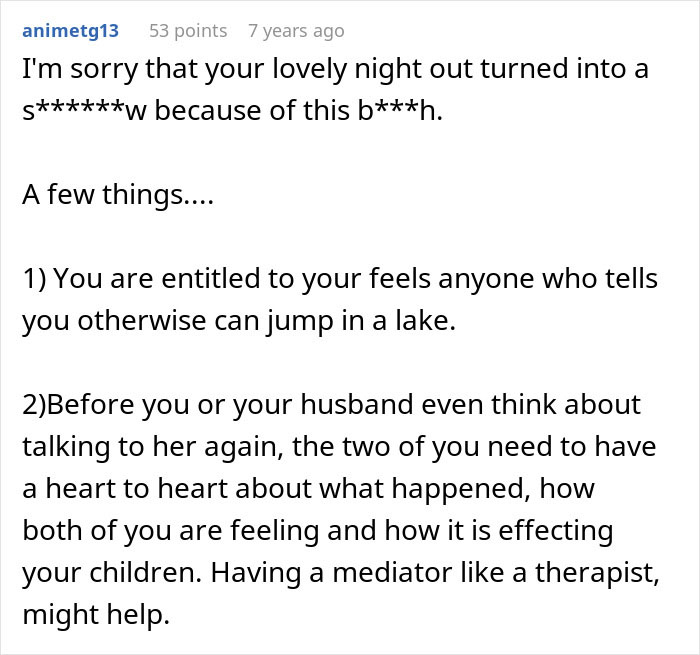
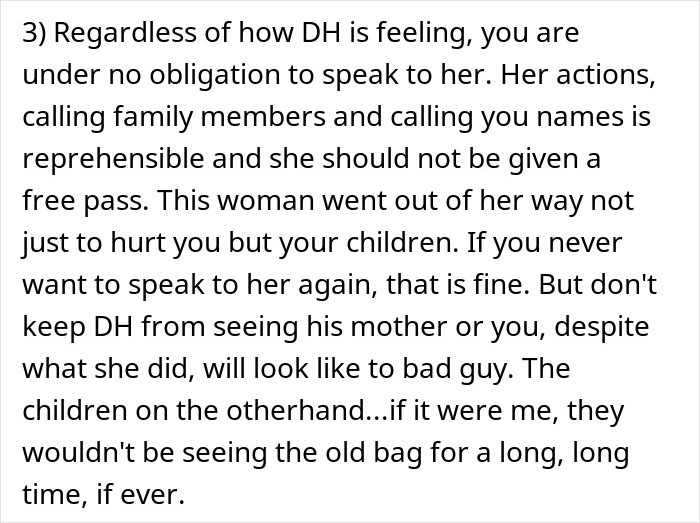
People who read the woman’s story believe she has every right to cut off contact with her mother-in-law