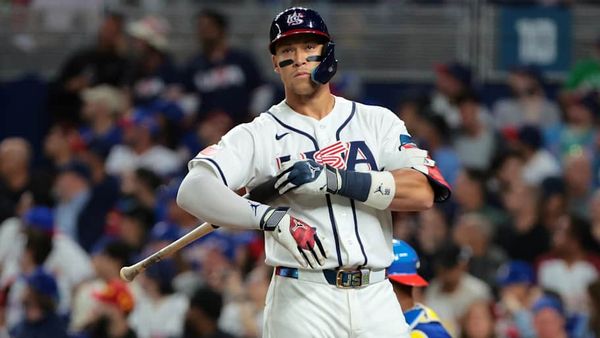
PHILADELPHIA _ There is a temptation, a natural one, to suggest that the core of the story that shook Philadelphia on Thursday _ Bryce Harper's decision to sign with the Phillies _ is without precedent in the city's sports history.
Harper arrives having already established himself not merely as one of Major League Baseball's best players, but as its biggest star at the apex of his abilities, as the face of his sport. That status sets him apart from (an aging) Pete Rose in 1978 and Jim Thome in 2002 and Cliff Lee in 2010, from the 1992 trade for Eric Lindros, and the 1996 drafting of Allen Iverson.
Each of those athletes was great, but Harper is younger, better, more famous, and/or more established than any of them. He was on the cover of Sports Illustrated in 2009, when appearing there still carried remarkable pop-culture cachet, as a 16-year-old. He was baseball's LeBron James. He has been named to six All-Star teams, been named the National League rookie of the year and most valuable player. This is as big as it gets, and you have to go back nearly 43 years to find an appropriate comparison.
You have to go back to a man who could fly.