While Thailand and the Maldives remain popular destinations, hotels in Dubai and Japan have been struck by geopolitical conflicts, prompting softer performance in the second quarter, according to Centara Hotels and Resorts.
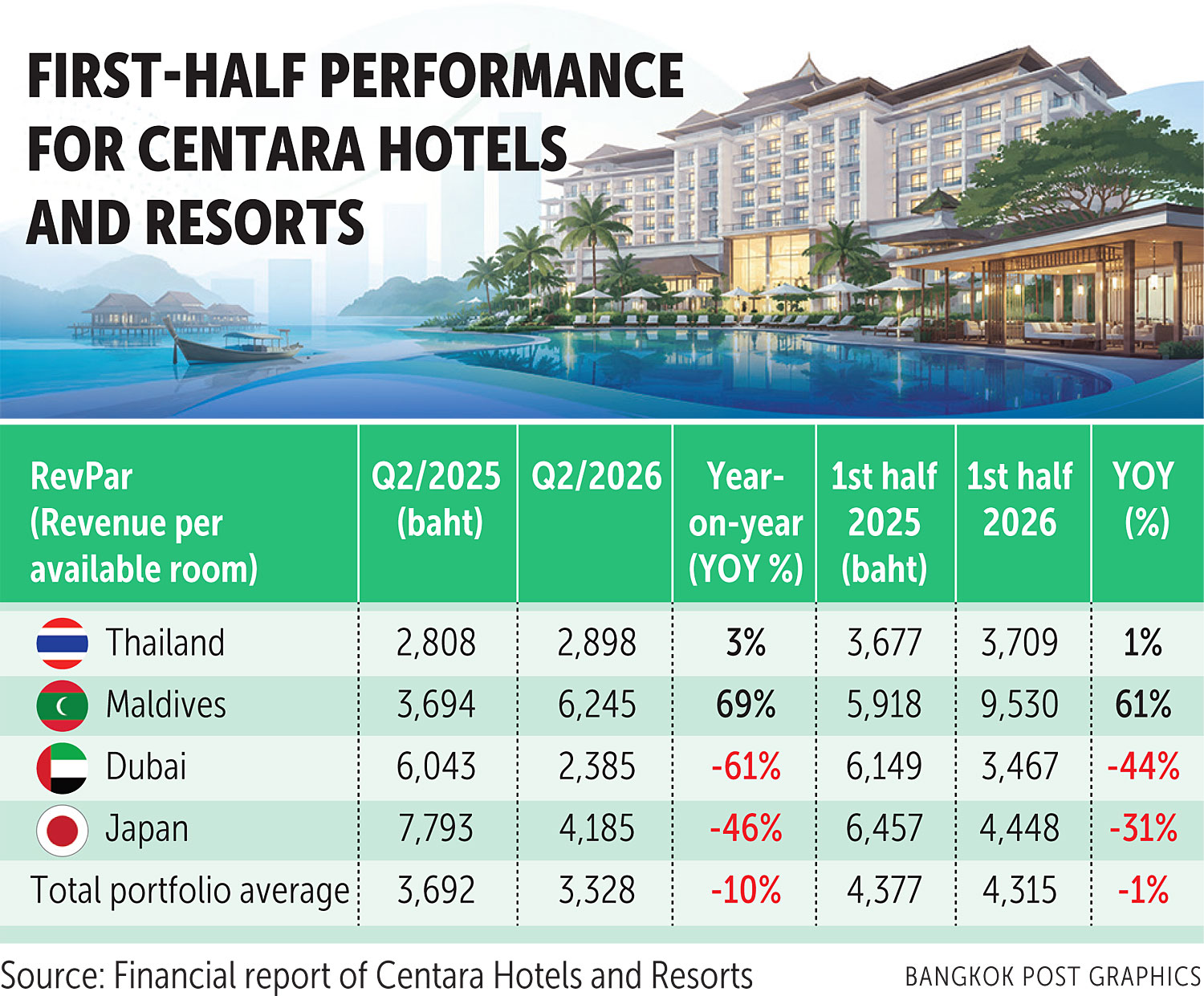
The company reported a second-quarter dip in revenue per available room (RevPar) of 10% year-on-year, down to 3,328 baht, mainly attributed to war in the Middle East.
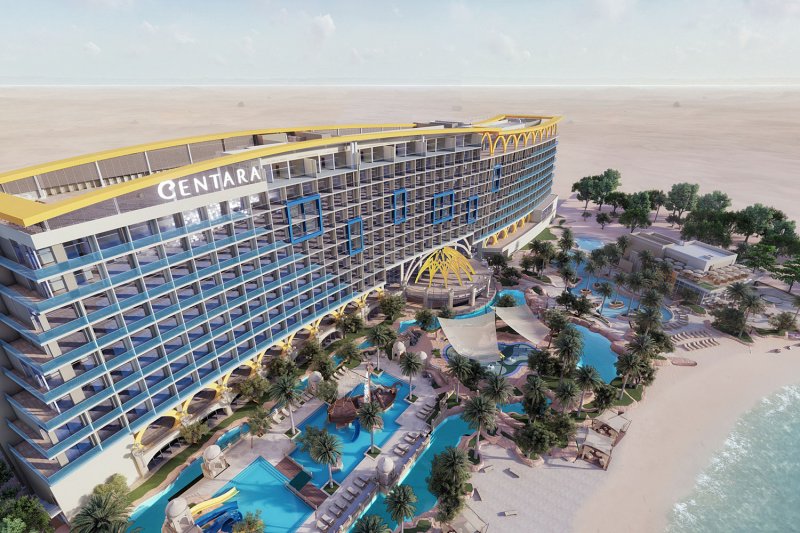
Centara Mirage Beach Resort Dubai posted a 61% RevPar reduction to 2,385 baht, and the average occupancy rate decreased from 83% to 44% as a result of the conflict that started in February.
The company said the hotel remained open throughout the period and did not have any physical damage, supported by staycation demand during holidays.
Centara's Japanese hotels recorded a 46% year-on-year reduction of RevPar to 4,185 baht, with the occupancy rate falling from 86% to 63% in the second quarter.
With the slowdown of Chinese arrivals in Japan due to tensions over Taiwan, and last year's strong traveller base for the Osaka World Expo, Centara Grand Hotel Osaka reported a 20% year-on-year decrease in RevPar to 6,225 baht.
In addition, the company opened Centara Life Namba Hotel Osaka in April, which is still in the ramp-up period.
The RevPar for Centara's Thai portfolio remained stable with a 3% year-on-year increase in the second quarter to 2,898 baht. However, the average room rate for Phuket hotels declined due to a shift in guest mix, affected by the Middle East war.
Some of its hotels, including Centara Grand Beach Resort and Villas Hua Hin, and Centara Grand Beach Resort and Villa Krabi underwent renovations.
Likewise, the Maldives' hotels recorded over 69% increase in RevPar year-on-year, booking a 53% occupancy rate, thanks to growth in its existing properties and a ramp-up period among new hotels.
For the first six months of the year, Centara's RevPar was down 1% year-on-year to 4,315 baht, with a total occupancy rate of 71%.
The Maldives reported a 61% uptick in RevPar to 9,530 baht, while Dubai and Japan recorded 44% and 31% reductions to 3,467 baht and 4,448 baht respectively.
RevPar for the Thai portfolio was 3,709 baht, up 1% year-on-year.