Houthis say they targeted two Saudi oil tankers
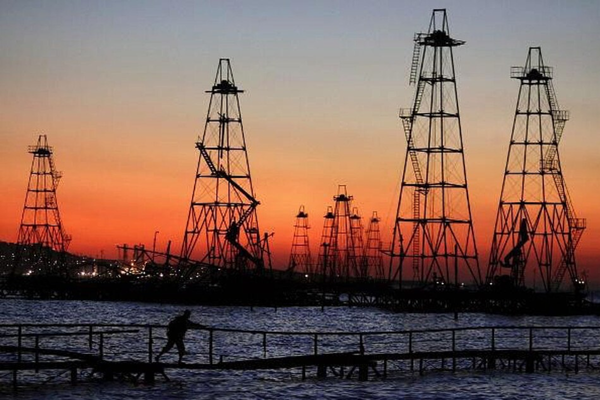
The Houthis - the Iran-backed group in Yemen, said on Thursday they had carried out a military operation targeting two Saudi oil tankers, identified as ENCELA and LAYLIA, saying the vessels violated the naval blockade imposed by the group on Monday.
The Houthis’ announcement prompted the Saudi-led coalition to declare that it would respond “firmly”, in a move that threatens to disrupt global energy supplies beyond the Gulf.
The Saudi authorities have not immediately confirmed the strike.
The UK Maritime Trade Operations (UKMTO) said it had received reports that a tanker had been struck by an unknown projectile and caught fire in the Red Sea, 70 nautical miles from Saudi Arabia’s Al Shuqaiq. At the time of writing there are no reported casualties and the projectile’s origin has not been specified.
The day so far
-
Iran’s foreign minister Abbas Araghchi said that Tehran would respond in kind to any attack on its infrastructure, after Donald Trump’s threat to bomb a bridge or power plant for every ship targeted in the strait of Hormuz. “Our defence doctrine is clear: eye for an eye. Any aggression against Iran, including our infrastructure, will compel a powerful and decisive response,” Araghchi said on X.
-
Iran’s state broadcaster also quoted the Iranian military as saying that US threats “will have no result other than the expansion of the war”. It added that if the US acts on the threats, Iran will stop all Gulf oil flow and target oil, gas, electricity and economic infrastructure in the region.
-
Iran’s top negotiator and powerful parliamentary speaker, Mohammad Bagher Ghalibaf, also warned on Wednesday that if Tehran cannot export its oil, no other country in the region would be able to do so. He wrote on X: “The equation of this war is clear: either all or none! In a region where we do not sell oil, no one will sell oil. If our security is not ensured, no infrastructure will be safe, and the security of the strait is in the absence of American forces. We have repeatedly said that the situation of the strait will not return to pre-war conditions. He also repeated that the strait of Hormuz “will not return to pre-war conditions”, as he has warned several times before.
-
It all came after Donald Trump threatened retribution against Iran in a post on Truth Social on Wednesday. “From this point forward, any time the Islamic Republic of Iran shoots at a ship in the Strait of Hormuz, whether it be by Missile, Rocket, Drone, or any other device or weapon, the United States will bomb and destroy ONE BRIDGE OR POWER PLANT, including those located next to, or in, the Capital City of Tehran,” the US president said on Truth Social. The threat came after the US conducted its 11th consecutive day of strikes on Iran, including on aircraft hangars and drone storage sites, as the renewed conflict continues to undermine diplomatic efforts to salvage an interim ceasefire deal.
-
Trump also attended the dignified transfer of four US service members killed in the Middle East over the weekend, the third such ceremony the US president has attended since he launched the war in Iran in February. Speaking to reporters on his way to Dover, Delaware, Trump called it “one of the hardest things to do as a president”. His message to grieving families, he said, will simply be “we love you, we love your child”.
-
The Trump administration signed a nuclear agreement with Saudi Arabia that could enable the kingdom to enrich its own uranium for nuclear reactors, US energy secretary Chris Wright said. As my colleague Patrick Wintour reported earlier, the timing of the announcement is controversial as the US’s war with Iran is being fought in part to prevent Tehran enriching uranium domestically and make it near-impossible for Iran to build a nuclear weapon. The plan is expected to be submitted to Congress for review, where it could face opposition among US lawmakers who fear a lack of monitoring safeguards to restrict Saudi Arabia’s uranium enrichment.
US announces nuclear deal with Saudi Arabia that could enable kingdom to enrich uranium
The Trump administration signed a nuclear agreement with Saudi Arabia on Wednesday that could enable the kingdom to enrich its own uranium for nuclear reactors, US Energy secretary Chris Wright said in a press release.
According to a statement from the Department of Energy, Wright and his Saudi counterpart, Prince Abdulaziz bin Salman, signed “a peaceful nuclear cooperation agreement” and “an accompanying bilateral safeguards agreement.”
The question of what those safeguards look like, given the potential for enriched uranium to be used to make nuclear weapons, will be closely scrutinized when the agreement is sent to Congress for review.
The two agreements, the press release said, “lay the legal foundation for a decades-long, multi-billion-dollar partnership that advances several priority economic and strategic objectives, including nuclear nonproliferation.”
“These agreements reflect our two nations’ shared commitment to strengthening U.S.-Saudi commercial relations, delivering prosperity at home and security to our allies abroad,” Wright said in a statement. “Rest assured, these agreements uphold the highest standards of nuclear safety and nonproliferation, while relying on the world’s best nuclear technology and scientists, designed right here in the United States.”
As our colleague Patrick Wintour reported earlier:
The timing of the announcement is controversial as the US’s war with Iran is being fought in part to prevent Tehran enriching uranium domestically and make it near-impossible for Iran to build a nuclear weapon.
The US-Saudi deal is expected to last 30 years and involve US firms such as Westinghouse in developing the programme.
It could allow for the building of a uranium enrichment facility in Saudi Arabia after a joint US-Saudi study. The proposal has been in discussion for years. At one point the Biden administration wanted to condition Saudi Arabia’s access to the technology on normalising relations with Israel, something Saudi Arabia is still refusing to do.
The plan is expected to be submitted to Congress for review, where it could face opposition among lawmakers who fear a lack of monitoring safeguards to restrict Saudi Arabia’s uranium enrichment.
Fatemeh Aman, an Iran expert and a former non-resident fellow at the Middle East Institute and a former senior fellow at the Atlantic Council, told the Guardian:
Iran is trying to balance deterrence with restraint. It wants to demonstrate that US military action carries costs while avoiding a full-scale war that could threaten the survival of the regime. Tehran therefore favours calibrated retaliation, enough to preserve credibility, but not enough to trigger overwhelming US escalation. A drawn-out war would be costly for both sides, but probably more so for Iran. The United States has greater military and economic resources, while Iran faces growing pressure on its economy, infrastructure, and domestic stability. That is why Tehran’s objective is to raise the costs for Washington, not to sustain an open-ended conflict.
Iran is already using missiles and drones against US bases and targets in Gulf states, while also attacking shipping and disrupting traffic through the strait of Hormuz. The most likely option is therefore a continuation of these attacks possibly with changes in intensity and target selection. Iran can also expand cyberoperations, covert attacks, and pressure through allied armed groups.
The more escalatory options would be larger attacks on Persian Gulf energy infrastructure or attempts to cause more sustained disruption to regional shipping. However, these would risk provoking an even broader US response and further alienating Gulf governments.
Iran still has the ability to impose significant regional and economic costs, but its capacity to sustain a prolonged war of attrition is more limited than that of the United States. Such a conflict would be damaging to both sides, but probably more damaging to Iran because of the imbalance in military resources and Iran’s greater economic and infrastructural vulnerability.
According to Aman, in the short term, the attacks are likely to strengthen the security establishment. Hardliners can argue that negotiations alone cannot guarantee Iran’s security and that military deterrence remains essential.
Over time, however, the conflict could expose deep divisions within the leadership over the costs of continued confrontation. If economic conditions worsen and military losses mount, debates over strategy are likely to become more pronounced, even if they remain largely behind closed doors.
The strikes are likely to delay parts of Iran’s nuclear program by damaging facilities, equipment, and infrastructure. However, they are unlikely to eliminate the program altogether. Iran retains technical expertise, scientific knowledge, and the ability to rebuild over time. Military action can slow the program, but it cannot permanently remove the underlying capability or motivation. Without a political agreement and an effective inspection regime, the strikes are more likely to buy time than provide a lasting solution.
Iran’s foreign ministry has said it is “shameful” that US lawmakers didn’t discuss the human suffering caused by the US-Israeli war on his country during a congressional hearing on additional funding for the conflict on Wednesday.
Esmaeil Baqaei wrote on X:
It is shameful that during the U.S. Congress hearing regarding the performance of the U.S. Secretary of War in the war against the Iranian nation, not even a single question was raised about the human dimensions of this brutal war, despite the fact that all of them are well aware that the U.S. military aggression against Iran has been an illegal war accompanied by countless war crimes, including the crimes of #Minab and #Lamard.
As you will remember, at least 175 people – most of them children – were killed on the first day of the war when a Tomahawk missile hit a girls’ elementary school in the southern Iranian city of Minab.
A preliminary US military investigation found that American forces were responsible. But while reports suggest that a secretive probe into the attack has concluded, some critics fear the Pentagon will bury the results under classifications to keep the worst mistakes secret from the public.
That same day, a strike hit a sports hall in Lamerd, also in southern Iran, killing at least 24 people, including teenage girls playing volleyball. The US was reportedly responsible for that too.
US has made 'no strategic gains' through war, says Iran's deputy foreign minister
In a post on X, Iran’s deputy foreign minister said he met with 25 European ambassadors and chargé d’affaires in Tehran and outlined his country’s position regarding the conflict.
“I reminded them that in the 40-day war, we imposed a severe defeat on the aggressors. In this new round of military aggression as well, we will resolutely defend our homeland and national interests,” Kazem Gharibabadi posted.
“These wars have created no strategic gains for America and only endanger regional and global peace and security. I also said that Europe is expected to safeguard the United Nations Charter and international law and to condemn aggression,” he added.
“Of course, a few Europeans, such as Spain, adopted principled positions. European governments must take note that placing bases and territory at the disposal of the aggressor will rank them among the aggressors. Europe is expected to be the driving force of diplomacy, not a follower of the aggressor’s power.”
Updated
The price for a barrel of Brent crude oil, the international standard, rose 3.4% to $94.07 (£70) after briefly topping $95 to touch its highest price in nearly six weeks, AP reports.
That is up from less than $72 early this month, which is roughly where it was before the war with Iran. Rising oil prices are threaten to reaccelerate inflation. AP says that in turn could push the Federal Reserve and other central banks to raise interest rates, which would slow economies and undercut prices for stocks and other investments.
Iran warns of 'eye for an eye' response if infrastructure hit
Further to that, Iran’s foreign minister Abbas Araghchi said Wednesday that Tehran would respond in kind to any attack on its infrastructure, after Donald Trump’s threat to bomb a bridge or power plant for every ship targeted in the strait of Hormuz.
“Our defence doctrine is clear: eye for an eye. Any aggression against Iran, including our infrastructure, will compel a powerful and decisive response,” Araghchi said on X.
Per my last post, Iran’s state broadcaster quoted the military as saying that US threats “will have no result other than the expansion of the war”.
Iran's military says Trump's threats will lead to expansion of war in region and beyond, state media reports
We’re getting some lines through now from Reuters news agency. Iranian state tv is reporting that Iran’s top joint military command has warned that Donald Trump’s repeated threats will only lead to expansion of the war in the region and beyond.
It added that if the US acts on the threats, Iran will stop all Gulf oil flow and target oil, gas, electricity and economic infrastructure in the region.
Per my last post, Iran’s top negotiator and powerful parliamentary speaker, Mohammad Bagher Ghalibaf, warned on Wednesday that if Tehran cannot export its oil, no other country in the region would be able to do so.
Earlier, Trump threatened to destroy an Iranian bridge of power plant for each strait of Hormuz attack.
Iran’s top negotiator and powerful parliamentary speaker, Mohammad Bagher Ghalibaf, has warned that if Tehran cannot export its oil, no other country in the region would be able to do so.
He wrote on X:
The equation of this war is clear: either all or none!
In a region where we do not sell oil, no one will sell oil. If our security is not ensured, no infrastructure will be safe, and the security of the strait is in the absence of American forces. We have repeatedly said that the situation of the strait will not return to pre-war conditions.
He also repeated that the strait of Hormuz “will not return to pre-war conditions”, as he has warned several times before. Before the war was launched by the US and Israel on 28 February, around 20% of the world’s oil and liquefied natural gas flowed through the critical waterway.
Updated
The US military has redirected nine commercial vessels and disabled one since reinstating the US’s naval blockade against Iran on 14 July, according to US Central Command.
Donald Trump salutes the coffins of the US service members killed in the Middle East last week.
Updated
The day so far
-
Donald Trump threatened retribution against Iran in a post on Truth Social on Wednesday. “From this point forward, any time the Islamic Republic of Iran shoots at a ship in the Strait of Hormuz, whether it be by Missile, Rocket, Drone, or any other device or weapon, the United States will bomb and destroy ONE BRIDGE OR POWER PLANT, including those located next to, or in, the Capital City of Tehran,” the US president posted on Truth Social.
-
President Donald Trump is attending the dignified transfer today of four US service members killed in the Middle East. Trump will be at Dover Air Force Base in Delaware when the remains of the troops killed in action are returned to their families, the White House said.
-
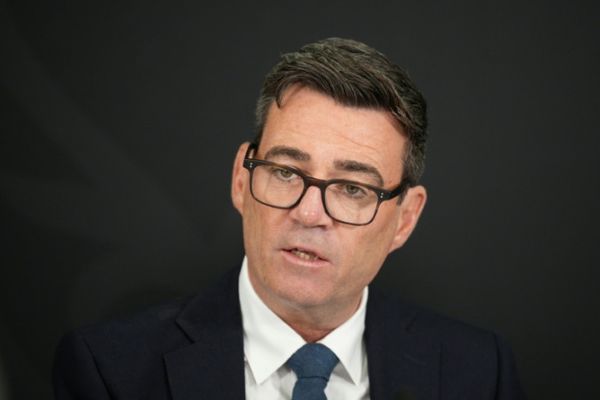
Britain’s new prime minister has agreed to allow the US to continue to use UK airbases for bombing missions against Iran as the US steps up its attacks on the country. Andy Burnham endorsed a decision taken by his predecessor Keir Starmer at a Cobra meeting on Friday to allow the US to resume strikes from UK bases against Iranian missile launchers and sites around the strait of Hormuz.
-
A US missile struck the Iranian island of Larak on Wednesday, the Tasnim news agency reported, in the latest attack to target the Islamic republic’s islands in and around the strait of Hormuz. The islands have been hit multiple times as the two sides fight over the strategic waterway, which Iran has sealed following the collapse of a preliminary deal aimed at ending the war.
-
Yemen’s Iran-backed Houthis have been recorded sending radio warnings to ships, the International Chamber of Shipping told AFP on Wednesday, after the rebels announced a naval blockade of Saudi Arabia. “We can confirm that the Houthis were recorded transmitting a warning message to ships in the region,” the ICS said.
-
The price of oil has breached the $95 a barrel mark for the first time in six weeks as the escalating Middle East conflict threatens further disruption to global supplies. The benchmark oil price rose sharply on Wednesday as renewed US-Iran aggression over the strait of Hormuz was compounded by Houthi threats to target vessels carrying Saudi oil through the Bab el-Mandeb strait.
-
The European Union Aviation Safety Agency on Wednesday added Jordan to the no-fly list, asking airlines not to operate withint the airspace as “the security situation has deteriorated rapidly”, Reuters reports. Iran has been targeting sites in Jordan and other US Gulf states amidst the renewed conflict. Last weekend, two US military personnel members were killed in an attack on Muwaffaq Salti Air Base in Jordan.
-
Italian foreign minister Antonio Tajani said that a new round of US-mediated talks between israel and Lebanon are set to take place in Italy on 4 August, AFP reports. This comes after a round of talks between the two countries in Rome last week.
-
The US military completed its 11th night of strikes on Iran, including on aircraft hangars and drone storage sites, as the renewed conflict continues to undermine diplomatic efforts to salvage an interim ceasefire deal.
-
The Jordanian army said it intercepted four Iranian missiles on Wednesday with two additional missile falling in an open area, AFP reports. The two missiles that the army did not intercept fell in “two remote, uninhabited areas, without causing any human casualties or material damage” the army said in a statement.
-
Iran has executed a man after finding him guilty of charges related to protests that swept the country last winter, according to AFP. The Iranian judiciary announced on Wednesday that Iran has executed a man identified as Mehdi Khanaki, who was arrested on 10 February in Karaj, west of Tehran, while in possession of a large arsenal. Khanaki “was condemned to death and the confiscation of all his property for having acted in favour of the Zionist and American regimes,” the website said. These allegations could not be independently confirmed.
-
In Lebanon, the focus is on “a complete Israeli withdrawal from the south”, Lebanese prime minister Nawaf Salam said on Wednesday. Salam was visiting Zawtar al-Gharbiya, one of several “pilot zones” intended to demonstrate that the Lebanese army can remove and disarm Hezbollah as part of a Washington-sponsored deal with Israel, AFP reports.
Yemen’s Iran-backed Houthis have been recorded sending radio warnings to ships, the International Chamber of Shipping told AFP on Wednesday, after the rebels announced a naval blockade of Saudi Arabia.
“We can confirm that the Houthis were recorded transmitting a warning message to ships in the region,” the ICS said.
US president Donald Trump walks to board Air Force One as he departs for Dover, Delaware, to attend the dignified transfer of US Army service members killed in Jordan and Iraq, amid the Iran war at Joint Base Andrews, Maryland.
Zohran Mamdani, the mayor of New York City, said in a video statement that he didn’t have the authority to arrest Benjamin Netanyahu but he urged the federal government to do so if the Israeli prime minister visits the city in September.
President Donald Trump is attending the dignified transfer today of four US service members killed in the Middle East.
Trump will be at Dover Air Force Base in Delaware when the remains of the troops killed in action are returned to their families, the White House said.
The ritual is one of the most somber duties of a commander-in-chief. It will be the third that Trump has attended since he launched the war in Iran in February.
Speaking to reporters on his way to Dover, Trump called it “one of the hardest things to do as a president.” His message to grieving families, he said, will simply be “we love you, we love your child.”
“There’s no games, there’s no nothing - that’s their child,” Trump said. “And all you can do is throw out your heart.”
Britain’s new prime minister has agreed to allow the US to continue to use UK airbases for bombing missions against Iran as the US steps up its attacks on the country.
Andy Burnham endorsed a decision taken by his predecessor Keir Starmer at a Cobra meeting on Friday to allow the US to resume strikes from UK bases against Iranian missile launchers and sites around the strait of Hormuz.
It is intended to be a continuation of a UK policy of permitting US ‘defensive strikes’ though it is unclear precisely how the distinction is drawn as Donald Trump threatens to bomb bridges and power plants in Iran.
US Air Force B-1 bombers were spotted at RAF Fairford on Tuesday. The Gloucestershire base is where US bombers are based in the UK, though the flight distance to Iran means they require refuelling support.
Burnham spoke to Trump on Monday, his first call with a foreign leader after becoming prime minister at lunchtime.
Trump said afterwards the two had “a very good conversation” while Downing Street said Burnham had told the US leader that “ensuring the security of the UK and its Allies was at the top of his agenda”.
A US missile struck the Iranian island of Larak on Wednesday, the Tasnim news agency reported, in the latest attack to target the Islamic republic’s islands in and around the strait of Hormuz.
The islands have been hit multiple times as the two sides fight over the strategic waterway, which Iran has sealed following the collapse of a preliminary deal aimed at ending the war.
Oil price hops over $95 mark as Middle East conflict escalates
The price of oil has breached the $95 a barrel mark for the first time in six weeks as the escalating Middle East conflict threatens further disruption to global supplies.
The benchmark oil price rose sharply on Wednesday as renewed US-Iran aggression over the strait of Hormuz was compounded by Houthi threats to target vessels carrying Saudi oil through the Bab el-Mandeb strait.
Brent crude peaked at $126 a barrel in April during the conflict, but had eased to as low as $71 at the start of July. However, the price has shot up since the war has reignited in recent days, and reached $95.24 on Wednesday, before easing to $94.40 by lunchtime, up more than 3% on the previous day.
The price increase followed an 11th night of strikes on Iran including on aircraft hangars and drone storage sites, despite diplomatic efforts to salvage an interim ceasefire deal. Donald Trump, warned strikes would intensify, in a war that has so far cost the US $37.5bn.
‘It’s truly hell here’: airstrikes, repression and water shortages become ‘new normal’ for Iranians
As US airstrikes hit port and inland cities in Iran, and Tehran strikes at the US’s Middle East allies, the escalating conflict has left many Iranians fearing that, amid war and a worsening human rights crisis, they remain trapped in a cycle of violence and repression with no way out.
Bandar Abbas, on the strait of Hormuz and the headquarters of the Iranian navy, has been hit by strikes every night since the latest escalation began nearly two weeks ago. Soroush*, a writer based in the city who secretly publishes a newsletter documenting human rights violations in Iran, described a “new normal” for its residents.
“We need to accept this could just be our new reality now and it’s worked because we are less afraid as each day goes on,” the 37-year-old said. “We are less afraid of the future because we are now forced to accept this is the new normal. There’s no one coming to save us from the bombs or the regime’s bullets. Our brains have tricked us into making peace with this new reality.”
Trump: US will 'destroy' one bridge or power plant for every future Iranian Hormuz strike
Donald Trump threatened retribution against Iran in a post on Truth Social on Wednesday.
“From this point forward, any time the Islamic Republic of Iran shoots at a ship in the Strait of Hormuz, whether it be by Missile, Rocket, Drone, or any other device or weapon, the United States will bomb and destroy ONE BRIDGE OR POWER PLANT, including those located next to, or in, the Capital City of Tehran,” the US president posted on Truth Social.
Updated
EU aviation agency asks airlines not to operate in Jordan airspace
The European Union Aviation Safety Agency on Wednesday added Jordan to the no-fly list, asking airlines not to operate withint the airspace as “the security situation has deteriorated rapidly”, Reuters reports.
Iran has been targeting sites in Jordan and other US Gulf states amidst the renewed conflict. Last weekend, two US military personnel members were killed in an attack on Muwaffaq Salti Air Base in Jordan.
“Since the middle of July 2026, the security situation has deteriorated rapidly, with a sustained increase in kinetic military activity affecting Jordanian airspace,” EASA said in a statement.
The agency already recommends that airlines avoid the airspace of Bahrain, Kuwait, Qatar, the United Arab Emirates, Iran, Iraq and Lebanon.
New round of talks between Israel and Lebanon to be held in Italy
Italian foreign minister Antonio Tajani said that a new round of US-mediated talks between israel and Lebanon are set to take place in Italy on 4 August, AFP reports.
This comes after a round of talks between the two countries in Rome last week.
Iran’s foreign minister, Abbas Araghchi, has described how he was pulled from the rubble of a leadership compound after the US-Israeli airstrike that killed the country’s supreme leader, Ali Khamenei, on the first day of the war, and has survived since by constantly moving around the capital, Tehran, by car.
In an interview with the Iranian journalist Javad Mogouyi, Araghchi confirmed Israel and the US had accurate intelligence on the location of Khamenei and other officials, enabling them to target Iran’s senior leadership.
Araghchi was reporting to Khamenei’s deputy chief of staff, Ali Asghar Hijazi, when the building was shaken by three blasts within seconds – each closer than the last, he said. “The third explosion was almost next to our building. The section where Mr Hijazi’s office was located was directly hit, and the left side of the building was completely destroyed.”
Hijazi’s secretary was killed instantly, but Araghchi and Hijazi escaped the full force of the detonation.
“We were on the other side of the building, and after the explosion, the ceiling, walls, and everything collapsed on us. I grabbed Mr Hijazi’s hand, and we made our way through the beams and boards and pieces of wood, hearing the cries for help. Water was pouring from the ceiling. Everything was wrecked. We eventually got out, and I saw that various parts of the compound had been targeted.”
Araghchi was rushed to the foreign ministry by a passerby since his official car had been hit.
“For three days we were cut off from everything trying to find out who was alive and who had been martyred,” he said. “The enemy thought they could paralyse us by targeting leadership, but they failed.”
Read more here:
In the UK, the new defence secretary Wes Streeting said that Israel has “fallen short” of British standards in its intense bombing of Gaza and its military operations in the West Bank in a briefing to journalists.
The newly appointed minister said that he stood by comments he had previously made in a July 2025 whatsapp exchange with Peter Mandelson that “Israel is committing war crimes before our eyes”.
“I’m not going to pretend I didn’t make those comments,” Streeting said, although he noted that any decisions on future arms exports to Israel would be part of a “clear framework” across the UK government.
Streeting, in his second day in the job, then went on to offer a degree of criticism of Israel and its military campaign that was notable for a British defence minister:
I believe very strongly in Israel’s right to defend itself, to defend its values, its freedom, and its democracy, just as we do every single day.
But I also hold Israel as a, as a friend and ally to the same standard that we hold ourselves to. That is the standard that should be applied to Israel. That is the standard that I think I feel they’ve fallen short of.
You know, we’ve got a responsibility as a country to make sure that we’re good friends. We’re good friends who are also critical friends when necessary.
Updated
Iran foreign ministry: there is no nuclear activity at Pickaxe Mountain
The Iranian foreign ministry spokesperson, Esmail Baghaei, posted on X on Wednesday that there is no nuclear activity at Kolang Kouh, otherwise known as Pickaxe Mountain.
“The repeated US attacks and threats against Iran’s peaceful nuclear facilities not only constitute a flagrant violation of the core principles of the UN Charter, international law, and the relevant resolutions of the IAEA board of governors, general conference, and UN Security Council, but also reveal the United States’ deep-rooted enmity toward Iran’s scientific progress and technological development,” Baghaei wrote on X.
“Iran’s nuclear activities have been fully declared to the IAEA in accordance with its safeguards obligations. Washington’s obsessive focus on Kolang Kouh where no nuclear activity is taking place is nothing more than a fabricated pretext for aggression, destruction, and sabotage.”
Read more on what Pickaxe Mountain is here:
Oil price touches $95 as US-Iran conflict escalates
Oil prices are climbing further this morning as investors grow fearful around the impact of the war in the Middle East on global supply.
Brent crude, the international benchmark for oil prices, is up 4.6% to $95.16 a barrel, its highest point in six weeks. Oil prices have risen by abut 20% this month as Washington and Tehran have exchanged fire.
For more, follow the Guardian’s live business updates here:
Today so far
-
The US military completed its 11th night of strikes on Iran, including on aircraft hangars and drone storage sites, as the renewed conflict continues to undermine diplomatic efforts to salvage an interim ceasefire deal.
-
Donald Trump warned that strikes would intensify and that the US would “soon” target “very heavily” the area near Pickaxe Mountain – a fortified underground site near one of Iran’s primary nuclear enrichment facilities, which Iran’s military leaders said would be considered a major escalation.
-
In what could open up a potential new front in the war, Yemen’s Iranian-aligned Houthis have warned shipping companies that their tankers risk being attacked if they use Saudi Arabian ports, as the militia moved quickly to enforce a blockade announced the previous day. Underlining how seriously the Houthi threat is being taken, three oil tankers that had loaded Saudi crude this week for China and India made U-turns on Tuesday away from Houthi-controlled coast at the mouth of the Red Sea and headed towards the Suez canal. The Houthis claimed six ships had changed course.
-
The Jordanian army said it intercepted four Iranian missiles on Wednesday with two additional missile falling in an open area, AFP reports. The two missiles that the army did not intercept fell in “two remote, uninhabited areas, without causing any human casualties or material damage” the army said in a statement.
-
Iran has executed a man after finding him guilty of charges related to protests that swept the country last winter, according to AFP. The Iranian judiciary announced on Wednesday that Iran has executed a man identified as Mehdi Khanaki, who was arrested on 10 February in Karaj, west of Tehran, while in possession of a large arsenal. Khanaki “was condemned to death and the confiscation of all his property for having acted in favour of the Zionist and American regimes,” the website said. These allegations could not be independently confirmed.
-
In Lebanon, the focus is on “a complete Israeli withdrawal from the south”, Lebanese prime minister Nawaf Salam said on Wednesday. Salam was visiting Zawtar al-Gharbiya, one of several “pilot zones” intended to demonstrate that the Lebanese army can remove and disarm Hezbollah as part of a Washington-sponsored deal with Israel, AFP reports.
-
The US war in Iran has cost $37.5bn so far, US defence secretary Pete Hegseth said, an increase of nearly $8bn since the last public estimate. Hegseth told the Senate on Tuesday that the defence department needs an additional $67.1bn to “pay our service members, rapidly replenish equipment and munitions, and sustain vital operations without disruption”.
-
The US secretary of state Marco Rubio warned south-east Asian foreign ministers on Wednesday that Iranian control of the strait of Hormuz would set a dangerous precedent with repercussions beyond the Middle East. “If we create a precedent in the Middle East where a nation state can decide that they are going to control an international waterway, charge a toll and if you don’t pay them, blow up your ships, we have created a very dangerous precedent which will repeat itself in other parts of the world, including in this region,” Rubio said.
Rubio warns that Iran's demand to control Hormuz threatents global economy
US secretary of state Marco Rubio spoke to southeast Asian leaders on Wednesday in the Philippine capital of Manila and warned them that Iran’s demand to control the strait of Hormuz threatens the global economy and freedom of navigation, the Associated Press reports.
“If we create a precedent in the Middle East where a nation state can decide that they are going to control an international waterway, charge a toll and if you don’t pay them, blow up your ships, we have created a very dangerous precedent which will repeat itself in other parts of the world, including in this region,” Rubio said.
Rubio also accused Iran of reneging on commitments under a failed peace deal.
Iran “has been reaching out to the United States, both directly and indirectly, to engage in talks about settling the differences,” Rubio said, but gave no indication that the US was considering returning to peace talks with Iran.
Lebanese interior minister says US can help secure Israeli withdrawal from south
Lebanese interior minister Ahmad Hajjar said the US remains the best actor positioned to pressure Israel into completely withdrawing from Lebanon, the state-run National News Agency reports.
A full Israeli withdrawal is Lebanon’s top priority, Hajjar said. Despite continued Israeli attacks in the south, Lebanon’s security situation remained “very good” despite continued Israeli attacks in the south, Hajjar said.
Mamdani urges US government to arrest Netanyahu if Israeli PM visits US
Zohran Mamdani, the New York City mayor, acknowledged on Tuesday he does not have the authority to arrest Benjamin Netanyahu, but urged US federal authorities to do so if the Israeli prime minister visits the US later this year.
“Benjamin Netanyahu is a war criminal, the architect of a horrific genocide against the Palestinian people,” Mamdani said in a video posted to social media.
Mamdani said he believed the international criminal court warrant for Netanyahu’s arrest over alleged war crimes was justified, but admitted he lacked the legal authority to enforce it.
Netanyahu is expected to travel to New York in September for the UN general assembly.
More here:
Number of vessels transiting the strait of Hormuz continues to drop
The number of vessels transiting the strait of Hormuz continues to drop, shipping data showed.
Three commodity vessels crossed the strait on Tuesday, down from four on Monday, according to data from Kpler. The Kaiser, a general cargo ship, exited the strait loaded with cargo, while dry bulk carrier H7 Smb8 entered the strait in ballast, meaning it will take on a cargo in the Gulf. The Hsin Ocean entered the strait carrying refined palm olein, Kpler said.
No visible very large crude carrier or liquefied natural gas tankers passed through the strait on Tuesday.
Meanwhile, a news agency in Yemen that is run by the Houthis, Saba, said six ships in the Red Sea were forced to reroute after they received warnings from the rebel group. The claim could not be independently verified. During the war, the Red Sea has served as the main alternate route out for millions of barrels of Saudi oil per day.
Updated
Jordanian army intercepts four Iranian missiles
The Jordanian army said it intercepted four Iranian missiles on Wednesday with two additional missile falling in an open area, AFP reports.
The two missiles that the army did not intercept fell in “two remote, uninhabited areas, without causing any human casualties or material damage” the army said in a statement.
Iran executes man for charges related to winter protests
The Iranian judiciary’s Mizan Online news website reported that Iran has executed a man after finding him guilty of charges related to protests that swept the country last winter, according to AFP.
What began as a demonstration in Tehran at the end of December against the rising cost of living quickly grew to the largest nationwide uprising in years against the country’s theocratic leaders.
In turn, Iran responded with overwhelming repression and state violence to silence the protests. Some human rights advocates estimate that this crackdown killed thousands.
On Wednesday, the Iranian judiciary announced that Iran has executed a man identified as Mehdi Khanaki in connection to charges related to the protests.
The judiciary’s online news website said that Khanaki was arrested on 10 February in Karaj, west of Tehran, while in possession of a large arsenal. Khanaki “was condemned to death and the confiscation of all his property for having acted in favour of the Zionist and American regimes,” the website said. These allegations could not be independently confirmed.
According to Amnesty International, Iran conducts the second most executions of any country, after China.
Donald Trump plans to attend the dignified transfer of four US service members recently killed in the Middle East.
The White House says Trump will be at Dover air force base when the remains are returned to their families on Wednesday.
An official says two Army soldiers killed in Iranian missile and drone attacks in Jordan will be returned, as well as a third service member believed to be the soldier missing after the Jordan attacks. The remains of another soldier, killed in Iraq during a detonation of an Iranian drone, will also be returned.
Since the war began on 28 February, 18 US service members have been killed.
Iran’s foreign minister, Abbas Araghchi, has described how he was pulled from the rubble of a leadership compound after the US-Israeli airstrike that killed the country’s supreme leader, Ali Khamenei, on the first day of the war, and has survived since by constantly moving around Tehran.
Beirut working for 'complete Israeli withdrawal', says Lebanon PM
Lebanese prime minister Nawaf Salam on Wednesday visited Zawtar al-Gharbiya, one of several “pilot zones” intended to demonstrate that the Lebanese army can remove and disarm Hezbollah as part of a Washington-sponsored deal with Israel, AFP reports.
“We will continue mobilising our political and diplomatic efforts to secure a complete Israeli withdrawal from the south,” Salam said.
Houthis threaten to attack shipping tankers if they use Saudi Arabian ports on Red Sea
Yemen’s Iranian-aligned Houthis have warned shipping companies that their tankers risk being attacked if they use Saudi Arabian ports, as the militia moved quickly to enforce a blockade announced the previous day.
The Houthi warning for the Red Sea, coming on top of Iran’s threat to shipping on the other side of the Arabian peninsular in the Gulf, could affect the substantial Saudi oil exports that have so far been unscathed by the months-long conflict and deepen the rapidly escalating crisis in the region.
Underlining how seriously the Houthi threat is being taken, three oil tankers that had loaded Saudi crude this week for China and India made U-turns on Tuesday away from Houthi-controlled coast at the mouth of the Red Sea and headed towards the Suez canal. The Houthis claimed six ships had changed course.
US defence secretary Pete Hegseth told the Senate on Tuesday that the war on Iran has so far cost $37.5bn – and the defence department needs $67.1bn more to “pay our service members, rapidly replenish equipment and munitions, and sustain vital operations without disruption”.
“The best way to create peace is to prepare for war, to deter it,” Hegseth said.
The Guardian’s Joseph Gedeon and Lauren Gambino have more here:
Trump nuclear deal with Saudi Arabia could allow it to enrich uranium: report
Donald Trump has approved an agreement with Saudi Arabia that could provide the kingdom with uranium enrichment capability for its civilian nuclear programme, according to news reports citing people familiar with the matter.
The deal is expected to last 30 years and is also expected to involve US firms in developing the programme. It could allow for the building of a uranium enrichment facility in Saudi Arabia after a joint US-Saudi study.
The agreement is not expected to include the IAEA’s “additional protocol”, which would allow for more monitoring, inspections and verification, according to one of the people who revealed it.
What is Iran’s Pickaxe Mountain, the site Trump has threatened to attack?
Donald Trump on Tuesday made new threats to attack and destroy Iran’s nuclear site known as Pickaxe Mountain.
Here’s what we know about Pickaxe Mountain, why it has captured Trump’s attention and how the US military could strike at the deeply buried complex.
Opening summary
Welcome to our live coverage of the latest developments in the US-Iran war, and its regional and global ramifications.
The US military completed its 11th night of strikes on Iran, including on aircraft hangars and drone storage sites, as the renewed conflict continues to undermine diplomatic efforts to salvage an interim ceasefire deal.
In what could open up a potential new front in the war, Yemen’s Iran-aligned Houthis, who control the coast at the mouth of the Red Sea, announced a naval blockade on Saudi Arabia. With the strait of Hormuz blocked, Saudi Arabia has been relying on a pipeline to the Red Sea to get millions of barrels of oil out to market.
The latest US barrage came as Donald Trump warned strikes would intensify.
The US leader also declared the US would “soon” target “very heavily” the area near Pickaxe Mountain – a fortified underground site near one of Iran’s primary nuclear enrichment facilities, which Iran’s military leaders said would be considered a major escalation.
Before the latest strikes, Iranian interior minister Eskandar Momeni visited Pakistan, a key mediator in the conflict. But it was unclear what new arrangement might be reached to end the war, which is now centered on a battle for control over the strait of Hormuz.
In other news:
-
The US war in Iran has cost $37.5bn so far, US defence secretary Pete Hegseth said, an increase of nearly $8bn since the last public estimate.
-
The number of wounded US personnel in the Iran war has grown to well more than 500 troops, a US official told the Associated Press.
-
Brent crude was trading up 1.2% at $92.09 a barrel at around 0130 GMT, its highest intraday price since 11 June. West Texas Intermediate (WTI), the main US oil benchmark, climbed 1.1% to $85.23.
-
The US secretary of state Marco Rubio told South-east Asian foreign ministers on Wednesday that Iranian control of the strait of Hormuz would set a dangerous precedent with repercussions beyond the Middle East.
-
Trump said he would authorise the resumption of direct flights by US airlines to Lebanon, which have been suspended since the 1985 hijacking by Lebanese Islamist militants of a TWA flight with many Americans aboard.
Updated