Closing summary
We’re wrapping up this live coverage now but a full report is here, and below a recap of the day’s major developments. Thanks for joining us.
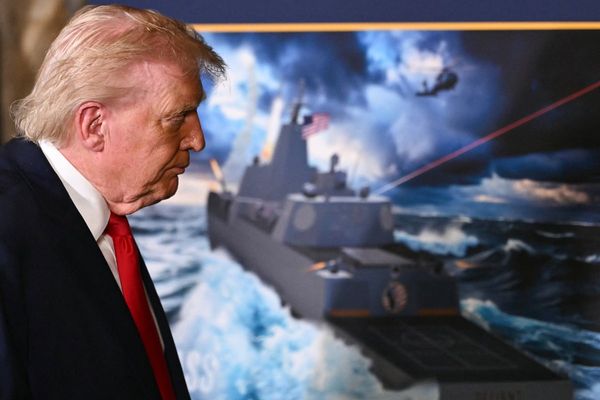
Donald Trump said a deal with Iran to end the war was “very possible” after “very good talks” over the past 24 hours. While again claiming Iran “badly” wants to make a deal, the US president told reporters in the Oval Office on Wednesday: “We’ll see whether or not they are agreeing. And if they don’t agree, they’ll end up agreeing shortly thereafter. That’s the way it is.” Later Trump said he expected the war would “be over quickly”. He earlier issued a fresh ultimatum to Tehran, telling it to accept a deal to end the war or face a new wave of US bombing “at a much higher level and intensity than it was before”.
Iran said on Wednesday it was reviewing a US peace proposal that sources told Reuters would formally end the war while leaving unresolved the key US demands that Iran suspend its nuclear program and reopen the strait of Hormuz. Separately Iran’s top negotiator Mohammad Bagher Ghalibaf said Washington was seeking through various means “to destroy the country’s cohesion in order to force us to surrender”.
Israel’s military attacked Beirut’s southern suburbs for the first time in weeks amid the Israel-Lebanon ceasefire. Israeli prime minister Benjamin Netanyahu said the IDF was targeting the unnamed commander of Hezbollah’s Radwan force.
A source close to Hezbollah said a senior commander had been killed in the Israeli attacks and named him as “Malek Ballout, the operations commander in the Radwan force”, Agence France-Presse reported.
US forces disabled an Iran-flagged unladen oil tanker in the Gulf of Oman, enforcing the US blockade, as the ship tried to sail towards an Iranian port, US Central Command said.
An Israeli strike in Lebanon’s eastern Bekaa valley on Wednesday killed four people, Lebanon’s health ministry said, with local media reporting the attack took place before the Israeli army issued a warning to evacuate the area along with 11 other towns.
Trump’s abrupt reversal on his plan to help ships through the strait of Hormuz came after key Gulf ally Saudi Arabia suspended the US military’s ability to use its airspace and a base to carry out the operation, NBC News quoted two US officials as saying. They said Trump’s announcement of “Project Freedom” via social media on Sunday surprised Gulf allies and angered the Saudi leadership, the report said.
French president Emmanuel Macron called for “all parties to lift the blockades” to allow for the resumption of traffic in the Hormuz strait, after a meeting with Iranian president Masoud Pezeshkian.
Pope Leo surprised 13 priests from southern Lebanon by joining a video call from Rome on Wednesday, telling them they were in his prayers and he hoped peace would soon prevail along the border.
Updated
Trump says Iran war will be over 'quickly'
Donald Trump has told a rally that he expects the war in Iran will be over quickly.
“When you look at the kind of things that are happening, we are doing that for one very important reason: we cannot allow them to have a nuclear weapon,” the US president told a tele-rally for a Republican governor candidate on Wednesday night, quoted by Reuters.
So I think most people understand that. They understand that what we are doing is right, and it’ll be over quickly.
Updated
Pope Leo surprised 13 priests from southern Lebanon by joining a video call from Rome on Wednesday, telling them they were in his prayers and that he hoped peace would soon prevail along the tense border.
The Lebanese Catholic and Maronite priests were asked to attend an online morning meeting with the Vatican’s ambassador to Lebanon, Archbishop Paolo Borgia. Once online, Borgia told them Leo XIV was also present and would like to speak with them.
The 13 priests from southern villages and towns near the border with Israel were pleasantly surprised, the Associated Press reports.
The pontiff “gave us peace and his blessings”, said Father Najib al-Amil, the parish priest of Rmeish, who attended the online meeting.
His words were reassuring, particularly as we live in constant worry over here.”
Updated
The Israeli military says it has intercepted a suspicious aerial target launched towards Israel from Lebanon after warning sirens sounded in northern Israel overnight.
It said on Telegram that the sirens sounded in Manara, Margaliot and Kiryat Shmona.
Missiles and rocket alerts were activated due to concerns of falling debris from the interceptor.”
It came after Israel launched its first attacks on Beirut in nearly a month on Wednesday, saying it was targeting a commander in Hezbollah’s Radwan force.
Updated
Trump reversal on Hormuz strait plan came after Saudi backlash – report
Donald Trump’s abrupt U-turn on his plan to help ships through the strait of Hormuz came after a key Gulf ally suspended the US military’s ability to use its bases and airspace to carry out the operation, NBC News is quoting two US officials as saying.
They said Trump’s announcement of “Project Freedom” via social media on Sunday surprised Gulf allies and angered the leadership of Saudi Arabia, the report said. In response the kingdom informed the US it would not allow the US military to fly aircraft from Prince Sultan airbase south-east of Riyadh or fly through Saudi airspace to support the effort, the officials said.
The NBC report continued:
A call between Trump and Saudi Crown Prince Mohammed bin Salman did not resolve the issue, the two US officials said, forcing the president to pause Project Freedom in order to restore US military access to the critical airspace.
Other close Gulf allies were also caught off guard; the president spoke with leaders in Qatar after the effort had already begun.”
NBC quoted a White House official as saying in a statement when asked about some Gulf state leaders being caught off guard by Trump’s announcement of the Hormuz operation: “Regional allies were notified in advance.”
Updated
Top Hezbollah commander killed in Israeli strikes – report
A source close to Hezbollah is saying a senior commander of the group’s elite Radwan force was killed in Israel’s attacks on Beirut’s southern suburbs, Agence France-Presse is reporting.
The source told the news agency on condition of anonymity that “Malek Ballout, the operations commander in the Radwan force”, was killed in Wednesday’s strikes – the first on the area in weeks amid a ceasefire.
Israeli prime minister Benjamin Netanyahu had earlier said his military targeted “the commander of Hezbollah’s Radwan force”.
Lebanon’s state-run National News Agency had reported that “Israeli warplanes launched an attack, targeting Ghobeiri” in the southern suburbs, a Hezbollah stronghold.
A building was seen covered in rubble after the strike as people left the area with their belongings.
A Lebanese security source told AFP on condition of anonymity that the strike hit an apartment in which Radwan leaders were holding a meeting.
At least 11 other people were killed in strikes across the south and east, according to the Lebanese health ministry.
Updated
The day so far
Donald Trump told reporters in the Oval Office that a deal with Iran to end the war was “very possible” following “very good talks” over the past 24 hours. Repeating his usual lines about how “badly” Iran “wants to make a deal” and how the US has “won” the war, the US president added: “We’ll see whether or not they are agreeing. And if they don’t agree, they’ll end up agreeing shortly thereafter. That’s the way it is.”
Israel’s military carried out strikes in Beirut’s southern suburbs for the first time in weeks since the Israel-Lebanon truce went into force on 17 April. Israeli prime minister Benjamin Netanyahu said the IDF was targeting the unnamed commander of Hezbollah’s Radwan force. There was no immediate comment from Hezbollah. Despite the ceasefire, Israel has continued to carry out extensive air and artillery attacks and raids in southern Lebanon, claiming it is targeting Hezbollah targets. Israel has killed dozens of people in these attacks and continues to force residents across the area to leave their homes and villages. Hezbollah says it has continued to strike back in retaliation for these “violations” of the truce. Lebanon’s health ministry puts the total number of people killed since 2 March, when Israel launched its unprecedented offensive, at more than 2,700 people and over 8,300 wounded.
US Central Command said US forces in the Gulf of Oman “enforced blockade measures by disabling an Iranian-flagged unladen oil tanker” that was attempting to sail towards an Iranian port. Centcom said repeated warnings were given to the vessel and the crew failed to comply, so US forces shot at and disabled the vessel from a navy jet.
French president Emmanuel Macron called for “all parties to lift the blockades” to allow for the resumption of traffic in the strait of Hormuz, following a meeting with Iran’s president Masoud Pezeshkian. “All parties must lift the blockade of the strait, without delay and without conditions. We must durably return to the regime of full freedom of navigation that prevailed before the conflict,” Macron said in a post on X. “The return of calm in the strait will help advance negotiations on the nuclear issue, the ballistic issue, and the regional situation.”
Updated
'All parties must lift the blockades,' says Macron
Emmanuel Macron earlier called for “all parties to lift the blockades” to allow for the resumption of traffic in the strait of Hormuz, following a meeting with Iran’s president Masoud Pezeshkian on Wednesday.
“All parties must lift the blockade of the strait, without delay and without conditions. We must durably return to the regime of full freedom of navigation that prevailed before the conflict,” the French president said in a post on X.
He also condemned “the unjustified strikes against Emirati civilian infrastructure and several ships”. Iran has denied recent attacks on the United Arab Emirates, despite the UAE’s defence ministry reporting several waves of missile and drone interceptions, as well as a strike on the Fujairah oil industrial zone, in recent days.
Citing the multinational mission proposed by France and the UK seeking to secure shipping in the critical waterway, Macron went on: “Recent events clearly demonstrate the usefulness that such a mission would have. I have invited the Iranian president to seize this opportunity, and I intend to discuss this matter with President [Donald] Trump.”
“The return of calm in the strait will help advance negotiations on the nuclear issue, the ballistic issue, and the regional situation,” he added.
Updated
First responders gather at the site of Israeli airstrikes in the Haret Hreik neighbourhood of Beirut’s southern suburbs on Wednesday.
Updated
'If they don't agree, they'll end up agreeing': Trump says deal with Iran 'very possible'
Earlier, Donald Trump told reporters in the Oval Office that a deal with Iran to end the war was “very possible” following “very good talks” over the past 24 hours.
Repeating his usual lines about how “badly” Iran “wants to make a deal” and how the US has “won” the war after decimating Tehran’s military capabilities, Trump added:
We’ll see whether or not they are agreeing. And if they don’t agree, they’ll end up agreeing shortly thereafter. That’s the way it is.
Trump repeated his claim that Iran has agreed to never have a nuclear weapon “among other things”, a claim that has not been confirmed by Tehran.
He also told reporters that there is “never” a deadline for a negotiated agreement.
The US president was later asked a question on getting enriched uranium from Iran as he left an event in the East Room of the White House.
“We’re going to get it,” Trump told the reporter.
Asked how the United States would do this, Trump repeated: “We’re going to get it.”
Updated
Since users of the leading prediction market Polymarket have been able to wager on the outcomes of war, fears have been raised that those betting on bombs falling from the sky may be privy to non-public information about military strikes. There has been much reported about suspicions of insider trading on war, but who exactly is believed to be placing these bets has remained unclear.
In February, Israeli authorities charged two suspects with committing security offences, bribery and obstruction of justice, alleging they used classified information to bet on the timing of military operations on Polymarket.
The claims in the indictment follow reporting in the Guardian in January, which revealed a cluster of jointly funded Polymarket accounts wagering on strikes involving Iran and Israel between June 2025 and January 2026, generating profits of about $156,000, according to publicly available blockchain data.
Since then, there have been growing reports of possible insider trading on prediction markets – where traders can bet using crypto wallets, particularly around the Iran war, with suspicious accounts racking up millions of dollars in profits.
Now, after local journalists successfully appealed to narrow a gag order, Tel Aviv court documents allege more about the people who prosecutors say have profited by betting on lethal military strikes and how they received their information.
The United Arab Emirates said its ties and its international and defense partnerships were a “purely sovereign matter,” rejecting an earlier statement by Iran saying that Abu Dhabi’s cooperation with the US threatened Iran’s security and national interests.
The UAE’s foreign ministry said the Gulf country reserves its full sovereign, legal, diplomatic and military rights to address any “threat, allegation or hostile act”.
The dispute between the two countries come after the UAE reported being attacked in the past days by Iran after four weeks of relative calm since the ceasefire was announced by the US.
Tehran denied carrying out operations against the UAE in recent days, however it warned of a “crushing response” if any action was launched from the UAE against Iran.
A CMA CGM container ship was attacked while transiting the Strait of Hormuz, injuring crew members and damaging the vessel, while another vessel run by the French group exited the Gulf.
The San Antonio was hit on Tuesday, with injured seafarers evacuated for medical treatment, CMA CGM, the world’s third-largest container shipping line, said.
Another CMA CGM ship, the Saigon, was sailing along the coast of Oman south of the country’s capital Muscat, after tracking as being inside the Gulf up to Tuesday, vessel data showed.
The company confirmed the vessel had exited the Gulf, Reuters reports.
US president Donald Trump said the situation in Iran is “very much under control” after the president told the regime to accept a deal to end the war in the Middle East or face a new wave of US bombing “at a much higher level and intensity than it was before” in a post on Truth Social.
He also claimed Tehran wants to “make a deal very much”, while noting the ongoing naval blockade in the strait of Hormuz is “unbelievable”.
“[Iran is] not getting anything through one way or the other, so they’re out of business,” Trump said.
“We’ll see whether or not they are agreeing, and if they don’t agree, they’ll end up agreeing shortly thereafter.”
The president added 111 missiles had been fired by Iran at a US aircraft carrier and were all intercepted.
Israel strikes Beirut for first time since ceasefire began
Israel’s military has carried out strikes in Beirut’s southern suburbs for the first time in weeks since the Israel-Lebanon truce went into force on 17 April.
Israeli prime minister Benjamin Netanyahu said the IDF was targeting the unnamed commander of Hezbollah’s Radwan force. In a joint statement with his defence minister Israel Katz, Netanyahu said:
The Israeli army has struck in Beirut to target the commander of Hezbollah’s Radwan force, in an attempt to neutralise him.
Radwan operatives, under his command, were responsible for firing at Israeli communities and for attacks on Israeli soldiers.
There was no immediate comment from Hezbollah.
Netanyahu said earlier that he will speak to Donald Trump later on Wednesday about the ongoing US-Iran negotiations to end the war.
Despite the ceasefire, Israel has continued to carry out extensive air and artillery attacks and raids in southern Lebanon, claiming it is targeting Hezbollah targets. Israel has killed dozens of people in these attacks and continues to force residents across the area to leave their homes and villages. Hezbollah says it has continued to strike back in retaliation for these “violations” of the truce.
Lebanon’s health ministry puts the total number of people killed since 2 March, when Israel launched its unprecedented offensive, at more than 2,700 people and over 8,300 wounded.
Lebanese parliament speaker Nabih Berri told Al Jazeera on Wednesday that any agreement with Israel needs to ensure guarantees, as Tel Aviv has “violated” the cessation of hostilities despite Hezbollah’s commitment to it.
Berri said that Iran’s foreign minister had confirmed that Lebanon would be part of any deal the US secures to end the war, adding that he hoped the US-Iran negotiations would reach a “positive conclusion soon”.
Updated
US forces fire at Iranian-flagged tanker in Gulf of Oman
US Central Command has said that US forces in the Gulf of Oman “enforced blockade measures by disabling an Iranian-flagged unladen oil tanker” that was attempting to sail towards an Iranian port earlier on Wednesday.
Centcom said repeated warnings were given to the Iranian-flagged vessel and the crew failed to comply, so US forces shot at and disabled the vessel from a navy jet.
“US forces disabled the tanker’s rudder by firing several rounds from the 20mm cannon gun of a US Navy F/A-18 Super Hornet,” the statement said.
“Hasna is no longer transiting to Iran. The US blockade against ships attempting to enter or depart Iranian ports remains in full effect.”
The day so far
The US president, Donald Trump, has issued a fresh ultimatum, telling Iran to accept a deal to end the war in the Middle East or face a new wave of US bombing “at a much higher level and intensity than it was before”. The social media announcement on Wednesday was the latest in a rapid series of dramatic and often contradictory changes in policy and came amid reports the US was claiming progress in stalled negotiations between Tehran and Washington.
Trump said that it was “too soon” to consider face-to-face talks with Tehran, according to an interview with the New York Post as the US waited for a response to its proposal to end the war. Trump posted earlier on social media that the war with Iran could soon end and oil and natural gas shipments could restart.
Ebrahim Rezaei, the spokesperson of the Iranian parliament’s national security and foreign policy commission, has poured cold water on the Axios report claiming the US and Iran were nearing a one-page memorandum to end the war, saying it was an “American wishlist [and] not a reality”. In a fiery statement on X, he said: “Americans will not gain in a lost war what they failed to achieve in face-to-face negotiations. Iran has its finger on the trigger and is ready; if they do not surrender and grant the necessary concessions, or if they or their lapdogs attempt any mischief, we will respond with a harsh and regrettable response.
Iran’s top negotiator Mohammad Bagher Ghalibaf said on Wednesday that Washington was seeking Tehran’s surrender through various means, including a naval blockade. “The enemy, in its new design, is seeking, through a naval blockade, economic pressure and media manipulation, to destroy the country’s cohesion in order to force us to surrender,” Ghalibaf said in a voice message published on his official Telegram channel.
More than 50 cargo ships have been turned back or returned to port as a result of the ongoing US naval blockade of Iran, the US military has said. The sanction remains in place despite Donald Trump pausing a naval mission to reopen the strait of Hormuz and free stranded vessels, given what he described as “great progress” towards an agreement to end the war with Tehran.
Iran’s Islamic Revolutionary Guard Corps (IRGC) navy has announced the strait of Hormuz could reopen following the end of “threats from aggressors”, Reuters reports, citing state media. The IRGC navy said the safe and stable transit through the key waterway could be possible. It follows Donald Trump’s remarks yesterday that he has paused his “Project Freedom” to open the strait of Hormuz due to “great progress” being made towards a “complete and final agreement” with Iran.
France’s Charles de Gaulle aircraft carrier group is moving into the Red Sea and Gulf of Aden as part of efforts by France and Britain to prepare for a future mission to help freedom of navigation on the strait of Hormuz, France’s military said on Wednesday. The French Armed Forces ministry said in a statement that the aircraft carrier group had crossed the Suez canal on Wednesday, en route to the south of the Red Sea.
The Israel Defense Forces (IDF) chief of the general staff, Eyal Zamir, said the military was prepared to launch a new offensive against Iran if needed. Speaking to troops today in the town of Khiam in southern Lebanon, where Israeli strikes have continued despite a ceasefire, Zamir said they have “no restrictions as to using force” and claimed the IDF has killed more than 2,000 Hezbollah operatives since the Iran war began, the Israeli Haaretz newspaper reported.
An Israeli strike in Lebanon’s eastern Bekaa valley on Wednesday killed four people, Lebanon’s health ministry said, with local media reporting the attack took place before the Israeli army issued a warning to evacuate the area along with 11 other towns. “An Israeli enemy raid on the town of Zellaya in West Bekaa resulted in four martyrs, including two women and an elderly man,” the ministry said.
Oil prices have continued to slide with the Brent crude global benchmark falling 9.2% to $99.79 a barrel - the first time it has been below $100 since 22 April. It follows reports that the US and Iran were closing in on an agreement to bring an end to the war. Iran has also reportedly announced that the strait of Hormuz could reopen after Donald Trump paused his so-called “Project Freedom” to guide commercial ships out of the economically vital waterway.
The Spanish prime minister, Pedro Sánchez, has asked the European Commission to activate its blocking statute to prevent compliance with US sanctions on the international criminal court (ICC) over its investigation into Israel’s actions in Gaza. The EU blocking statute is a legal mechanism that would effectively allow European companies to ignore the US sanctions.
The UN has called on Israel to immediately release two activists taken from a Gaza aid flotilla, and demanded an investigation into “disturbing accounts” they had been severely mistreated. Spanish national Saif Abu Keshek and Brazilian activist Thiago Avila were among dozens of activists on a flotilla attempting to transport aid to Gaza when it was intercepted by Israeli forces in international waters near Crete last Thursday. The two men are being held in a prison in Ashkelon in southern Israel.
Iran's top negotiator says US aiming to force Tehran's 'surrender'
Iran’s top negotiator Mohammad Bagher Ghalibaf said on Wednesday that Washington was seeking Tehran’s surrender through various means, including a naval blockade.
“The enemy, in its new design, is seeking, through a naval blockade, economic pressure and media manipulation, to destroy the country’s cohesion in order to force us to surrender,” Ghalibaf said in a voice message published on his official Telegram channel.
The influential speaker of the Iranian parliament did not elaborate on the prospects for a peace plan with the United States, as Tehran continues to review elements of a US proposal.
The US president, Donald Trump, has issued a fresh ultimatum, telling Iran to accept a deal to end the war in the Middle East or face a new wave of US bombing “at a much higher level and intensity than it was before”.
The social media announcement on Wednesday was the latest in a rapid series of dramatic and often contradictory changes in policy and came amid reports the US was claiming progress in stalled negotiations between Tehran and Washington.
“Assuming Iran agrees to give what has been agreed to, which is perhaps a big assumption, the already legendary Epic Fury will be at an end,” Trump posted on his Truth Social platform, referring to the military operation he launched with Israel against Iran in February.
“If they don’t agree, the bombing starts, and it will be, sadly, at a much higher level and intensity than it was before.”
Earlier on Wednesday Axios reported that Washington and Tehran were close to agreeing on a one-page memorandum of understanding to end the war.
The US-based news outlet reported that the US expects Iran to respond to several key points in the next 48 hours, and that while nothing has yet been agreed, this was the closest the parties had been to an agreement since the war began.
More than 50 cargo ships have been turned back or returned to port as a result of the ongoing US naval blockade of Iran, the US military has said.
The sanction remains in place despite Donald Trump pausing a naval mission to reopen the strait of Hormuz and free stranded vessels, given what he described as “great progress” towards an agreement to end the war with Tehran.
An update from US central command (Centcom), which oversees US military operations in the Middle East, said: “So far, 52 commercial vessels have been directed to turn around or return to port in order to comply.”
The US Department of Homeland Security has identified the US-Israeli war with Iran as a potential motive for the man accused of attempting to assassinate president Donald Trump and senior members of his administration at a White House reporters’ gala last month, according to an intelligence report sent to state and local law enforcement nationwide and other federal agencies.
The report, a preliminary assessment by the Department of Homeland Security’s Office of Intelligence and Analysis dated 27 April, assessed that the suspect Cole Allen had “multiple social and political grievances.”
It concluded that the Iran conflict “may have contributed to his decision to conduct the attack,” citing social media posts from Allen that criticized US actions in the war, Reuters reported.
The assessment sheds new light on the US government’s search for a motive in the foiled attack on the White House Correspondents’ Dinner on 25 April.
Its conclusions, while preliminary, offer the most definitive evidence to date that the Iran conflict, which has killed thousands in the Middle East and rattled the global economy, could have been a trigger.
Updated
Analysis: Trump's policy whiplash shows he is flailing inside a crisis of his own making
Another day, another hairpin turn in the world of Donald Trump’s foreign policy.
The weekend was all about war and Trump insisting Iran had not yet “paid a big enough price”.
Tuesday was Project Freedom, styled as a grand “humanitarian gesture” to allow trapped ships and their crews to escape the Gulf, but which was also aimed at weakening Iran’s chokehold on the strait of Hormuz.
By the early hours of Wednesday we were back to peace. The president announced “Great Progress has been made toward a Complete and Final Agreement” so Project Freedom would be paused to give negotiations a chance.
All three approaches on three consecutive days do at least have something in common. They are all attempts to wrestle with the same set of hard facts: the regime in Iran is unlikely to collapse or surrender the right to enrich uranium no matter how many bombs are dropped on it. Tehran has shown its capacity to close the strait of Hormuz, and a total blockade hurts the US economy at the same time it is clearly crippling Iran.
Together, these hard facts make up the sides of a steel box in which the Trump administration, largely through its own actions, finds itself trapped. The repeated policy changes in recent days represent him flailing around inside this trap, pinging off the walls and looking for an exit other than humiliation or a forever war.
It remains too early to say whether Trump has now found the way out he has been looking for. His accompanying threat of bombardment “at a much higher level and intensity”, if Iran does not accept the initial terms, betrays his nervousness it will not work.
Before the war, Iran was offering a moratorium on uranium enrichment of five years, and the US was demanding 20. The reported new proposal suggests a compromise of 12 or 15 years. Any agreement should ultimately be assessed against the benchmark of the 2015 multilateral nuclear deal that Trump torpedoed in 2018. Under its terms, Iran had no highly enriched uranium but would have held on to a closely-monitored and strictly limited nuclear programme.
If he wants to declare victory, Trump could point to the fact that even the 2015 deal lacked the lengthy moratorium on enrichment that his diplomacy will provide.
But any such gains will have come at an awful price. There are over 5,000 dead, including the 120 primary school children killed on the first day in Minab, and counting the casualties in Lebanon.
Then there are all the indirect global costs - economic and environmental - that will take years to play out. Harder to calculate is whether the relentless bombing has shortened or lengthened the life of Iran’s regime. For now, it appears to have entrenched the military and the hardliners.
As things stand, there are more unknowns than knowns surrounding this possible breakthrough, and any progress will remain extremely fragile. But even if the war is brought to an end and Trump gets the peace plan which has been sketched out in today’s reports, this war seems certain to rank right up there on the list of history’s most pointless conflicts.
The Israel Defense Forces (IDF) chief of the general staff, Eyal Zamir, said the military was prepared to launch a new offensive against Iran if needed.
Speaking to troops today in the town of Khiam in southern Lebanon, where Israeli strikes have continued despite a ceasefire, Zamir said they have “no restrictions as to using force” and claimed the IDF has killed more than 2,000 Hezbollah operatives since the Iran war began, the Israeli Haaretz newspaper reported.
The military chief also said the IDF maintains a list of targets ready for an attack in Iran, in coordination with the US.
Updated
Reuters has reported a source in Israel saying the country was not aware of Donald Trump being potentially close to a deal with Iran that would end the war and reopen the strait of Hormuz.
Rather, Israel was preparing for an escalation in fighting, the source said, speaking on condition of anonymity.
'American wishlist, not a reality': Iranian officials cast doubt on US proposal to end war
Ebrahim Rezaei, the spokesperson of the Iranian parliament’s national security and foreign policy commission, has poured cold water on the Axios report claiming the US and Iran were nearing a one-page memorandum to end the war, saying it was an “American wishlist [and] not a reality”.
In a fiery statement on X, he said: “Americans will not gain in a lost war what they failed to achieve in face-to-face negotiations. Iran has its finger on the trigger and is ready; if they do not surrender and grant the necessary concessions, or if they or their lapdogs attempt any mischief, we will respond with a harsh and regrettable response.
Iran’s foreign ministry spokesperson, Esmail Baghaei, also responded to the Axios report, telling the Iranian Isna news agency that the US proposal is still being reviewed by Tehran.
“Once Iran concludes its assessment, it will convey its views to the Pakistani side,” Isna reported, adding that the US demands detailed in the Axios report “included excessive and unrealistic demands that have been strongly rejected by Iranian officials in recent days”.
Isna reported that the Iranian negotiating team is solely reviewing the “termination of the war” and the nuclear issue is not currently being discussed.
Axios, citing US officials, said Washington was expecting Tehran to respond to its proposal within 48 hours. Among the provisions was Iran committing to a moratorium on nuclear enrichment. Donald Trump has also threatened to resume the conflict unless Iran “agrees to give what has been agreed”, without saying what those concessions were.
Updated
France’s Charles de Gaulle aircraft carrier group is moving into the Red Sea and Gulf of Aden as part of efforts by France and Britain to prepare for a future mission to help freedom of navigation on the strait of Hormuz, France’s military said on Wednesday.
The French Armed Forces ministry said in a statement that the aircraft carrier group had crossed the Suez canal on Wednesday, en route to the south of the Red Sea.
This French aircraft carrier strike group was deployed to the eastern Mediterranean shortly after the US and Israel launched air strikes on Iran, and it can stay at sea between four to five months.
US president Donald Trump said that it was “too soon” to consider face-to-face talks with Tehran, according to an interview with the New York Post as the US waited for a response to its proposal to end the war.
Trump posted earlier on social media that the war with Iran could soon end and oil and natural gas shipments could restart.
But that all depends on Iran accepting a reported agreement that the US president did not detail.
“If they don’t agree, the bombing starts,” Trump wrote.
An Israeli strike in Lebanon’s eastern Bekaa valley on Wednesday killed four people, Lebanon’s health ministry said, with local media reporting the attack took place before the Israeli army issued a warning to evacuate the area along with 11 other towns.
“An Israeli enemy raid on the town of Zellaya in West Bekaa resulted in four martyrs, including two women and an elderly man,” the ministry said.
Lebanese state media said the attack struck the house of the town’s mayor, killing him and three members of his family.
'If Iran agrees, war will be at an end,' says Trump
Donald Trump has expressed optimism that the Iran war “will be at an end” and the strait of Hormuz “open to all” if Iran agrees to the US’s truce proposal.
But he also vowed that the US would resume its bombing campaign “at a much higher level and intensity” than before if Iran doesn’t accept terms that have apparently already been agreed to.
In a post on Truth Social, the US president said:
Assuming Iran agrees to give what has been agreed to, which is, perhaps, a big assumption, the already legendary Epic Fury will be at an end, and the highly effective Blockade will allow the Hormuz Strait to be OPEN TO ALL, including Iran. If they don’t agree, the bombing starts, and it will be, sadly, at a much higher level and intensity than it was before. Thank you for your attention to this matter!
Updated
More on the IRGC navy’s announcement on the strait of Hormuz – in a series of posts on social media in Persian and English, it thanked captains and shipowners in the Gulf for “complying with Iran’s strait of Hormuz regulations and contributing to regional maritime security”.
It added: “With the aggressor’s threats neutralised and new protocols in place, safe [and] stable passage through [the strait] will be ensured.”
It didn’t detail what the new protocols were, but it is the first reaction from Iran after Donald Trump paused his military operation to help stranded ships pass through the strait.
Updated
Oil prices have continued to slide with the Brent crude global benchmark falling 9.2% to $99.79 a barrel - the first time it has been below $100 since 22 April.
It follows reports that the US and Iran were closing in on an agreement to bring an end to the war. Iran has also reportedly announced that the strait of Hormuz could reopen after Donald Trump paused his so-called “Project Freedom” to guide commercial ships out of the economically vital waterway.
Follow our business live blog for more:
IRGC: safe transit through strait of Hormuz will be possible
Iran’s Islamic Revolutionary Guard Corps (IRGC) navy has announced the strait of Hormuz could reopen following the end of “threats from aggressors”, Reuters reports, citing state media.
The IRGC navy said the safe and stable transit through the key waterway could be possible. It follows Donald Trump’s remarks yesterday that he has paused his “Project Freedom” to open the strait of Hormuz due to “great progress” being made towards a “complete and final agreement” with Iran.
The statement did not specify what the new procedures entailed and thanked owners and captains of ships for respecting Iranian regulations when moving through the waterway.
Updated
The Israeli military said it has begun striking what it described as Hezbollah infrastructure in several areas of southern Lebanon, despite a ceasefire intended to halt fighting with the Iran-backed militant group.
Earlier the Israel Defense Forces (IDF) reported “several incidents” during which drones exploded near soldiers operating in Lebanon’s south. The strikes also follow a new IDF order affecting a dozen town and villages in southern Lebanon forcing more families to flee their homes.
The Pakistani prime minister, Shehbaz Sharif, said he is “grateful” to Donald Trump for his decision to pause his “Project Freedom” in the strait of Hormuz.
Sharif said the decision will lead to a “lasting agreement that secures durable peace and stability” for the region.
In a post on X, he wrote:
I am grateful to President Donald Trump for his courageous leadership and timely announcement regarding the pause in Project Freedom in the Strait of Hormuz.
President Trump’s gracious response to the request made by Pakistan and other brotherly countries, particularly the Kingdom of Saudi Arabia and my dear brother Crown Prince and Prime Minister of Saudi Arabia H.R.H Prince Mohammed bin Salman, will go a long way towards advancing regional peace, stability and reconciliation during this sensitive period.
Pakistan remains firmly committed to supporting all efforts that promote restraint and a peaceful resolution of conflicts through dialogue and diplomacy. We are very hopeful that the current momentum will lead to a lasting agreement that secures durable peace and stability for the region and beyond.
Oil prices dropped after Axios reported that the US and Iran were close to an agreement to end the war, accelerating an earlier decline. Hours earlier, Donald Trump paused “Project Freedom”, his initiative to reopen the strait of Hormuz, to see whether a deal could be worked out, citing “great progress” towards a “final agreement” with Iran.
The price of Brent crude, the most commonly used global benchmark for oil, has fallen about 7% to $101.97 a barrel today.
For more updates on the economic impacts of the Iran war and other financial news, you can follow our business live blog here:
Updated
Reuters has said a Pakistani source involved in US-Iran peace efforts has confirmed the Axios report.
“We will close this very soon. We are getting close,” the source said, according to the news agency.
US and Iran nearing one-page memorandum of understanding to end the war - Axios
The US believes it is getting close to an agreement with Iran on a one-page memorandum of understanding to end the war, according to the American news website Axios, citing two US officials and two other sources briefed on the issue.
Axios also reported that both sides have set a framework for more detailed negotiations on Iran’s nuclear programme, a key issue at the heart of deadlocked talks between Washington and Tehran.
The US reportedly expects Iran to respond to several key points in the next 48 hours, and while nothing has yet been agreed, the sources told Axios this was the closest the parties had been to an agreement since the war began.
Among other provisions, the deal would involve Iran committing to a moratorium on nuclear enrichment, the US agreeing to lift its sanctions and release billions in frozen Iranian funds, and both sides lifting restrictions around transit through the strait of Hormuz, Axios reported
The Guardian has approached the US state department for comment.
Updated
The Spanish prime minister, Pedro Sánchez, has asked the European Commission to activate its blocking statute to prevent compliance with US sanctions on the international criminal court (ICC) over its investigation into Israel’s actions in Gaza.
The EU blocking statute is a legal mechanism that would effectively allow European companies to ignore the US sanctions.
In a post on X, Sánchez wrote:
Spain does not look the other way. Sanctioning those who defend international justice puts the entire human rights system at risk.
The EU cannot remain idle in the face of this persecution.
That is why, today, we ask the Commission to activate the Blocking Statute, to protect the independence of the international criminal court and the United Nations, and their actions to end the genocide in Gaza.
Donald Trump signed an executive order in February last year that authorises aggressive economic sanctions against the ICC, accusing the body of “illegitimate and baseless actions” targeting the US and Israel.
The US president issued the order in response to the court’s decision in 2024 to approve prosecutor Karim Khan’s requests for arrest warrants against Israeli prime minister Benjamin Netanyahu and his former defence minister Yoav Gallant for alleged war crimes and crimes against humanity in Gaza.
Iran’s foreign minister, Abbas Araghchi, has spoken on the phone with Saudi Arabia’s foreign minister, Prince Faisal bin Farhan Al Saud, according to a statement on the former’s Telegram channel.
The statement said:
The parties in this conversation, whilst reviewing the latest regional developments, stressed the continuation of the path of diplomacy and cooperation between regional countries to prevent the emergence and escalation of tension.
Iran and Saudi Arabia have long been deeply distrustful of each other, and regional tensions have escalated sharply since the US and Israel launched strikes against Tehran on 28 February. Iran has responded with retaliatory attacks against Israel as well as US allies in the Gulf.
UN demands release of Gaza flotilla activists in Israeli detention
The UN has called on Israel to immediately release two activists taken from a Gaza aid flotilla, and demanded an investigation into “disturbing accounts” they had been severely mistreated.
Spanish national Saif Abu Keshek and Brazilian activist Thiago Avila were among dozens of activists on a flotilla attempting to transport aid to Gaza when it was intercepted by Israeli forces in international waters near Crete last Thursday. The two men are being held in a prison in Ashkelon in southern Israel.
“Israel must immediately and unconditionally release Global Sumud Flotilla members Saif Abu Keshek and Thiago Avila, who were detained in international waters and brought to Israel where they continue to be held without charge,” UN rights office spokesperson Thameen Al-Kheetan said in a statement.
“It is not a crime to show solidarity and attempt to bring humanitarian aid to the Palestinian population in Gaza, who are in dire need of it.”
The flotilla’s vessels set sail from France, Spain and Italy with the aim of delivering humanitarian aid to Gaza. Representatives for Avila and Abu Keshek have accused Israeli authorities of abusing the two men, who have been on hunger strike for the past six days.
Kheetan decried the “disturbing accounts of severe mistreatment”, calling for an investigation and insisting “those responsible must be brought to justice”.
“We call for an end to Israel’s use of arbitrary detention and of broadly and vaguely defined terrorism legislation, inconsistent with international human rights law,” he said.
“Israel must also end its blockade on Gaza, and allow and facilitate the entry of humanitarian assistance to the besieged Palestinian strip, in sufficient amounts.”
We have more statements from Beijing following Araghchi and Wang’s meeting.
The Chinese foreign ministry said Wang had urged the US and Iran to heed international calls to reopen the strait of Hormuz, where an effective blockade has brought roughly 20% of global oil trade to a virtual standstill.
The ministry said China recognised Iran’s “legitimate right to the peaceful use of nuclear energy” - a bone of contention in stalled talks between Washington and Tehran.
French shipping giant confirms vessel targeted in earlier attack in strait of Hormuz
French shipping giant CMA CGM has confirmed one of its vessels was targeted in an attack while transiting the strait of Hormuz yesterday.
“The CMA CGM San Antonio was the target of an attack yesterday while transiting the strait of Hormuz, resulting in injuries among crew members and damage to the vessel,” the shipping company told AFP.
It added that the injured crew had been evacuated from the ship for medical care.
The vessel was attacked the same day Donald Trump halted the so-called “Project Freedom” to help ships leave the strait of Hormuz. The US president said he ordered the pause to see whether the US and Iran can reach a deal to end the war.
The US military operation to escort ships through the strait was announced on Sunday, but the Iranian military said it has fired at US warships since then to deter them from navigating the waterway.
CMA CGM, the world’s third-largest container shipping line, had reported last month that one of its vessels was the target of warning shots in the strait, although no crew were injured.
The French firm has indicated that 14 of its vessels were stranded in the Gulf at the start of the war. One ship, the Kribi, exited the strait of Hormuz at the start of April.
Updated
We have some statements coming through the newswires on this morning’s meeting between the Iranian foreign minister, Abbas Araghchi, and his chinese counterpart, Wang Yi, in Beijing.
Araghchi described China as a close ally and said bilateral cooperation “will become stronger under current circumstances”, Reuters reported, quoting a statement from Iran’s Isna news agency.
“We will do our best to protect our legitimate rights and interests in the negotiations ... We only accept a fair and comprehensive agreement,” he added regarding talks between Iran and the US to end the conflict.
Wang said China is a reliable strategic partner to Iran, according to the Chinese foreign ministry.
The Chinese foreign minister told Araghchi that China was “deeply distressed” over the war, according to AP, quoting a video of the meeting.
“We believe that a comprehensive ceasefire is urgently needed, that a resumption of hostilities is not acceptable, and that it is particularly important to remain committed to dialogue and negotiations,” Wang said.
It is the first time Araghchi has travelled to China since the outbreak of war in late February. His visit comes a week before Donald Trump is due to hold talks with Chinese president Xi Jinping in Beijing. US treasury secretary Scott Bessent said earlier this week that the two leaders will seek to keep the US-China relationship on track following a trade truce in October. Bessent also urged China to intensify its diplomatic efforts to persuade Iran to open the strait of Hormuz to international shipping.
The UK work and pensions secretary, Pat McFadden, has warned that job losses “could happen” in Britain due to the economic impacts of the Iran war.
He said the UK economy was “going in the right direction” at the start of the year and unemployment figures for February showed a decline. He added that interest rates were expected to come down and the markets were pricing in cuts during the course of the year.
“The truth is, with the effect of the Iran war, we can’t count on any of that at the moment,” he told Sky News.
“There is likely to be an effect on prices, which feeds through from energy costs, and there may well be labour market implications.”
When asked if this meant job losses, McFadden replied: “Yes. It could happen.
“The market projections for unemployment for the rest of the year have been revised upwards as a direct result of the Iran war.”
In Lebanon, the Israeli military has ordered people in 12 southern towns and villages to flee their homes as its bombing campaign continues unabated.
In a social media post, the Israel Defense Forces (IDF) Arabic-language spokesperson Avichay Adraee urged people to move at least a kilometre from their homes “to open areas”. Most of the towns and villages are located north of the Litani River, south of which the IDF has stationed its troops.
Adraee said the IDF was “compelled to act” against what he described as Hezbollah’s ceasefire violations.
More than a million people in Lebanon have been internally displaced as a result of the war.
The US secretary of state, Marco Rubio, has called a US-proposed UN resolution demanding Iran stop attacks and laying mines in the strait of Hormuz a test of the utility of the UN and urged China and Russia not to repeat vetoes.
UN security council members began closed talks on Tuesday on a text the US drafted with Bahrain, Saudi Arabia, the UAE, Kuwait and Qatar, which, if it were to pass, could lead to sanctions against Iran, and potentially authorise force, if Tehran fails to halt attacks and threats to commercial shipping.
The new draft avoids explicit language authorising force while still operating under Chapter VII of the UN Charter, Reuters reported, which allows the security council to impose measures ranging from sanctions to military action.
“Everyone wouldn’t want to see this vetoed again, and we’ve made some slight adjustments to the language,” Rubio told reporters on Tuesday at a White House briefing.
“I don’t know if it will avoid a veto or not,” he added.
South Korean shipper HMM said it had secured a vessel to tow a bulk carrier it operates to a port in Dubai after an explosion and fire damaged the ship, which had been stranded in the strait of Hormuz.
Donald Trump blamed the incident on an Iranian attack, while South Korea’s foreign ministry said the cause of the fire would only be confirmed after the vessel was towed back to port and inspected.
HMM said the damaged vessel was expected to arrive in Dubai on Thursday night or Friday morning Seoul time, according to Reuters.
The Panama-flagged ship, named HMM Namu, suffered an explosion and caught fire on Monday evening. The fire was later extinguished, with no casualties and all 24 crew members remaining on board, according to the company.
Updated
Here are some images from Beirut’s growing tent encampments. Lebanon’s health ministry says more than 2,600 people have been killed in Israeli attacks since 2 March, and over a million people displaced.
Brent crude oil price hovering about $108
Since Donald Trump announced the pause to Project Freedom, about six hours ago, the price of Brent crude oil has been hovering around $108 a barrel, with no notable moves up or down.
Updated
And while we’re talking fuel prices: Jet fuel has doubled in price since the start of the war on Iran. The Guardian’s Zoe Williams takes a look at how bad the disruption could get and if it will accelerate the route to jet zero.
We had this in our earlier blog, but it’s worth recapping here. The US national average retail price of gasoline surpassed $4.50 a gallon on Tuesday for the first time since July 2022, data from GasBuddy showed.
As the US Memorial Day weekend approaches and with it peak summer driving season, surging pump prices pose a major political risk for President Donald Trump and his Republican party as they campaign for midterm elections in November.
Without de-escalation in the Middle East, analysts say US motor fuel prices could rise past prior records.
Iran foreign minister flies to China for talks
Iranian foreign minister Abbas Araghchi met with China’s top diplomat Wang Yi for talks in Beijing on Wednesday, China’s Xinhua news agency reported, without giving details on the discussion.
Iran’s Fars news agency earlier said Araghchi would “discuss bilateral relations and regional and international developments with his Chinese counterpart”.
On Tuesday, the US secretary of state, Marco Rubio, expressed hope that Beijing would reiterate to Tehran the need to release its chokehold on the strait.
Ordinarily, China buys more than 80% of Iran’s oil. Those Iranian imports make up about 12% of China’s oil supply.
Trump changes strait of Hormuz plan again as Rubio says US offensive is ‘over’
Welcome to the Guardian’s continuing coverage of the crisis in the Middle East.
Donald Trump has said the effort to guide vessels out of strait of Hormuz is paused while the US aims to finalise a deal with Iran. The president announced the decision in a social media post on Tuesday evening, saying he was pausing the effort for a short period to give space for US efforts to final a settlement with Iran to end the war.
Trump said he was making the move based “on the request of Pakistan and other Countries, the tremendous Military Success that we have had during the Campaign against the Country of Iran and, additionally, the fact that Great Progress has been made toward a Complete and Final Agreement with Representatives of Iran.”
He added that the US blockade of vessels leaving Iranian ports would remain in place.
US secretary of state Marco Rubio said the military objectives of so-called “Operation Epic Fury” have concluded and the offensive stage of the war with Iran is “over”. Speaking at the White House press briefing, Rubio insisted that ongoing US military action in the strait of Hormuz is “defensive” in nature and a separate operation, in line with the Trump administration’s argument that it doesn’t need approval from Congress to continue the war against Iran. “There’s no shooting unless we’re shot at first,” he told reporters, urging Iran to “make the sensible choice” and negotiate a deal.
With the status of the ceasefire in doubt, Donald Trump declined to say what would constitute a violation, telling reporters only that Iran knows “what not to do”. It comes amid rising tensions after both sides exchanged fire in the strait of Hormuz on Monday. “Well, you’ll find out because I’ll let you know,” the US president said. “They know what to do, or what not to do more importantly.”
Before Trump’s announcement on Tuesday evening, his defense secretary Pete Hegseth insisted that “Project Freedom” had allowed the US to gain control of the strait, despite Iran claiming it has actually strengthened its control of the waterway, and thousands of cargo ships remain stranded there.
Rubio framed the US’s operation in the strait of Hormuz as a rescue effort, saying that Iran had left thousands of mariners “for dead”. He said the US was trying to reopen the strait “as a favour to the world”, neglecting to mention that its closure is the result of the war the US started.
Iran’s foreign minister Abbas Araghchi met with his Chinese counterpart, Wang Yi, in Beijing on Wednesday morning, the official Xinhua news agency reported, without providing further details. It was the first time since the start of the war that Araghchi has traveled to China, whose close economic and political ties to Tehran give it a unique position of influence.
Meanwhile, the UK maritime authority reported a cargo vessel being struck “by an unknown projectile” in critical waterway.
And for a second consecutive day, the United Arab Emirates said its air defences had shot down missiles and drones from Iran. Tehran did not immediately comment. It comes a day after the UAE said it had intercepted 15 Iranian missiles and four drones.
Updated