The fragile ceasefire in the Middle East was at risk of complete collapse on Tuesday after attacks on the UAE and exchanges of fire in the Gulf.
US secretary of defence Pete Hegseth insisted the truce was “not over”, despite the latest drone and missile strikes against the United Arab Emirates and clashes in key shipping route the Strait of Hormuz.
But Tehran warned “we are just getting started”, amid fears that the United States is unable to resolve the conflict it began alongside Israel more than two months ago.
“They are very proud ... [but] they should wave the white flag of surrender,” Donald Trump told reporters in the Oval Office, playing down Iran’s attacks as “games” and insisting that the US has “total control” of the situation.
Marco Rubio warned in a press conference on Tuesday that Iran is “holding the whole world hostage” in the Strait, with the secretary of state adding the US would respond to any attacks from Tehran with “lethal efficiency”.
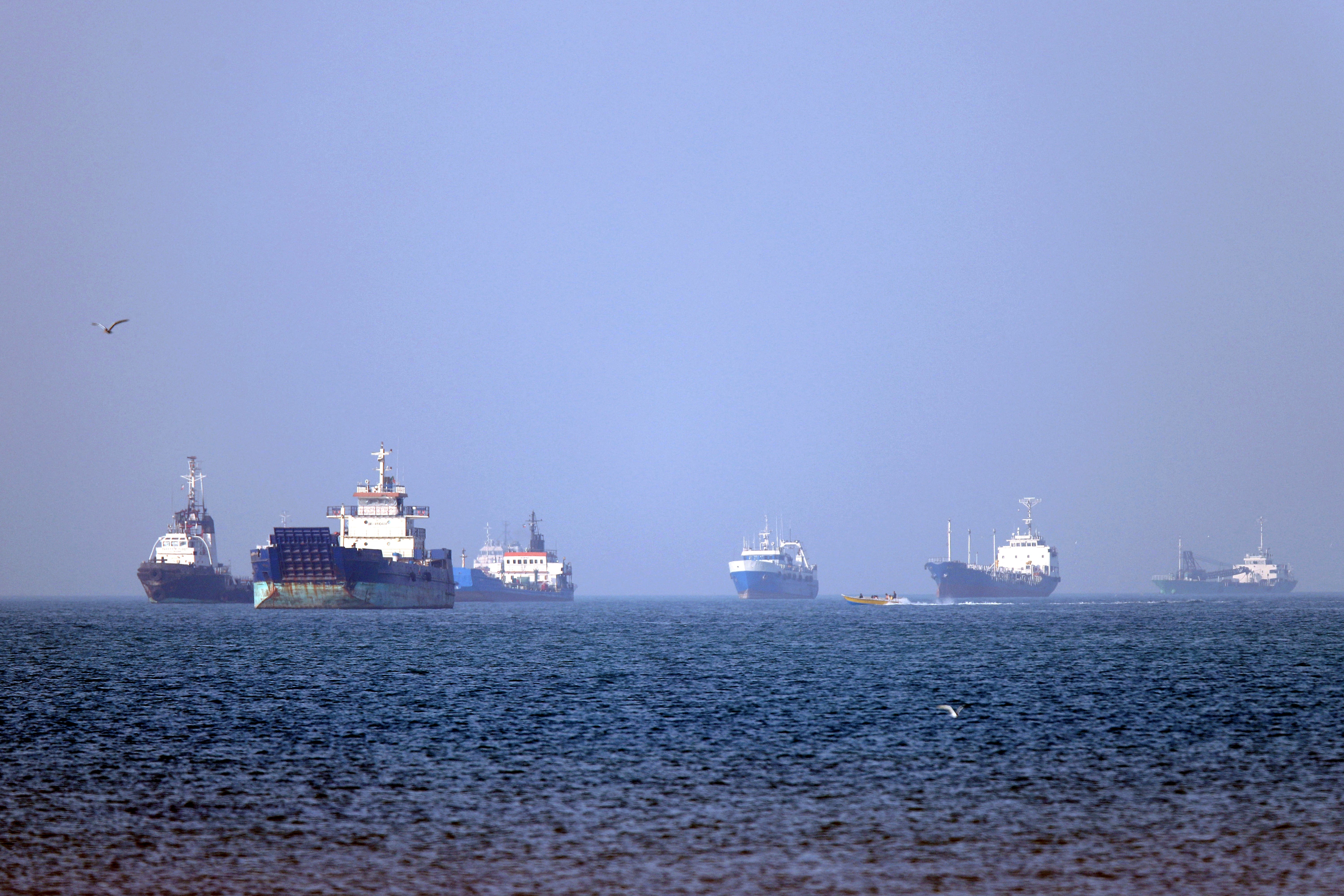
The escalating tensions come after Mr Trump launched “Project Freedom” on Monday, an effort to guide “innocent bystander” ships through Hormuz despite Iran claiming control of the waterway.

Iran’s parliamentary speaker Mohammad Bagher Ghalibaf, who previously led Tehran through talks with Washington, said the US was endangering shipping through the strait with what Tehran has dubbed “Project Deadlock”.
“We know full well that the continuation of the status quo is intolerable for America, while we have not even begun yet,” Mr Ghalibaf wrote on social media.
Sir Keir Starmer has condemned Iran’s recent attacks and joined calls for de-escalation, urging Tehran to engage “meaningfully” in talks to ensure the ceasefire endures.
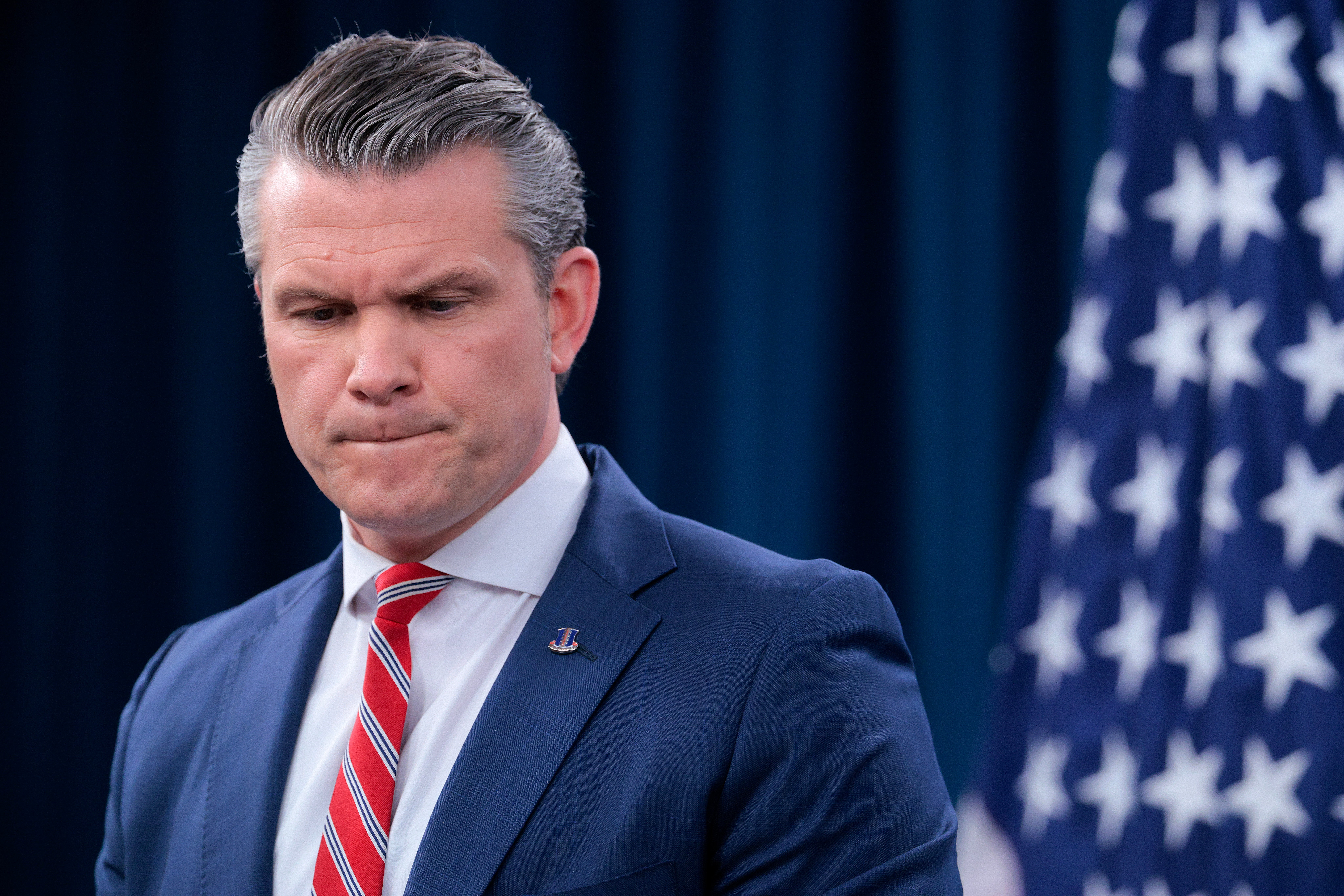
In a briefing on the war to reporters, Mr Hegseth attempted to frame Monday’s clashes in the strait as natural “churn”, while warning that the US still has the capability to reopen the wider conflict if needed.
“The option is always there, and Iran knows that. And that’s why their choices in Project Freedom are important,” he said, casting the mission as a “gift” to the rest of the world while also downplaying the US’s need for the waterway.
The defence secretary said the operation would only be temporary and that other nations would soon have to “step up” and take responsibility for the strait themselves, amid a widening rift with Nato allies over their perceived lack of support for Mr Trump’s war.
Mr Hegseth’s comments came just days after a deadline passed requiring the administration to seek congressional approval to continue the war. He said the 60-day limit did not apply as “with the ceasefire, the clock stops”.
General Dan “Razin” Caine, the chair of the US Joint Chiefs of Staff, told reporters that Iran had fired at commercial vessels nine times and seized two container ships since the ceasefire agreement came into force last month.
More than 100 American aircraft remain in the air 24 hours a day to provide defensive overwatch, he added, representing a fraction of some 15,000 service personnel involved in operations in the region.
“Commercial vessels will see, hear and frankly feel American combat power around them, in the sea, in the skies and on the radio,” he said.
Gen Caine said the operation would require “patience and engagement”, after demonstrating on Monday that the US could enter the Strait of Hormuz and guide ships.
He said the US military remained ready to resume major combat operations against Iran if ordered to do so.
Dr Martin Navias, senior visiting research fellow at the Centre for Defence Studies at King’s College London, told The Independent that Iran had been “reckless” in its attacks but lacked the military capability to compel the United States to back down.
“The Americans have upped the ante here, and there is the danger that even these limited actions will prompt an Iranian response that will demand an American counter-response. But ... the United States does not appear to have made the decision to force [the Strait of Hormuz] open yet,” he said.
“The United States has the force to force the strait open, but that will require a major escalation, and that escalation will not be limited to the Gulf. It will have to be part of a broader resumption of strikes on Iran. And it doesn’t appear that the Trump administration has reached that point yet.”
Nitya Labh, a fellow on the International Security Programme at London’s Chatham House, said the United States’ push to assist global shipping in the region is “extremely risky”.
“I think what’s happening is quite escalatory; it suggests the US isn’t willing to negotiate over the terms of reopening the strait,” she told the BBC. “The US has accepted that the only way to continue to move shipping is under the threat of force or strikes from Iran.”
Meanwhile, Goldman Sachs warned that Britain is the country that is “most exposed” to jet fuel shortages caused by the Iran war, raising fears of more cancelled flights and ruined summer holidays.
The UK is highly reliant on imports that come through the closed Strait of Hormuz and has “critically low levels” of supplies and poor refining tools, analysts at one of the world’s largest investment banks said.
Responding to Monday’s attacks, the UAE restricted flights to a handful of approved routes until at least 11 May and activated emergency security protocols, two days after lifting all precautionary airspace measures and saying its airspace was clear.
Marco Rubio defends Trump’s false claim that Pope Leo wants Iran to have a nuke
Trump says ballroom will cost $400M. Why are Republicans adding $1B to spending bill?
Rubio says Iran is holding ‘whole world hostage’ in Hormuz as ceasefire at risk: Live
‘Insane in the brain’: Marco Rubio quotes Cypress Hill to describe Iran leaders
Trump’s war has done little to slow Iran’s nuclear capabilities: report
Trump’s latest threat to ‘blow away’ Iran shows how few options he really has